

He Never Attended Architecture School. Then He Built a Church Out of Light.
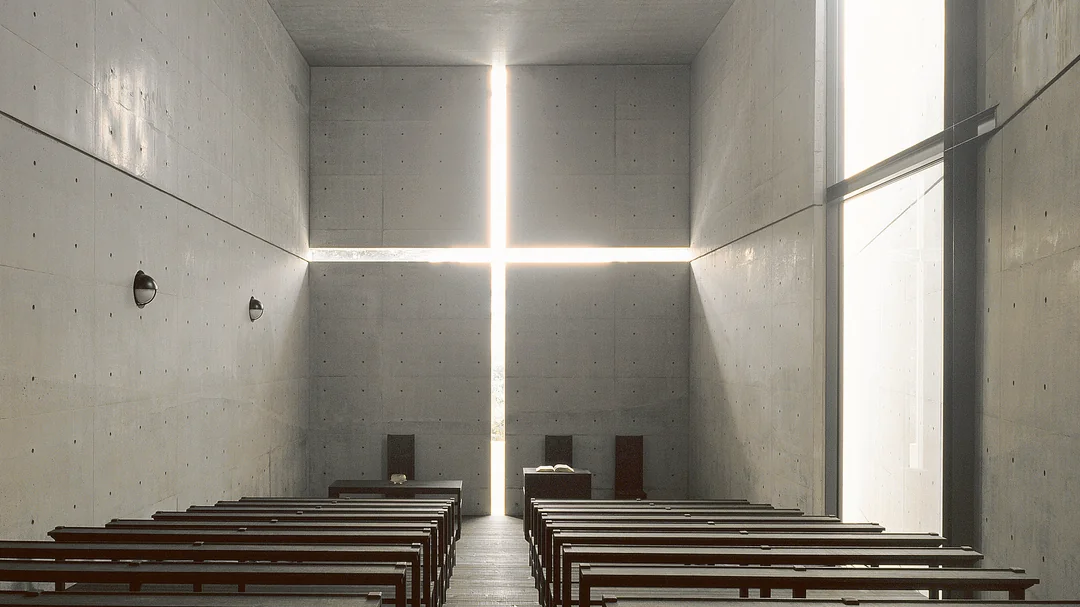
He did not enter architecture through a classroom. He entered through curiosity.
Tadao Ando had no architecture degree, no traditional academic path, and no celebrated master guiding his hand.
Before architecture, there was boxing — a world of discipline, instinct, solitude, and confrontation. When he finally chose to build, he became his own school.
He read relentlessly. He studied drawing. He traveled through Europe and the United States with sketchbooks, standing before the buildings of history and asking not only how they had been made, but how they made people feel. Instead of learning architecture inside a classroom, he learned it by walking through light, shadow, concrete, silence, and space.
Then, in an unassuming residential neighborhood outside Osaka, he created something unforgettable: a concrete church where the most powerful element was not placed inside the building. It entered through the wall as light.
This is the story of Tadao Ando — and of what becomes possible when curiosity is given the discipline to become a life.
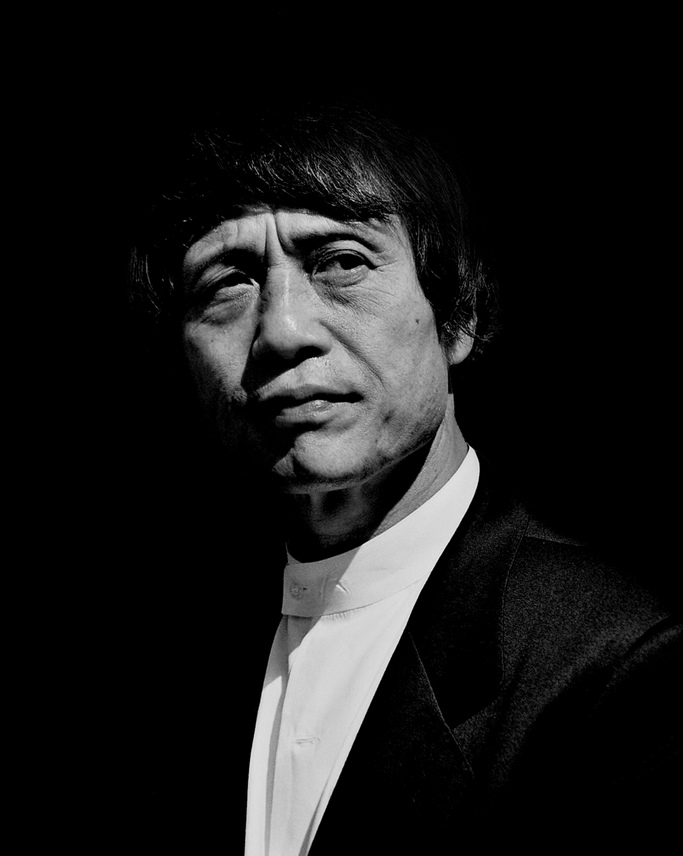
Before the Buildings, There Was the Fight
Born in Osaka in 1941, Ando did not begin with the advantages typically associated with a future master architect. His education was unconventional, physical, and self-directed. As a young man, he boxed. The ring taught him lessons no lecture hall could: how to face fear without retreating, how to endure repetition, how to read space and distance, and how to remain intensely present.
Architecture and boxing may seem like opposite worlds. One creates shelter; the other stages confrontation. Yet both demand courage, timing, control, and an unflinching awareness of the body in space. Ando would later describe boxing as a source of the toughness required to take risks and continue through uncertainty.
That courage mattered because he chose a profession whose conventional doors had not opened for him. He never attended architecture school. Rather than treating that absence as a verdict, he designed his own education.
He learned through books, night study, observation, short periods working around designers and planners, and extensive travel. He made sketches not as souvenirs, but as acts of investigation. Buildings became his teachers. Streets became his studios. Each journey allowed him to examine proportion, movement, material, and the invisible emotional force of a room.
It is tempting to romanticize the self-taught artist as someone carried by instinct alone. Ando’s life tells a more demanding story. Freedom from an institution did not mean freedom from rigor. He replaced the structure of school with a discipline he had to create and enforce for himself.
In 1969, he established Tadao Ando Architect & Associates in Osaka. The outsider had given himself a place from which to build.
When Concrete Learned to Breathe
Ando became known for concrete, but concrete alone does not explain his architecture. In less thoughtful hands, the material can feel severe, heavy, even mute. Ando uses its stillness as a counterpoint. Against those precise surfaces, light becomes visible. Wind becomes perceptible. Water becomes reflective. The passing hour becomes part of the building.
His walls do not merely enclose rooms; they choreograph our encounter with the world. A turn delays the view. A narrow passage heightens awareness. An opening frames the sky. Sunlight moves across a surface and reminds us that architecture is never truly static.
This is why photographs can only partially describe an Ando building. The image may capture the geometry, but the architecture is completed by time — and by the person moving through it.
For Ando, simplicity is not emptiness for its own sake. It is concentration. By removing what is unnecessary, he allows the essential elements to speak with greater force.
The Church Where the Cross Arrives as Light
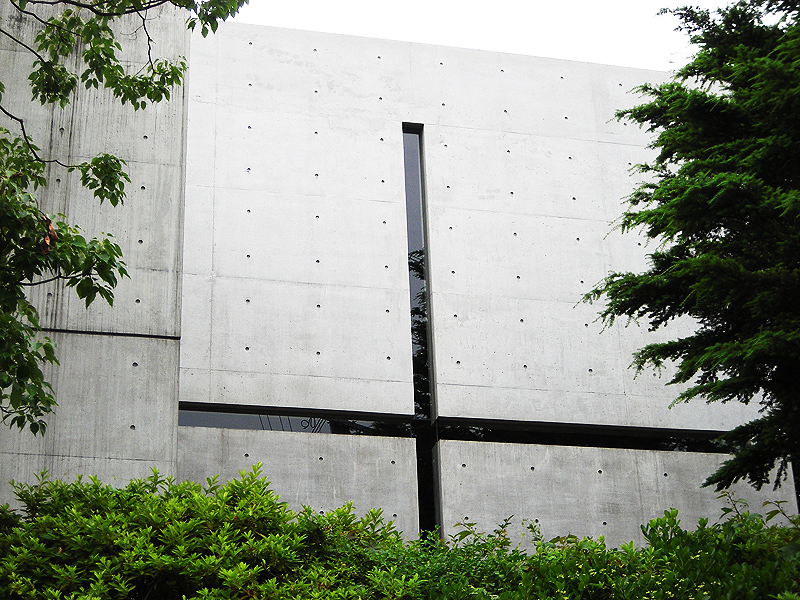
Completed in 1989 in Ibaraki, Osaka Prefecture, the Church of the Light is modest in scale and monumental in memory. From the outside, it does not announce itself with spectacle. Its exposed concrete planes appear restrained, almost guarded. The experience unfolds only when one enters.
Inside the chapel, the eye is drawn toward the east wall. Two intersecting openings form a cross. Daylight passes through them, and a familiar religious symbol becomes something immediate and alive.
The cross is not applied as decoration. It is not an object hanging on the wall. It is the place where the wall yields.
The cross is not placed on the wall. It arrives as light.
That distinction is the genius of the space. The building does not attempt to manufacture transcendence through excess. It creates the conditions for an encounter: darkness and brightness, solidity and absence, shelter and the world beyond it.
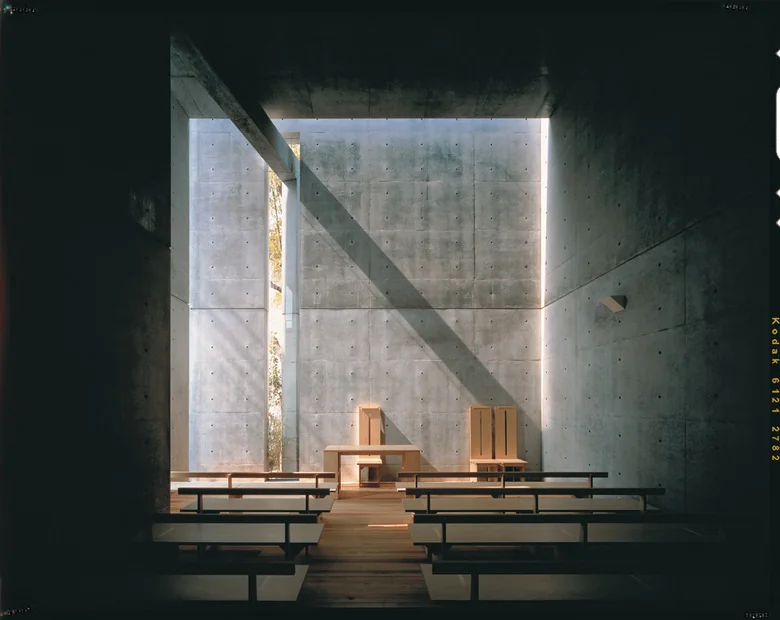
Because natural light is never fixed, the chapel is never experienced in exactly the same way twice. Morning, cloud, season, and weather continually rewrite the interior. The building does not compete with nature; it invites nature to become a participant.
The Church of the Light is often remembered for the cross, but its emotional power comes from the entire sequence — the angled wall that interrupts a direct entrance, the quiet compression of the concrete enclosure, the simplicity of the seating, and the gradual orientation toward illumination. Nothing clamors for attention. Everything prepares it.
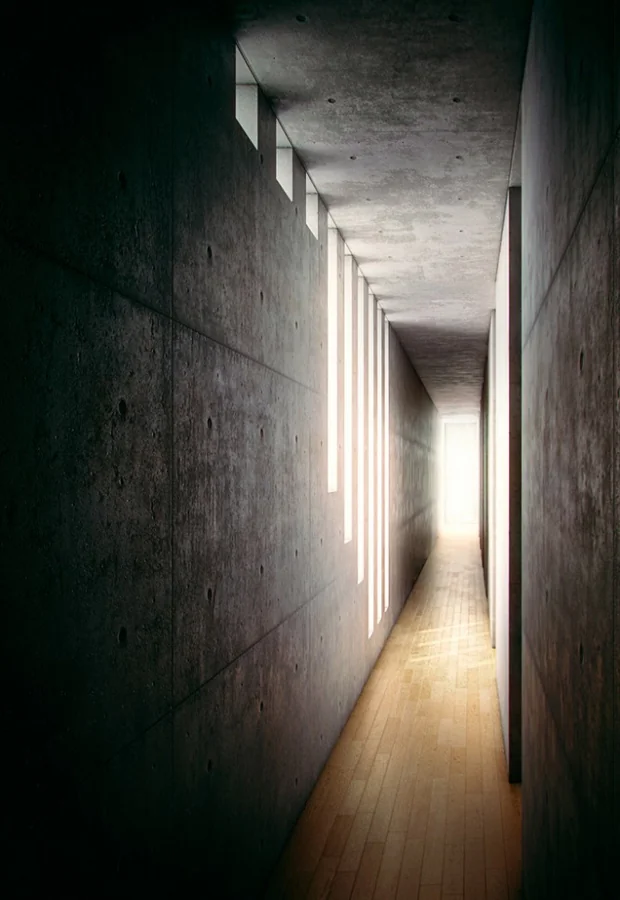
Here, Ando achieved something artists in every discipline pursue: he transformed limitation into language. A restricted palette became emotional abundance. Concrete carried silence. Emptiness carried meaning. Light became architecture.
From an Outsider’s Path to Architecture’s Highest Honor
Six years after the Church of the Light was completed, Ando received the 1995 Pritzker Architecture Prize, widely regarded as architecture’s highest international honor. The man who never attended architecture school had reached the summit of the profession by constructing his education differently.
The recognition did not domesticate his curiosity. His work continued across the world: the Garden of Fine Art in Kyoto, the Modern Art Museum of Fort Worth in Texas, the museums and cultural spaces of Naoshima, and later transformations that brought new life to historic structures. Across continents and scales, the vocabulary remained unmistakable — geometry, procession, nature, restraint, and light.
There is a beautiful irony in the next chapter. Ando, who had no formal architectural education, later taught at the University of Tokyo and is now professor emeritus. His story does not diminish education; it enlarges our understanding of where education can happen. A classroom can be a powerful beginning. So can a library, a journey, a sketchbook, a construction site, a failure, or a question pursued for years.
Ando’s career is not an argument that training is unnecessary. It is evidence that learning cannot be confined to a single approved path.
Architecture as an Act of Hope
What makes Ando’s story so moving today is not simply the improbability of his success. It is the seriousness with which he has treated creation itself. His buildings ask us to slow down, to notice the quality of light, to recognize the emotional weight of space, and to remember that beauty does not always need to raise its voice.
In a culture often drawn toward speed and spectacle, the Church of the Light offers another form of power. It shows us that restraint can be unforgettable. That a quiet room can hold immense feeling. That what is absent may speak as eloquently as what is present.
And it reminds artists of something essential: the path that appears missing may be the path you are being asked to make.
Ando did not wait for his beginnings to look conventional. He studied what moved him, submitted himself to discipline, and kept building until the world could see the language he had been developing all along.
Perhaps that is the deepest lesson in the light entering the wall. The concrete is real. The obstacle is real. But neither has the final word.
Light finds an opening.
When curiosity becomes discipline, the world eventually recognizes what the soul already knew it was called to create.
The Pritzker Architecture Prize, “Biography: Tadao Ando” and the 1995 laureate profile. pritzkerprize.com
Benesse Art Site Naoshima, “Ando Museum” and current biography. benesse-artsite.jp