
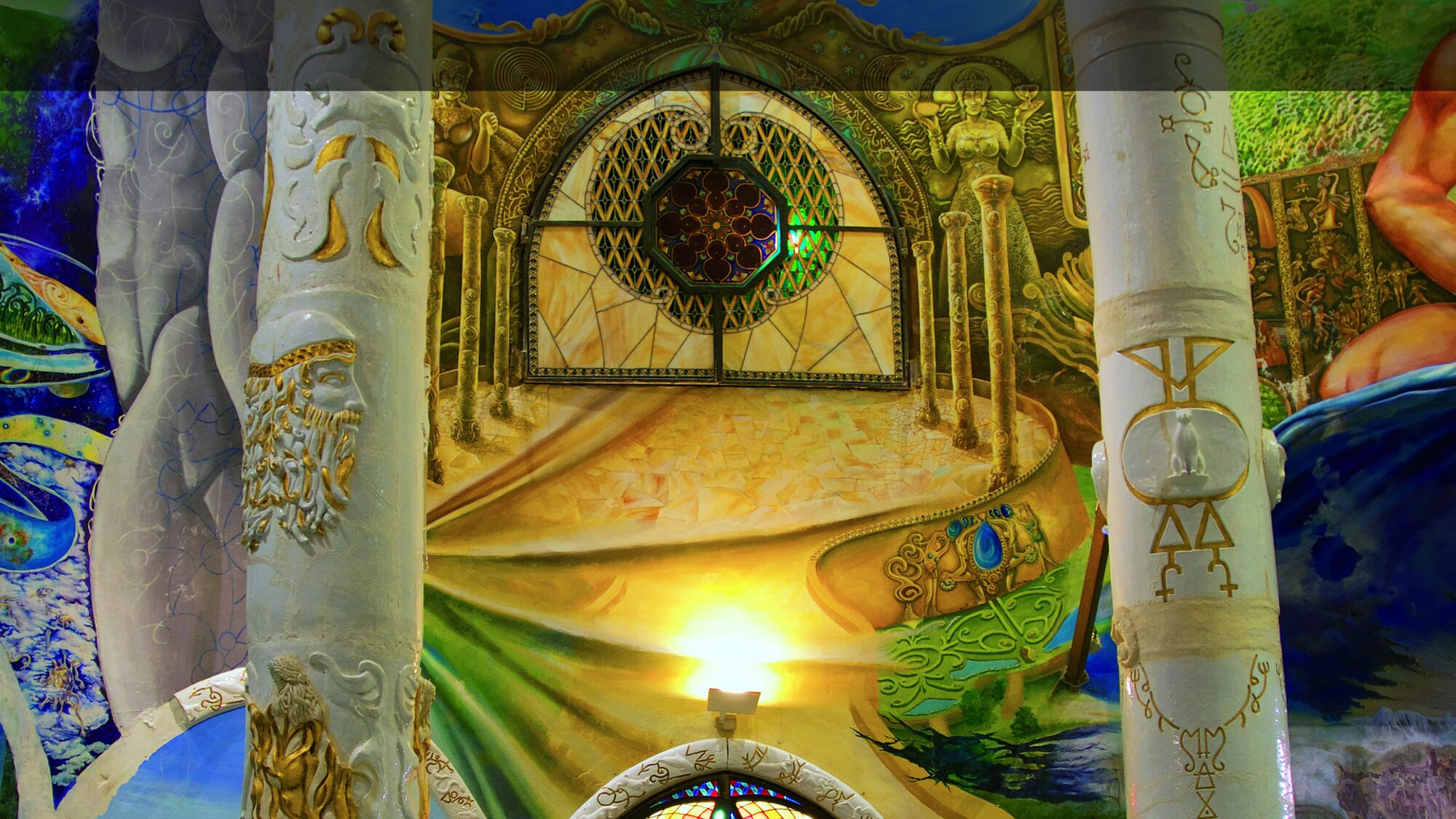
Some monuments preserve the past. This one is still becoming.
Nothing about the house prepares you for what lies beneath it.
Above ground, in the foothills of the Italian Alps north of Turin, the landscape is quiet: trees, stone, mountains, and the measured beauty of Piedmont. Then a doorway opens. A passage descends. The familiar world begins to disappear.
Under the mountain is a cathedral no government commissioned, no famous architect designed, and—at first—almost no outsider knew existed.
Its rooms glow with stained glass, mosaics, sculpted columns, painted ceilings, gold leaf, symbols, mirrors, and color. Corridors turn into chambers; chambers become entire worlds. The deeper one travels, the more improbable the story becomes: for years, members of the spiritual community of Damanhur excavated and decorated this immense work in secrecy.
When ArtTour International entered the Temples of Humankind, our cameras recorded what language still struggles to contain. And the most astonishing truth is that the work has not stopped. The living artwork beneath the mountain continues to change.
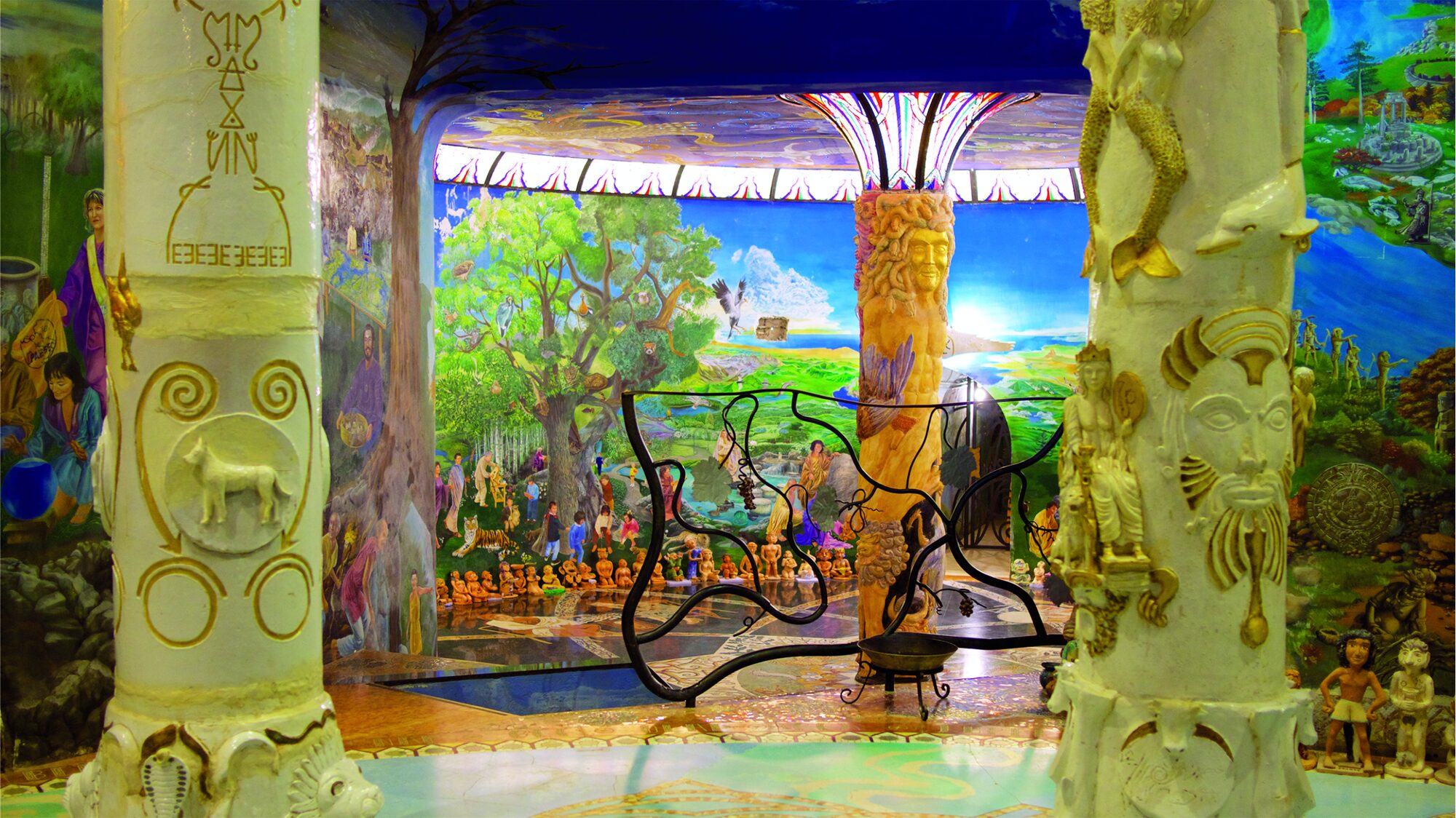
The first masterpiece is the temple. The second is the human determination that made it possible.
IThe Doorway to Another World
Damanhur was founded in 1975 in Valchiusella, near Vidracco, by Oberto Airaudi, known within the community as Falco Tarassaco. Its members describe it as a federation of spiritual communities and a laboratory for new forms of collective and ecological living. Its beliefs and internal culture have also attracted controversy and criticism over the decades.
Those questions belong to any responsible account of the place. Yet the artistic achievement beneath the mountain can be examined without asking a reader to adopt the community’s worldview. The Temples of Humankind are, unmistakably, an immense collective work of architecture, craft, symbolism, and persistence.
Construction began in the late 1970s. The excavation was initially unauthorized and concealed from authorities until the complex was discovered in 1992. After inspections and legal regularization, the temples were preserved and eventually opened to visitors.
The story sounds invented: people working at night, removing rock, solving structural problems, and transforming raw chambers into ornate environments before the outside world knew they were there. But the proof is physical. It surrounds the visitor on every side.
This was not a project completed by a conventional construction team and then handed to decorators. The architecture and the art grew together. Stone was removed; surfaces were shaped; glass, ceramic, metal, paint, mosaic, sculpture, and light were woven into a single visual language.
IIA Cathedral With Many Hands
Great monuments are often remembered through one name. Damanhur resists that habit. Its power lies in accumulated labor—the hands that excavated, painted, cut glass, laid mosaics, modeled figures, applied gold leaf, and returned to the work year after year.
The result is not stylistically restrained. It is abundant, symbolic, and unapologetically immersive. Egyptian references meet alchemical diagrams. Human figures stand beside geometric systems. Flowers, celestial forms, metals, animals, and mythic imagery move across walls and ceilings. Every surface appears to participate in a larger story about humanity and the universe.
One does not need to interpret every symbol—or accept the philosophy behind it—to understand the magnitude of the undertaking. The temples make a more universal proposition: collective imagination can become physical reality when people are willing to give it time, skill, and sustained attention.
In an age of rapid images and disposable experiences, that devotion may be the most radical element of all.
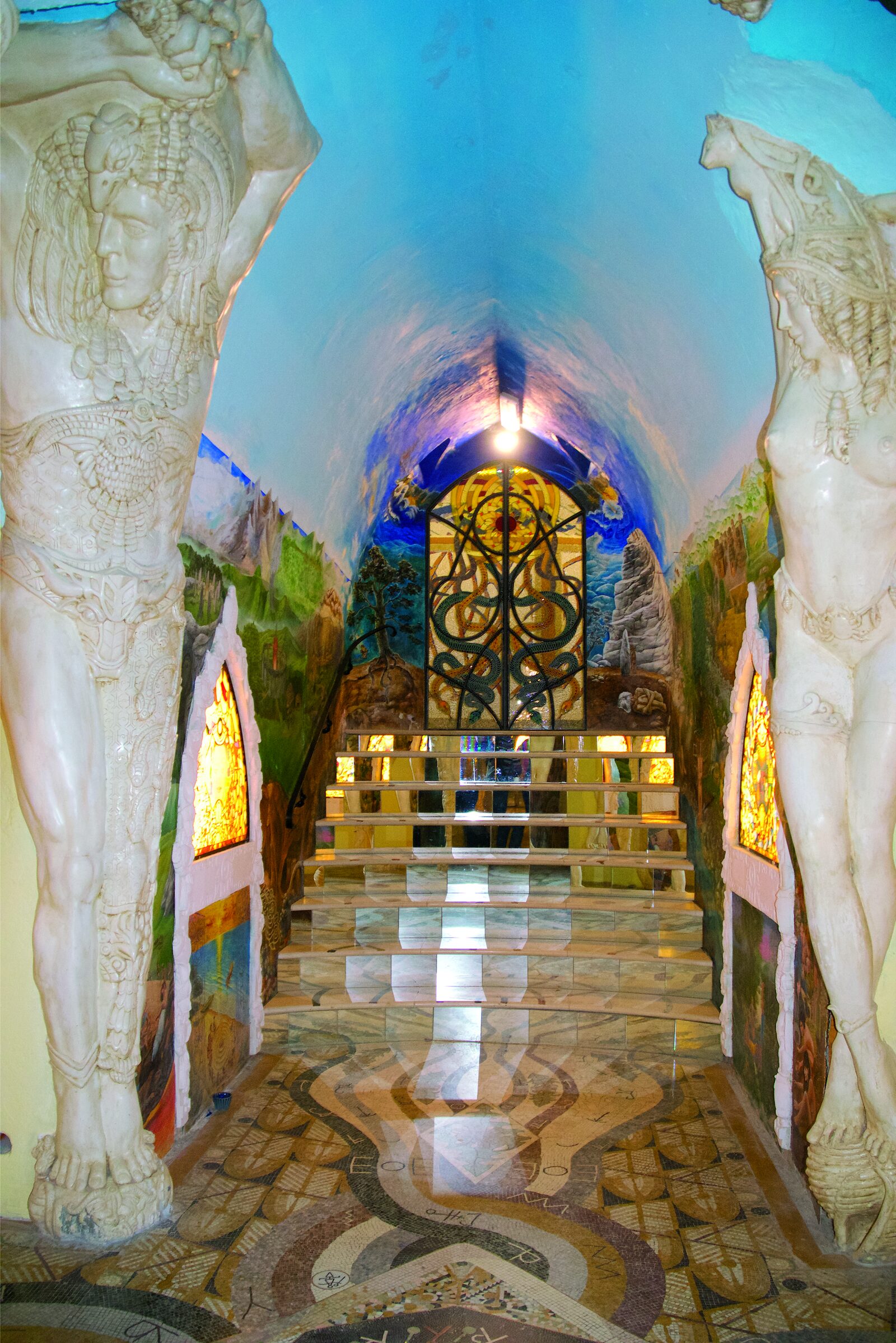
IIIThe Halls Beneath the Mountain
Each chamber has its own atmosphere. The Hall of the Earth, located deep underground, surrounds the visitor with paintings and sculptural forms connected to life, nature, and the human journey. The Hall of Metals meditates on time and transformation through stained glass, ceramic columns, figures, and intricate floor mosaics.
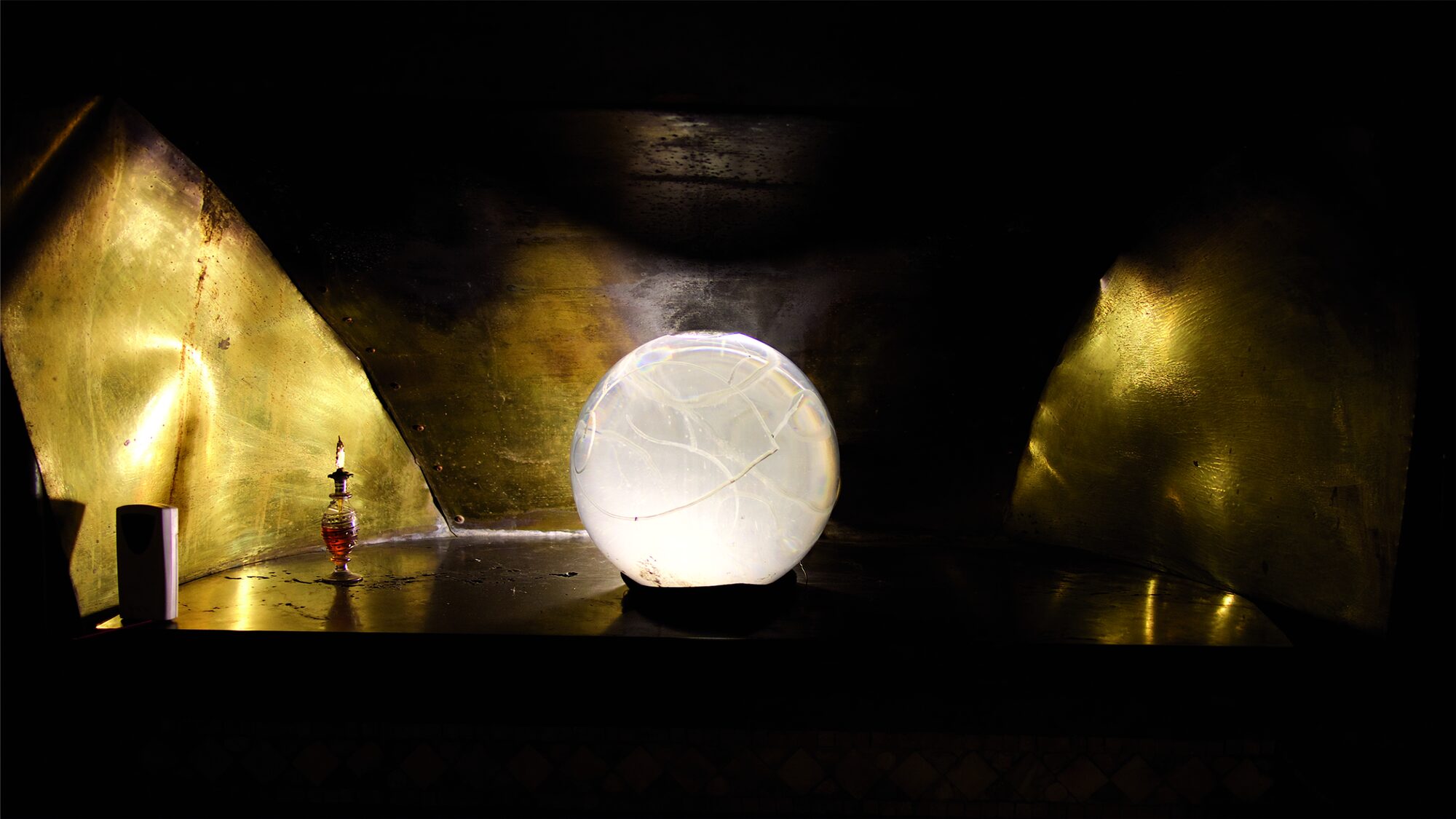
The Labyrinth unfolds as a visual passage through cultures and centuries. Its windows, paintings, and monumental guardians turn movement itself into storytelling. The Hall of Water is shaped by blue light and curving forms. The Hall of Spheres, glowing with gold, is among the most theatrical spaces in the complex. In the Hall of Mirrors, reflected light, glass, color, and sound dissolve the certainty of where a room begins and ends.
The old Blue Temple carries a different weight. Built with humble tools during the earliest phase, it preserves the memory of the first act of excavation—the moment imagination crossed into matter.
These rooms are not neutral galleries holding detachable objects. The room is the artwork. Architecture, painting, sculpture, craft, illumination, and sound cannot be separated without diminishing the whole.
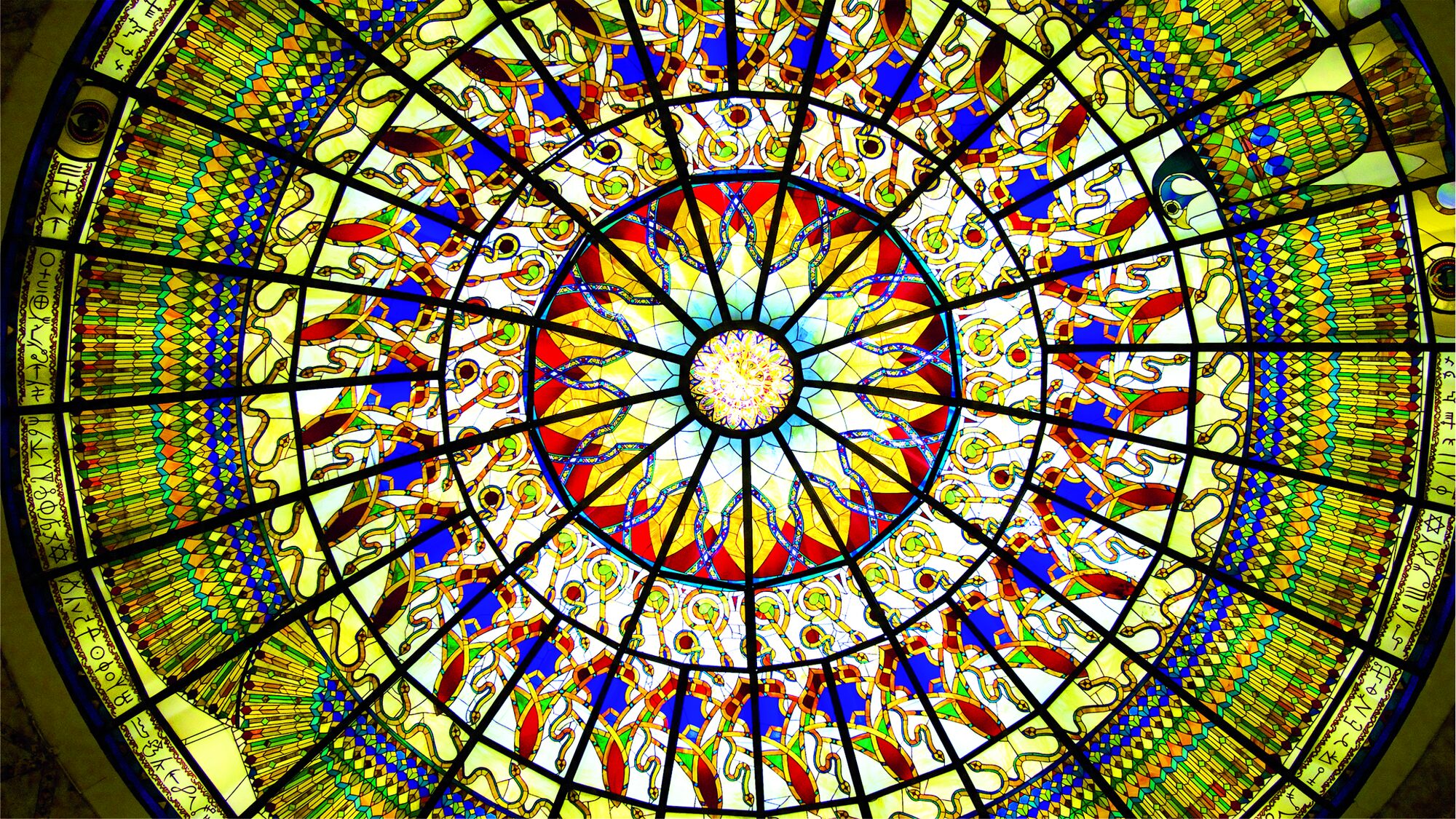
Here, art is not something placed inside the architecture. Art is the architecture.
IVWhat Changed Since Our First Visit
Where earlier documentation described nine monumental temple spaces across multiple underground levels, a digital-heritage project created with Damanhur now describes twelve richly decorated rooms available within its virtual experience, supported by nearly one hundred high-resolution spherical photographs, immersive video, and an enormous gigapixel image of the Hall of the Earth.
The changing count is more than trivia. It tells us that the Temples of Humankind should not be understood as a sealed historical monument. They are a continuing artwork.
New paintings, glasswork, lighting, restoration, and expansion projects have continued to reshape the experience. The community now welcomes scheduled visitors and offers virtual access that would have been unimaginable when the excavation began in secret.
The hidden temple has become visible to the world—yet visibility has not ended its evolution.
This creates a fascinating tension. Preservation usually asks a monument to remain as it was. Damanhur asks what happens when a monument is also a living studio, ritual space, and multi-generational creative process. Which moment should be preserved when the artwork is still becoming?
VWonder Without Surrendering Judgment
Writing about Damanhur requires two kinds of attention at once.
The first is openness: the willingness to encounter an extraordinary work without reducing it to a label before seeing it. The second is discernment: the understanding that visual magnificence does not require uncritical acceptance of the institution, beliefs, or power structures behind it.
ArtTour International does not present the community’s spiritual claims as scientific fact, nor does appreciation of the temples constitute an endorsement of Damanhur’s teachings. Readers should approach any spiritual organization with independent judgment and seek information from multiple perspectives.
But discernment should not make us incapable of wonder.
The temples exist. Human beings carved them into a mountain. Thousands upon thousands of decisions—technical, aesthetic, symbolic, and physical—accumulated until an idea became a world one could enter.
VIThe Mountain Is Still Speaking
When we revisit our photographs and recordings now, they do more than document an unusual destination. They preserve a moment in the life of an unfinished work.
The rooms we first walked still exist, but they no longer tell the entire story. New spaces and technologies have extended the encounter. What we documented has become a threshold between what was there then and what is emerging now.
Perhaps this is why Damanhur remains so compelling. Beneath the mythology, controversy, and spectacle is a question every artist understands:
What would you create if you believed the work might continue beyond you?
Most of us will never excavate a cathedral. But every meaningful creation asks for a smaller version of the same faith: begin before the full form is visible; keep working when recognition is absent; accept that the finished work may be larger than the self who began it.
Above ground, the mountain appears still.
Below it, color, glass, stone, sound, and human imagination continue their conversation.
Some monuments preserve the past. This one is still becoming.
This feature draws on ArtTour International’s own photography, video and audio from the Temples of Humankind. Descriptions of the community reflect its own account and publicly reported history; ATI does not endorse any spiritual organization’s teachings.