
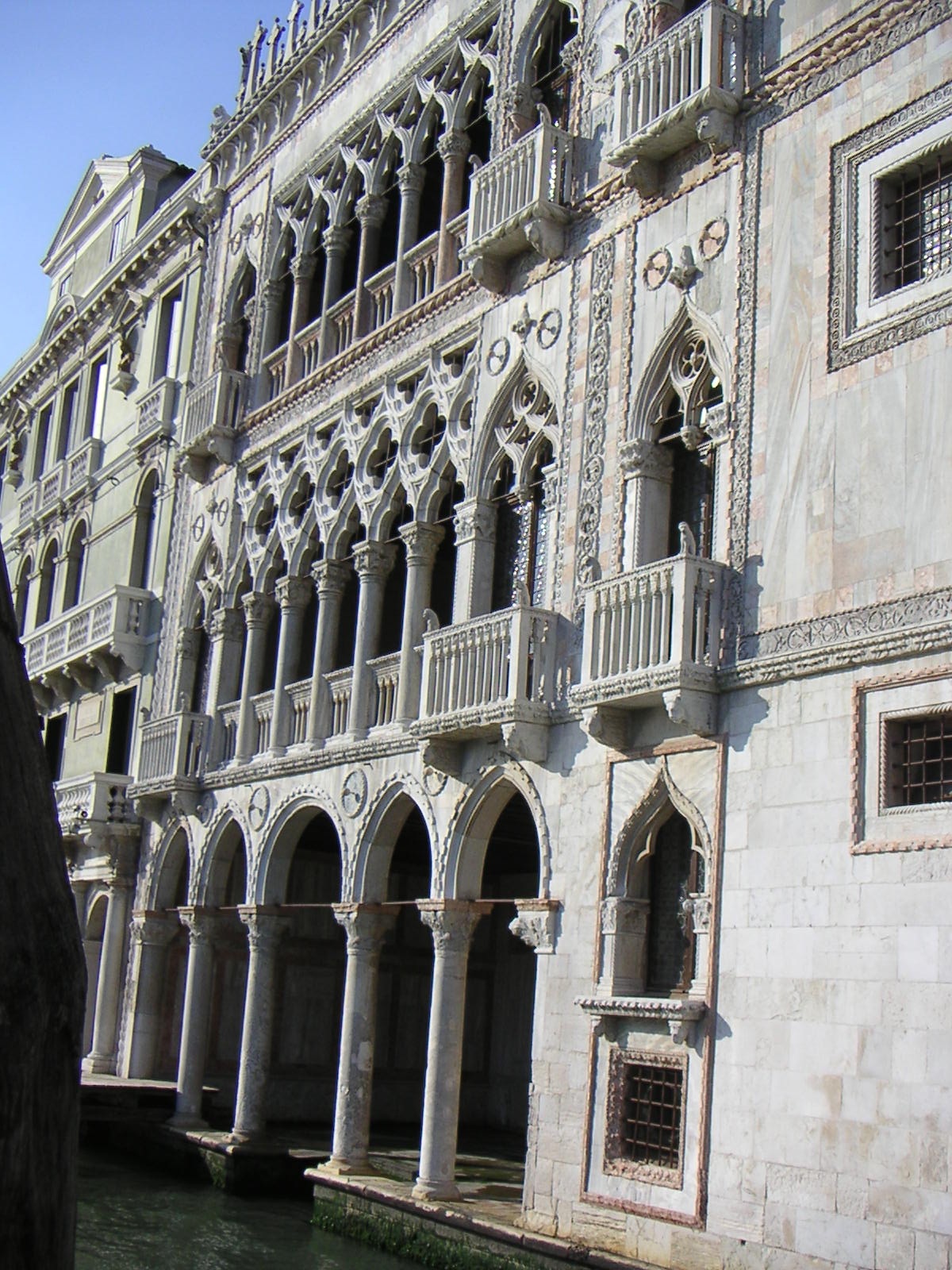

Venice’s Ca’ d’Oro is in the middle of a restoration and reinstallation whose cost exceeds €10 million, a scale that makes the project more than a conservation story. It is also a test of how private philanthropy can support a public museum without reducing cultural stewardship to branding.
The Direzione regionale Musei nazionali Veneto says work began in 2023 and is scheduled for completion in 2027. Venetian Heritage is funding the project with the Fondazione Giulio e Giovanna Sacchetti. The intervention spans the building and the visitor experience: architectural surfaces, windows, loggias and floors are being addressed alongside display cases, lighting, climate systems, circulation and visitor services.
A palace and a collection must be read together
The fifteenth-century palace is not a neutral container. Its Gothic façade, open loggias and long history of alteration are part of what visitors come to understand. Inside, the Galleria Giorgio Franchetti grew from the collection assembled by Baron Giorgio Franchetti, who gave the building and its holdings to the Italian state. Restoring the architecture while reinstalling the collection therefore requires a double act: conserve the monument and make the works legible within it.
A presentation at the Biennale Internazionale dell’Antiquariato di Firenze, which ran from September 26 through October 4, placed Antico’s Belvedere Apollo in the foreground as an ambassador for the larger project. The choice was strategic. A single object can make a complex, multiyear capital campaign understandable, while the campaign gives the object a broader institutional story.
What the funding model reveals
Public-private cultural projects are often described only in financial terms: a funding gap appears, and a donor fills it. Ca’ d’Oro shows a more demanding model. Conservation, interpretation, visitor flow and environmental control must be planned as one system, with public authorities retaining responsibility for the museum’s mission and the private partner contributing resources and specialist support.
For cultural institutions, the practical lesson is to frame sponsorship around a transparent conservation program rather than a list of naming opportunities. Donors can see what their support makes possible; the public can see how decisions serve the collection; and curators can connect technical work to a renewed narrative.
What artists and smaller institutions can take from it
Few organizations command a €10 million restoration budget, but the structure scales down. A studio archive, artist foundation or regional museum can divide a large preservation goal into visible, evidence-based stages: condition assessment, conservation, documentation, environmental improvements, interpretation and public access. Each stage can have a budget, a timetable and a clear account of why it matters.
The deeper value of the Ca’ d’Oro project will be measured after reopening, when visitors encounter a palace and collection that explain one another. If the partnership succeeds, it will offer a persuasive example of patronage serving public memory rather than simply attaching itself to it.