

At Milan’s Natural History Museum, a speculative future has entered the display cases. L’Era Plasteozoica. Una distopia ecologica imagines an epoch in which plastic has become so entangled with living systems that a museum might classify synthetic debris as though it were a new branch of natural history.
The exhibition, open through November 8, is by Pictoria Newhouse, the Dominican collective formed by Victoria Thomen and Guadalupe Casasnovas, and is curated by Julian Kunhardt. Photographs, installations and invented taxonomies are placed in dialogue with the museum’s collections and scientific instruments. The result borrows the authority of natural-history display while exposing the unnatural conditions that such authority may one day be asked to describe.
A field observation becomes a fictional science
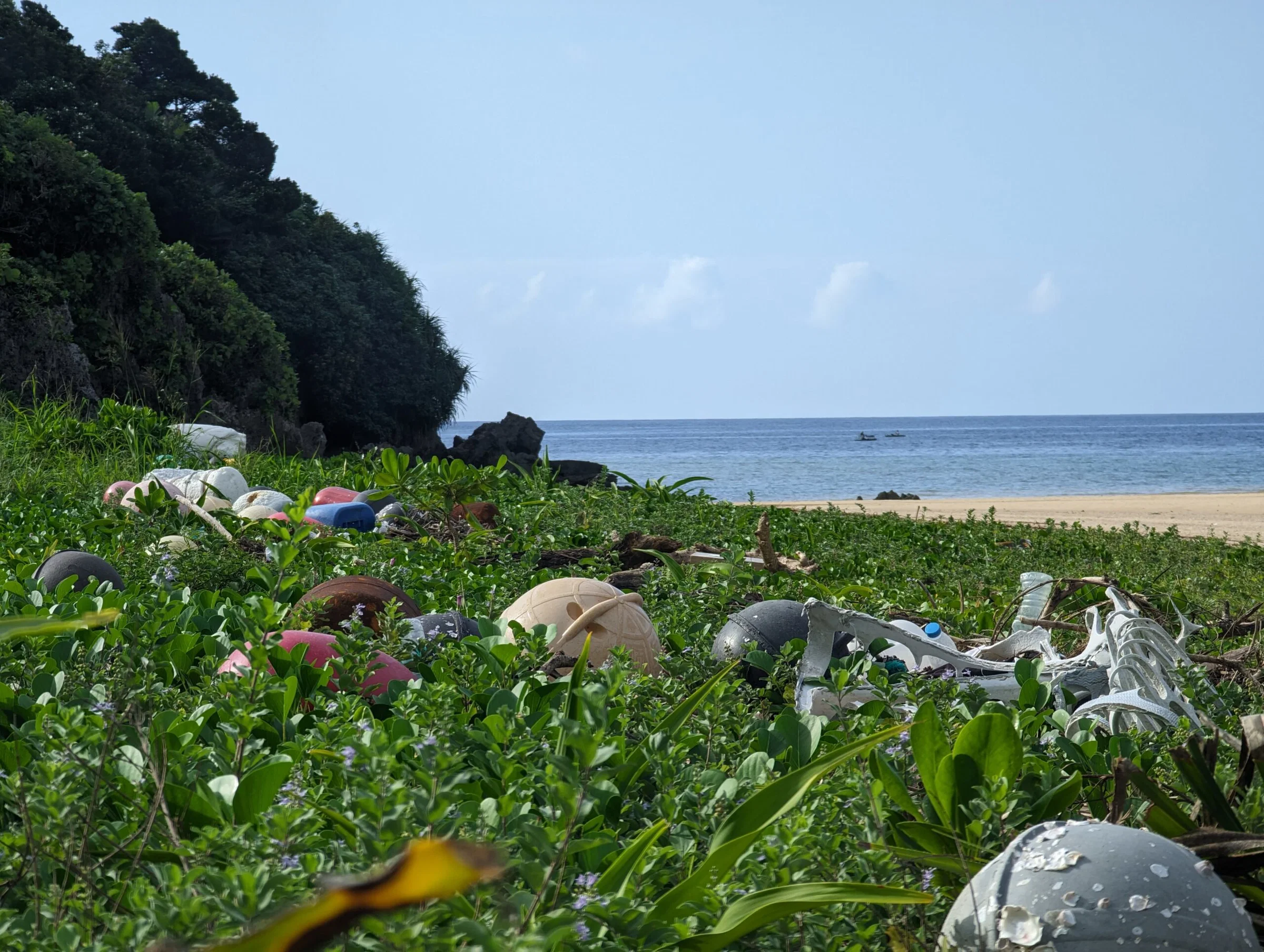
The project developed from work begun between 2015 and 2019 and from an expedition to Laguna de los Flamencos on Saona Island in the Dominican Republic. Plastic pollution encountered in a biodiverse landscape becomes the raw evidence for a future-looking archive. Rather than presenting debris only as an environmental statistic, the artists imagine how it might alter the categories through which people understand nature.
That strategy gives the exhibition its force. A dystopia can feel distant, but a taxonomy implies that transformation has already occurred and must be named. The museum’s own specimens—including animals associated with the Dominican ecosystem—make the fiction press against real histories of collection, extraction and scientific description.
Why the natural-history museum is the right stage
Environmental art often enters a gallery as an image of damage happening elsewhere. Here, the work occupies an institution built to organize evidence about the living world. The setting asks whether museums can remain observers of ecological change or must also examine the materials, economies and colonial routes that shape their collections.
For artists, the exhibition demonstrates how site can function as part of the argument. The work does not merely fit the museum; it uses the museum’s language—classification, specimen, instrument and display—to produce meaning. That is a transferable method for ecological practice: identify the institution whose habits are implicated in the subject, then design the artwork to activate those habits critically.
From awareness to material accountability
The exhibition’s invented “Plastozoic” era is persuasive because plastic is both symbol and substance. It points to durability, consumption, unequal waste burdens and the artificialization of ecosystems. But the same material question applies to exhibition making. Environmental projects gain credibility when artists and institutions document fabrication choices, transport, reuse, energy demands and the afterlife of installations.
Pictoria Newhouse turns plastic pollution into a museum of the near future. Its warning is not that nature will disappear overnight, but that culture may gradually normalize a transformed world by giving it a label, a case and a place in the collection.