
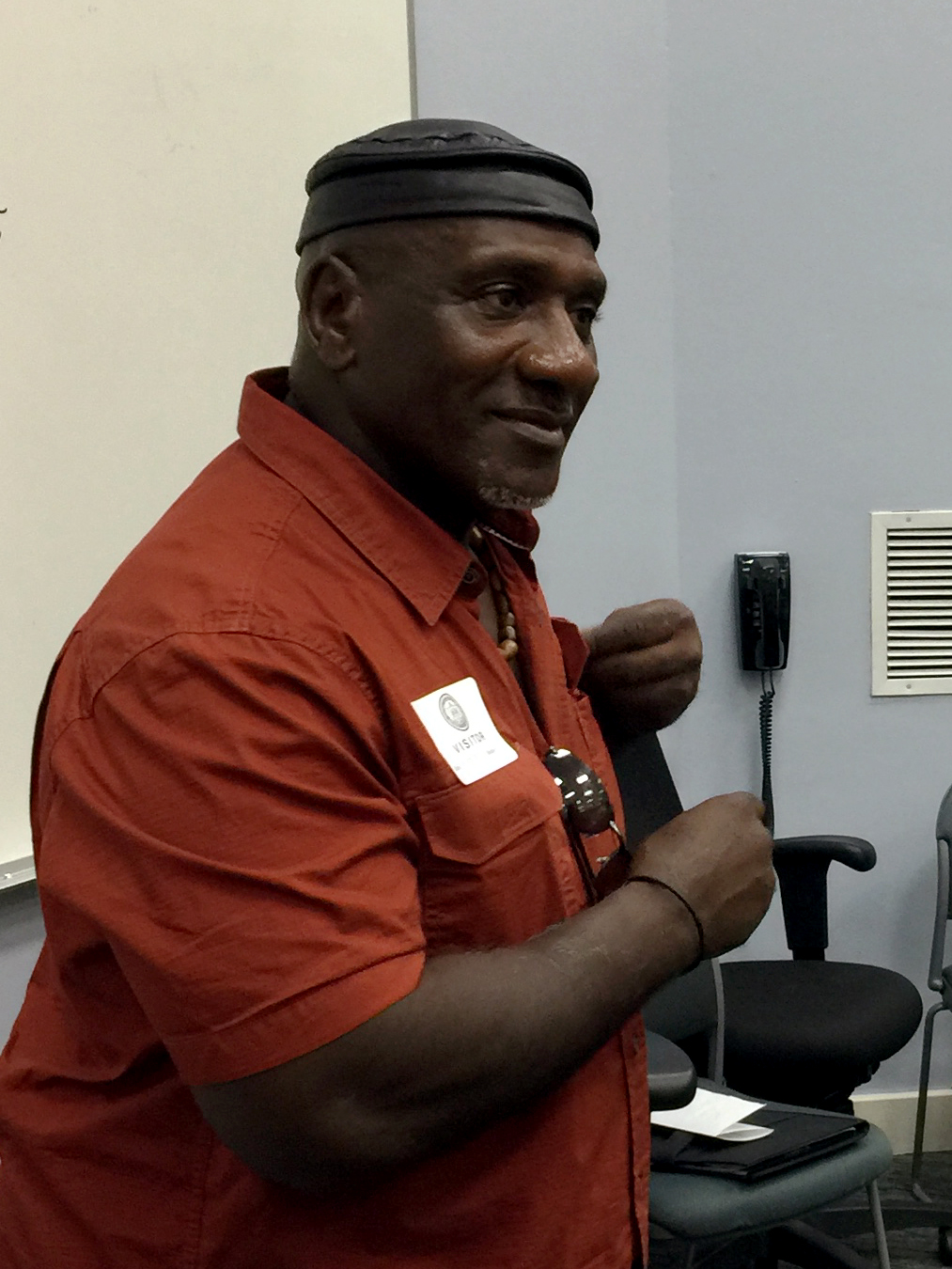

Gary Tyler’s first major museum exhibition has opened at the Grand Rapids Art Museum. Rebirth brings together recent quilts and new commissions by an artist who developed his textile practice during more than four decades of wrongful incarceration in Louisiana.
Tyler was 16 when he was arrested and 17 when an all-white jury convicted him of murder. He received a mandatory death sentence and became the youngest person on death row in the United States. Courts later found his trial fundamentally unfair, and he was released in 2016 after nearly 42 years in prison.
The facts make Tyler’s life extraordinary, but the exhibition asks viewers not to let injustice consume the art. His quilts are not footnotes to a legal history. They are carefully constructed works rooted in African American textile traditions, memory, family, landscape, incarceration and freedom.
A creative practice built around care
Tyler learned quilting while supporting the hospice program at Louisiana State Penitentiary, known as Angola. The quilts made for dying prisoners were eventually given to their families. A domestic form associated with warmth and inheritance became, in that setting, a final act of dignity.
He also led a prison drama program. Both practices created structure and community inside an institution designed to restrict identity. Art offered a way to make time purposeful, to build skills, and to imagine a self larger than the sentence imposed on him.
That history remains inside the quilts, but it does not dictate one visual language. Tyler works with vibrant fields of color, repeated motifs and appliquéd scenes. His subjects can include gardens, animals and family memory alongside confinement and resistance. The range matters because it refuses the expectation that an artist who survived injustice must continually reproduce trauma for an audience.
Why the museum context matters
Rebirth positions Tyler within contemporary American textile art, not solely within exhibitions about prisons. The distinction is overdue. Fiber practices have often been separated from painting and sculpture by hierarchies of medium, gender, race and use. Tyler’s work makes those divisions impossible to sustain: a quilt can be an object of care, a historical record, a formal composition and a political witness at once.
The Grand Rapids presentation gains additional force from two concurrent exhibitions. Julie Green’s The Last Supper records final meals requested by people executed in the United States across nearly 1,000 painted plates. Ray Materson’s Metamorphosis surveys embroideries first made from threads unraveled from socks while he was incarcerated. Together, the shows trace different ways that ordinary materials can preserve personhood within punitive systems.
Beyond the story of survival
Museums have a responsibility when presenting lives shaped by violence or incarceration. Biography can bring audiences to the work, but it can also become a frame so dominant that craftsmanship, experimentation and artistic agency disappear. Rebirth is strongest when the quilts are allowed to carry both history and their own aesthetic authority.
For artists, Tyler’s practice demonstrates that material can hold relationships as well as images. The hospice quilts connected prisoners to families. Theater connected collaborators to one another. The museum quilts connect private memory to a public record. In every case, making becomes a way of refusing erasure.
Gary Tyler: Rebirth is on view at the Grand Rapids Art Museum through January 3, 2027.