
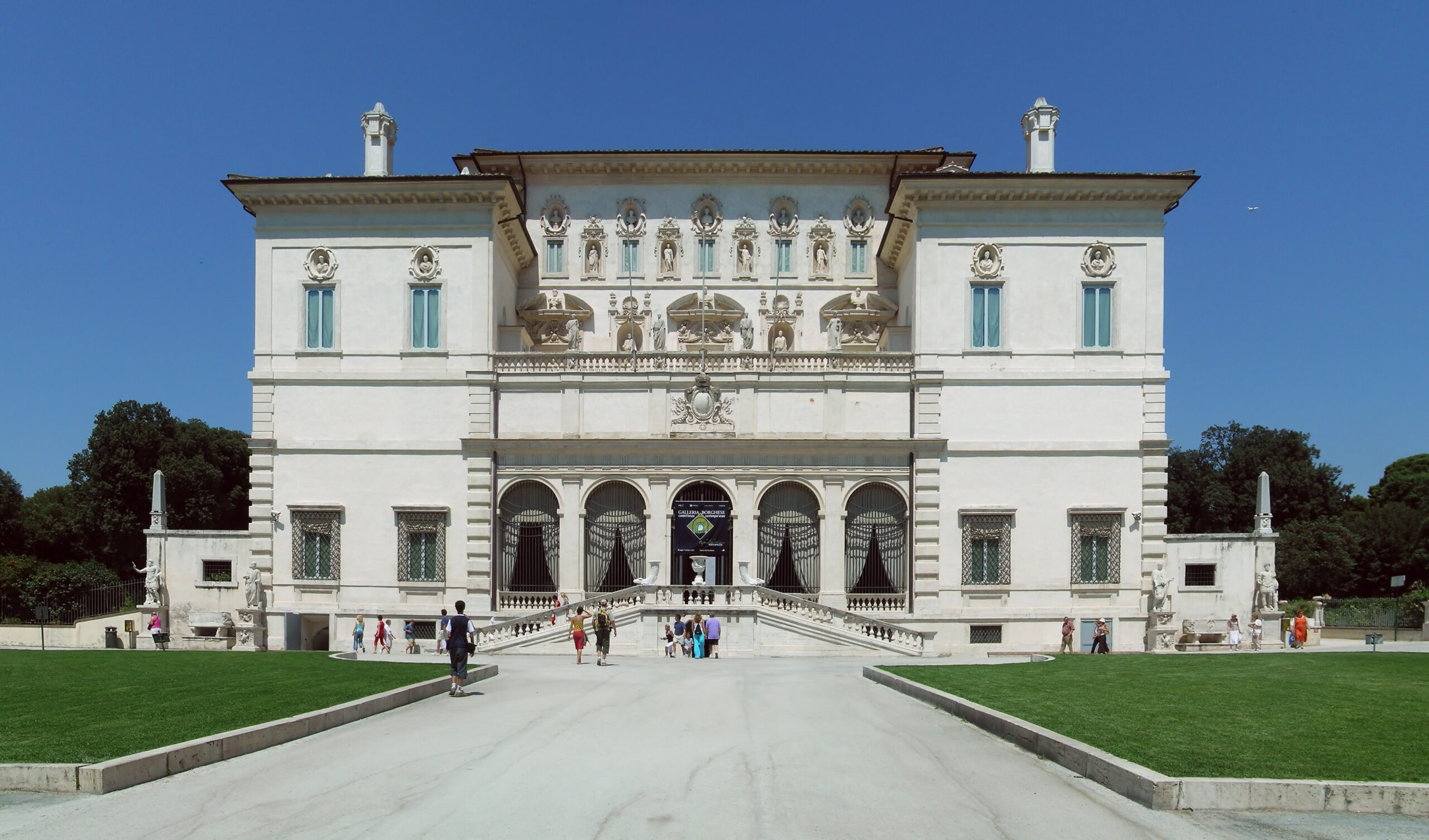

Rome’s Galleria Borghese has launched an international architecture competition for a new museum pavilion, moving a closely watched expansion proposal into its design phase. The aim is to make more of the collection accessible, improve physical access and relieve pressure on one of Italy’s most sought-after museums.
Hundreds of works remain in storage, while the historic villa strictly limits admission and routinely sells out. The competition will proceed in two stages: architecture and engineering teams may apply, and five finalists will be invited to submit anonymous designs. Any winning proposal will still require approval from Rome and heritage authorities.
A museum expansion inside a sensitive landscape
The opportunity is also a preservation challenge. The gallery occupies a 17th-century villa within Villa Borghese, a landscape whose architecture, gardens and sightlines form part of the museum experience. Earlier proposals prompted concern from conservation groups and historians who argued that a new structure could damage that relationship.
The museum has said the pavilion is needed to show more of its holdings and improve visitor services. Backers have also stressed that the project should be located near the gallery rather than automatically inside the protected park, and that the competition is intended to test solutions rather than predetermine a building.
Why the competition matters internationally
Museums around the world face the same conflict: major collections attract more visitors than historic buildings can safely accommodate, but expansion can threaten the character that makes those sites culturally valuable. The Borghese competition will be watched as a test of whether new architecture can add capacity without turning heritage into a backdrop for growth.
For architects and cultural institutions, the brief demands more than an iconic object. A successful proposal will need to manage circulation, accessibility, security, conservation standards and the movement of art while respecting an exceptionally sensitive urban and landscape context.
For audiences, the potential gain is significant. Greater display space could bring long-stored works into public view and support research, interpretation and loans. Better access could also reduce the imbalance between extraordinary demand and a visitor system that leaves many people unable to secure tickets.
The competition’s strongest outcome would not be the most visually assertive pavilion. It would be a design that makes the collection and site more legible together. That is the deeper standard for museum architecture in historic settings: intervention should create new public value while clarifying, rather than competing with, what is already there.