
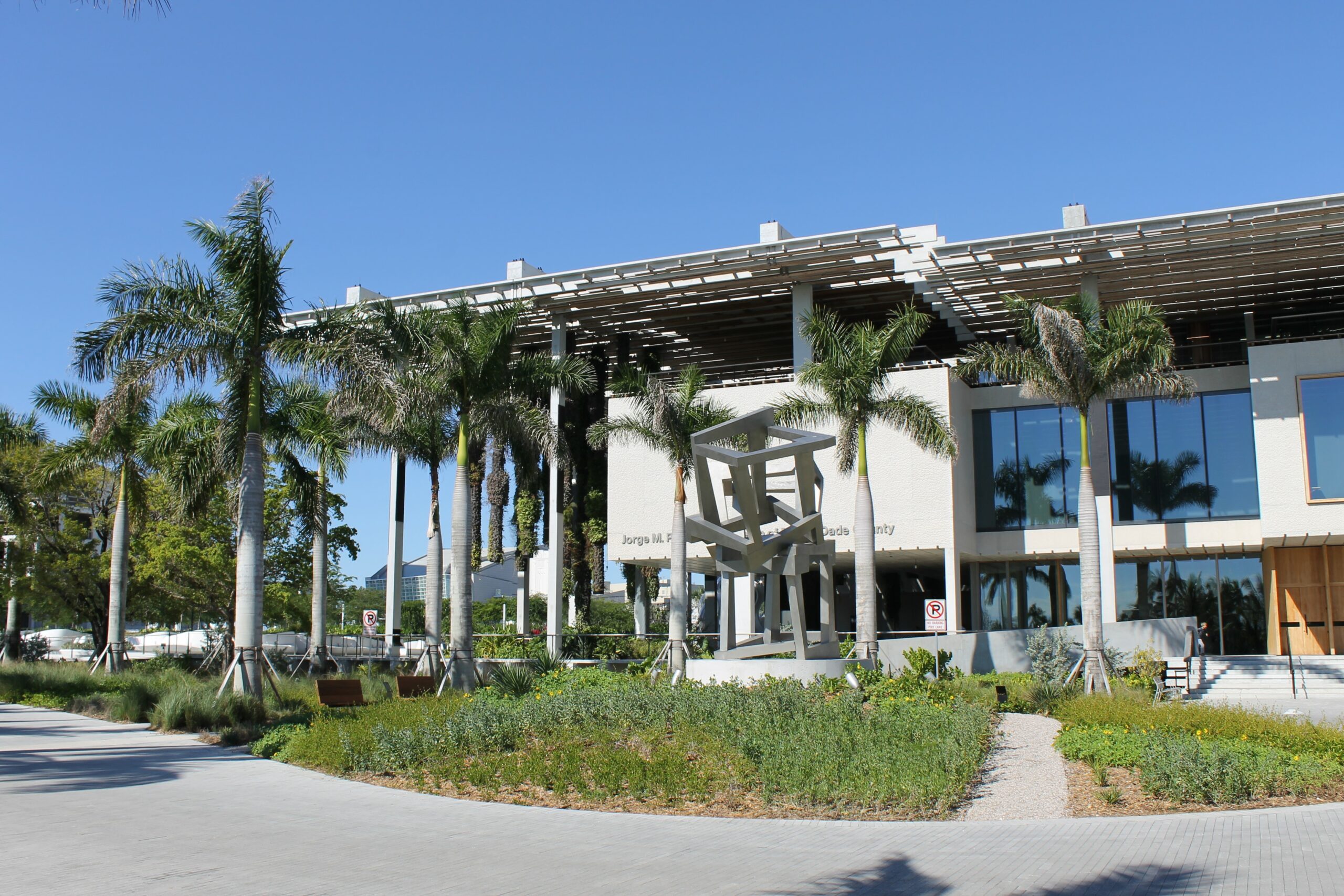

Anina Major has transformed a waterfront gallery at Pérez Art Museum Miami into a walkable ecosystem of woven clay, bottle trees, sea glass, sand, and crushed conch shells. The Sacred Mangrove, on view through August 1, 2027, is the Bahamian-born artist’s most significant institutional presentation in the United States to date.
Major works at the intersection of ceramics, sculpture, and installation. She hand-weaves clay to resemble the palm-leaf plaiting associated with Bahamian craft, translating a flexible and perishable material tradition into fired earth. The change is not simply formal. It asks what happens when labor, memory, and inherited knowledge are made permanent inside a museum.
The mangrove as structure and metaphor
Mangroves are protective coastal systems. Their interlaced roots create habitat, stabilize shorelines, and absorb the force of water. Major’s installation draws on that ecological intelligence without attempting to reproduce a natural mangrove literally.
Visitors move among island-like groups of tall ceramic forms, protective objects, bottle trees, and a shell path designed for slow looking. The environment connects cultural and ecological histories that are often separated: the material knowledge of weaving, the extractive image of the Caribbean as paradise, the movement of people and goods, and the vulnerability of island landscapes.
The work also resists the way tourism can convert a living tradition into decoration. By rebuilding palm-plaiting through labor-intensive ceramics, Major gives the practice weight, fragility, and institutional scale. The installation honors skill while exposing the economic and cultural conditions that can make that skill invisible.
Reuse as memory, not ornament
Major’s use of bottles, sea glass, sand, and shells gives familiar materials a second life, but reuse is not presented as a simple sustainability claim. Each material carries a social history. Bottle trees, for example, have protective associations across parts of the African diaspora. Conch shells evoke foodways, tourism, trade, and the marine environment.
For artists working with ecological themes, this distinction is important. Recycled or natural material does not automatically make a work environmentally meaningful. The stronger question is what the material knows: where it came from, who handled it, what system discarded it, and what new relationship the artwork asks viewers to consider.
Lessons for ecological installation
The Sacred Mangrove offers a model for bringing environment, ancestry, and contemporary form into one experience. It does not use ecology as scenery. Environmental protection, cultural survival, and the dignity of labor are structurally connected.
The installation also shows how museums can support environmental art without reducing it to a panel of statistics. Spatial experience can invite attention before explanation. A path slows the body; repeated forms establish rhythm; material transformations open questions that interpretive text can deepen.
Major’s mangrove is made, not grown, yet it behaves like an ecosystem of relations. Clay holds the memory of palm. Shells connect land and water. Protective forms gather into a place where craft is not peripheral to contemporary art but central to how a community remembers itself.