

A council-commissioned housing development in South London has won the 2026 RIBA Stirling Prize, the United Kingdom’s most prominent architecture award. Lion Green Road in Coulsdon was designed by Mary Duggan Architects with RUFF Architects for Croydon Council and delivers 157 homes across five buildings.
The award is significant because it places public housing—not a museum, cultural monument, or private landmark—at the center of the national architectural conversation. RIBA praised the project for achieving density while preserving privacy, daylight, views, public access, and a close relationship with landscape.
More homes without a sealed-off enclave
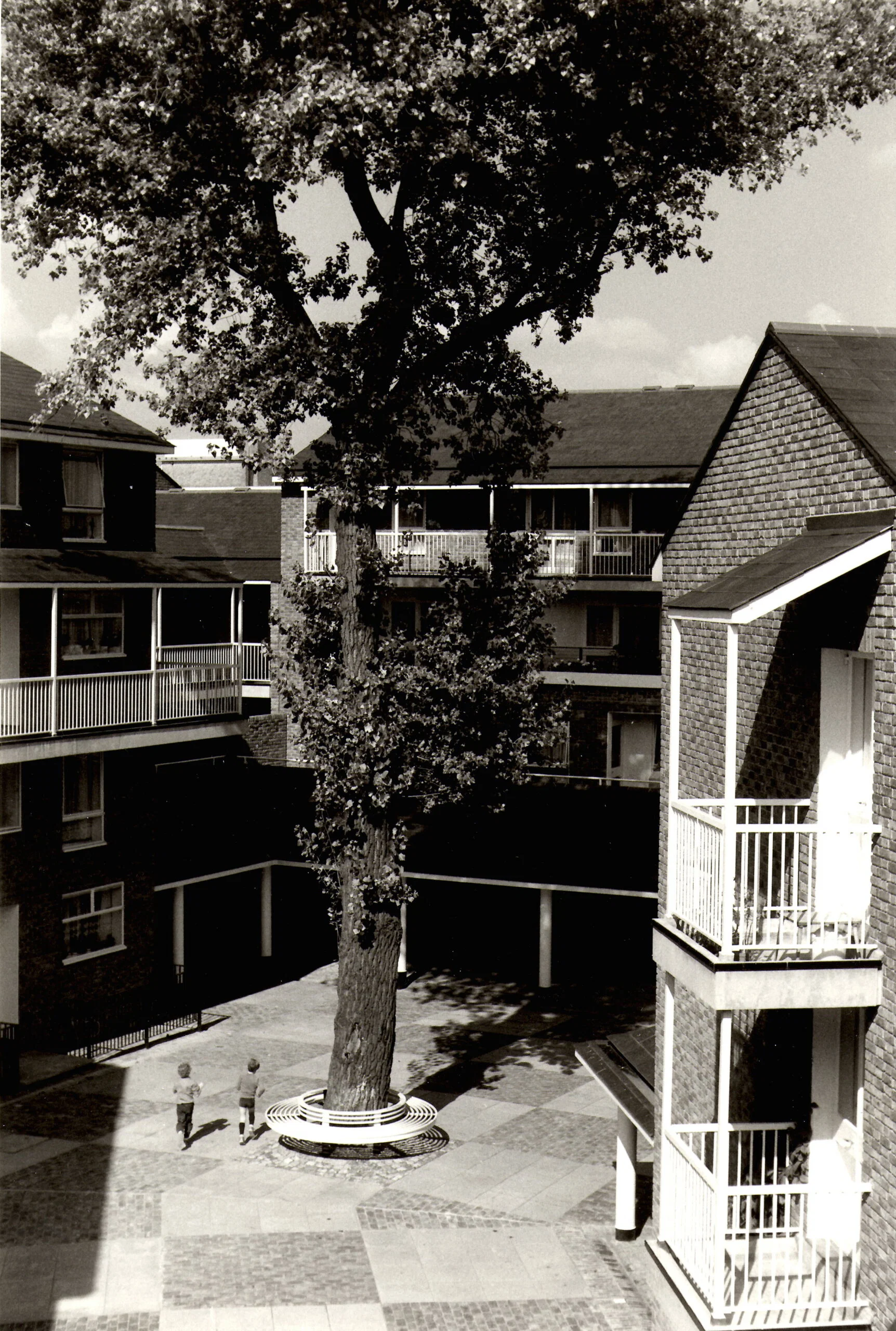
The site was a former car park with an eight-meter change in level. Instead of flattening that complexity into a conventional street plan, the architects rotated and positioned five related blocks around shared outdoor spaces. A new public route connects Lion Green Road to the parkland beyond.
Every home is dual-aspect, improving natural light, views, and cross-ventilation. Balconies are arranged to reduce direct overlooking even though the buildings sit relatively close together. Play areas, a sensory trail, allotments, and retained biodiversity turn the scheme into more than a collection of apartments.
The project began with a brief for 80 homes. Mary Duggan’s team demonstrated that 157 could be accommodated while retaining mature trees and bluebell woodland. That reversal is the core design lesson: density did not arrive by treating landscape, access, and quality as expendable.
Why artists and cultural institutions should pay attention
Architecture establishes the conditions under which culture is encountered. The most useful idea in Lion Green Road is not a particular brick or silhouette, but a method: use constraints to produce shared space, legibility, and difference within a consistent system. That applies directly to artist housing, studio buildings, residency campuses, and cultural venues working with limited land or budgets.
The five buildings share a specification but vary in height, orientation, and relationship to the terrain. For arts organizations, that suggests a way to balance efficiency with identity. Repetition can reduce cost without making every room, unit, or visitor experience feel identical.
The project also demonstrates the cultural value of routes that remain open. A public path through the development connects the street to green space rather than creating a private perimeter. Museums, galleries, and studio complexes often speak about access; Lion Green Road makes access spatial, visible, and continuous.
A prize with a public argument
The Stirling Prize gives the project symbolic reach beyond its 157 homes. In an era when housing debates often reduce architecture to unit counts, the jury has rewarded a scheme that treats environmental performance, community use, privacy, and beauty as part of the same brief.
For artists and cultural workers facing unstable rents and shrinking workspace, one prize cannot solve affordability. But it can reset expectations. Lion Green Road argues that publicly led development can be ambitious, landscape-aware, and dignified—and that careful design is not an optional layer added after housing targets are met.