
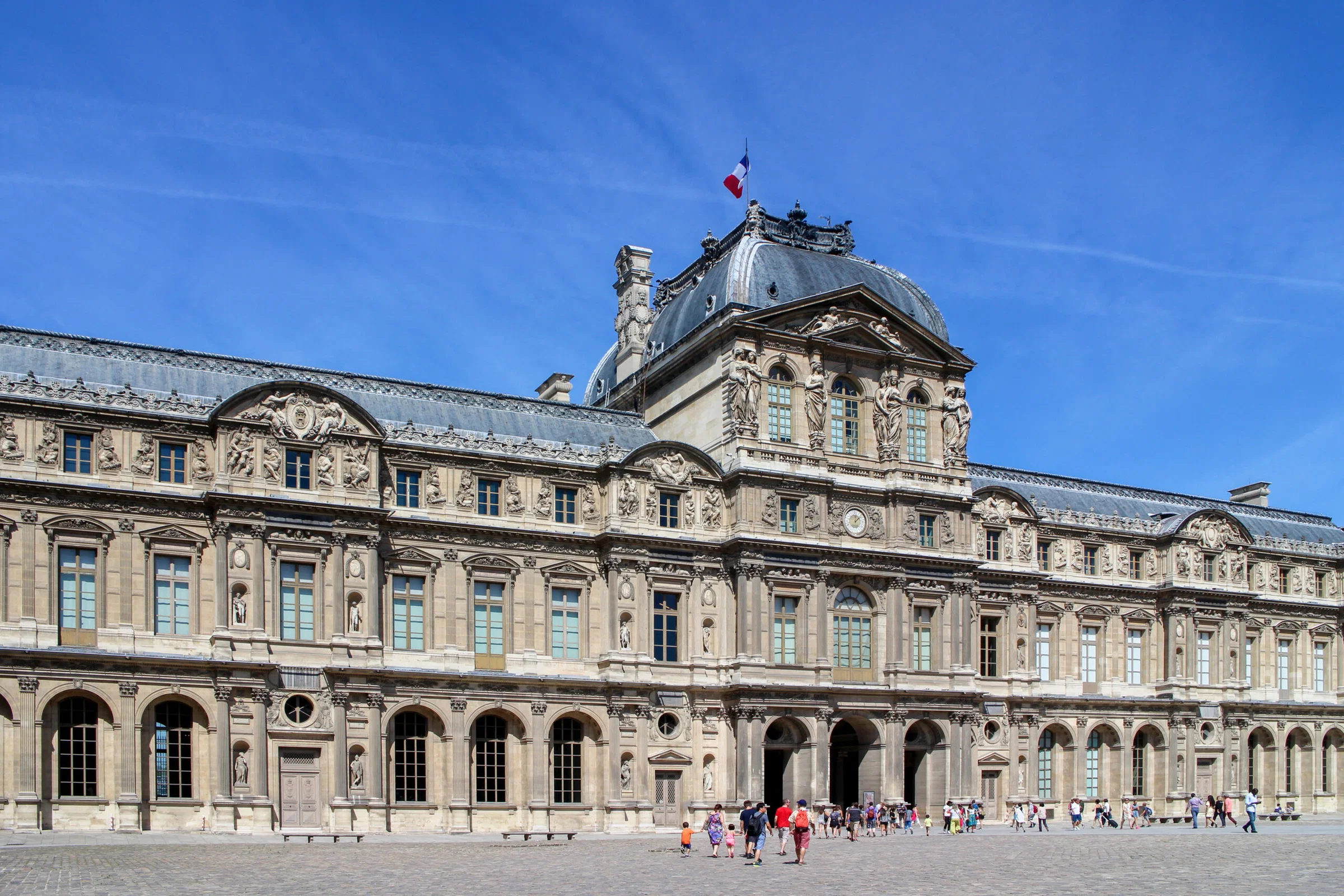

The Louvre, Musée d’Orsay, Musée Picasso and Grand Palais are closed on Saturday, October 24, as Paris prepares for renewed demonstrations. The closures place cultural access inside a wider public-safety decision rather than treating museums as spaces apart from civic life.
The Louvre posted an exceptional closure notice and said reservations for the day would be reimbursed automatically. France’s Culture Ministry told the Associated Press that the institutions were closing to protect visitors, staff and artworks. Authorities planned to deploy roughly 70,000 police officers and gendarmes across France after violent unrest the previous weekend.
A precaution, not a report of damage
No damage to the museums was reported in the closure announcements. The distinction matters. These are preventive decisions made amid concern that planned protests could again be accompanied by violence and vandalism.
For visitors, the immediate effect is straightforward: tickets, travel plans and a major Saturday of cultural programming have been disrupted. For museums, the calculation is more complex. They are responsible for public access, but also for people, collections and buildings that cannot be secured through ordinary visitor operations during an unpredictable citywide event.
The Musée d’Orsay’s closure also interrupts a particularly active period in its program, while the Louvre’s notice reaches one of the world’s largest daily museum audiences. The scale turns an operational update into an art-world development with international consequences.
Museums inside the public square
Major museums often function symbolically as national institutions even when they do not take positions on the political events around them. Their visibility, central locations and public ownership make them part of the geography of protest and security planning.
Closing protects the collection, but it also removes a civic resource for the day. A museum is not only a building full of objects; it is a place where people gather, learn and encounter histories larger than the immediate news cycle. When that access is suspended, the loss is temporary but real.
The decision also illustrates how rapidly institutions must communicate under pressure. Visitors need a clear date, the exact scope of the closure, refund information and guidance about reopening. Ambiguous notices can compound disruption, especially for international travelers who may have arranged an entire day around timed admission.
What audiences should verify
Anyone planning a museum visit in Paris should rely on the institution’s own website or ticketing account rather than an older itinerary or third-party listing. A closure for October 24 does not automatically establish the status of October 25 or later dates.
Travelers should also preserve booking records and avoid assuming that every venue follows the same policy. The Louvre confirmed automatic reimbursement for Saturday reservations; other institutions may use different procedures.
The closures will be judged partly by what happens next: whether demonstrations remain safe, whether museums reopen promptly and whether visitors receive accurate information. For now, the responsible reading is precise. Several of Paris’s most important cultural institutions have paused public access for one day because authorities consider the security risk exceptional. The art remains protected; the public encounter with it must wait.