

Italy has opened a new chapter in the long work of identifying soldiers whose names were lost to twentieth-century war. On October 28, the Ministry of Defence and the Ministry of Culture signed a protocol that brings military remembrance into direct collaboration with archaeology, anthropology, archival research, forensic science and genetics.
The agreement concerns human remains found on former battlefronts and in other wartime contexts. Its purpose is not simply to recover bodies. It is to preserve the evidence around each discovery, reconstruct identity where possible, and return the dead to a named place in history and memory.
When a battlefield becomes an archive
A battlefield is never only a military site. It is also a cultural landscape: an accumulation of objects, terrain, documents and human remains. Disturbing one element without recording the others can erase the relationships that make identification possible.
Under the protocol, archaeologists can document the position and context of a recovery; anthropologists can study the remains; archives can connect material evidence with unit records and missing-person files; and genetic analysis can help test possible family connections. The ministries describe a shared method designed to protect both scientific integrity and human dignity.
That integrated approach matters because the unknown dead are not anonymous by nature. They became anonymous through destruction, incomplete records, displacement and time. Each careful recovery is therefore an act of historical reconstruction as well as a humanitarian responsibility.
Culture and remembrance meet
The involvement of Italy’s cultural authorities recognizes that war graves and their surrounding evidence belong to the country’s material history. The Defence Ministry brings responsibility for military burials and commemoration; the Culture Ministry brings expertise in archaeological method, conservation and heritage protection. Together, they can prevent a recovery from being reduced to excavation alone.
For museums, artists and cultural workers, the initiative is a reminder that public memory is made through systems of care. Memorials provide visible form, but the less visible work of cataloguing, testing, comparing records and speaking with families gives memory its names.
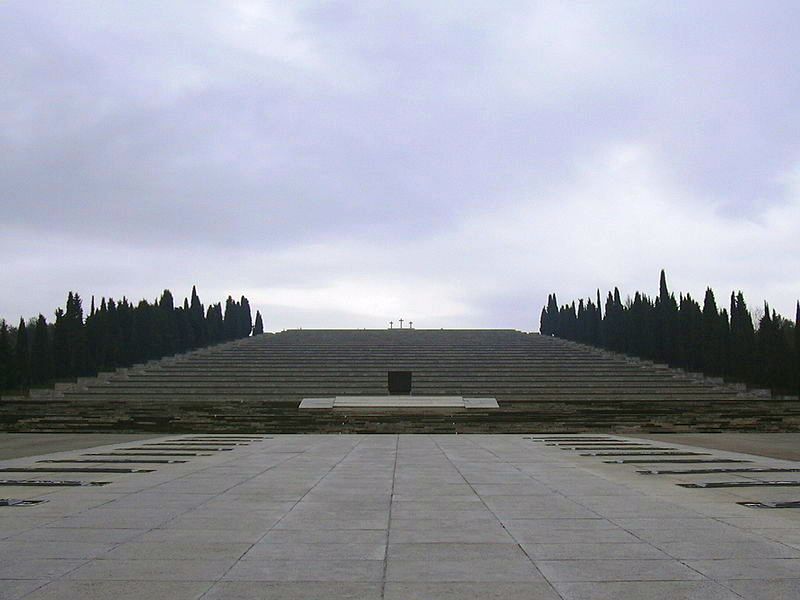
Italy’s great military cemeteries already communicate the scale of wartime loss. The new protocol focuses on the individual within that scale. A button, an identity disc, a burial position or a genetic match may become the bridge between an unknown soldier and a family history interrupted generations ago.
The ethics of making history visible
Scientific tools can increase the chance of identification, but they also require restraint. Human remains are not artifacts in an ordinary sense, and genetic information is not simply another catalog entry. The protocol’s value will depend on transparent procedures, respect for descendants and careful communication about certainty and uncertainty.
At its best, the initiative shows how heritage practice can serve the living without instrumentalizing the dead. It treats evidence as something to be interpreted patiently and the recovered person as more than evidence.
The result may be a restored name, a documented burial or, sometimes, only a more honest account of what cannot yet be known. All three outcomes matter. In each case, the work resists the final anonymity of war and turns recovery into a form of cultural repair.