
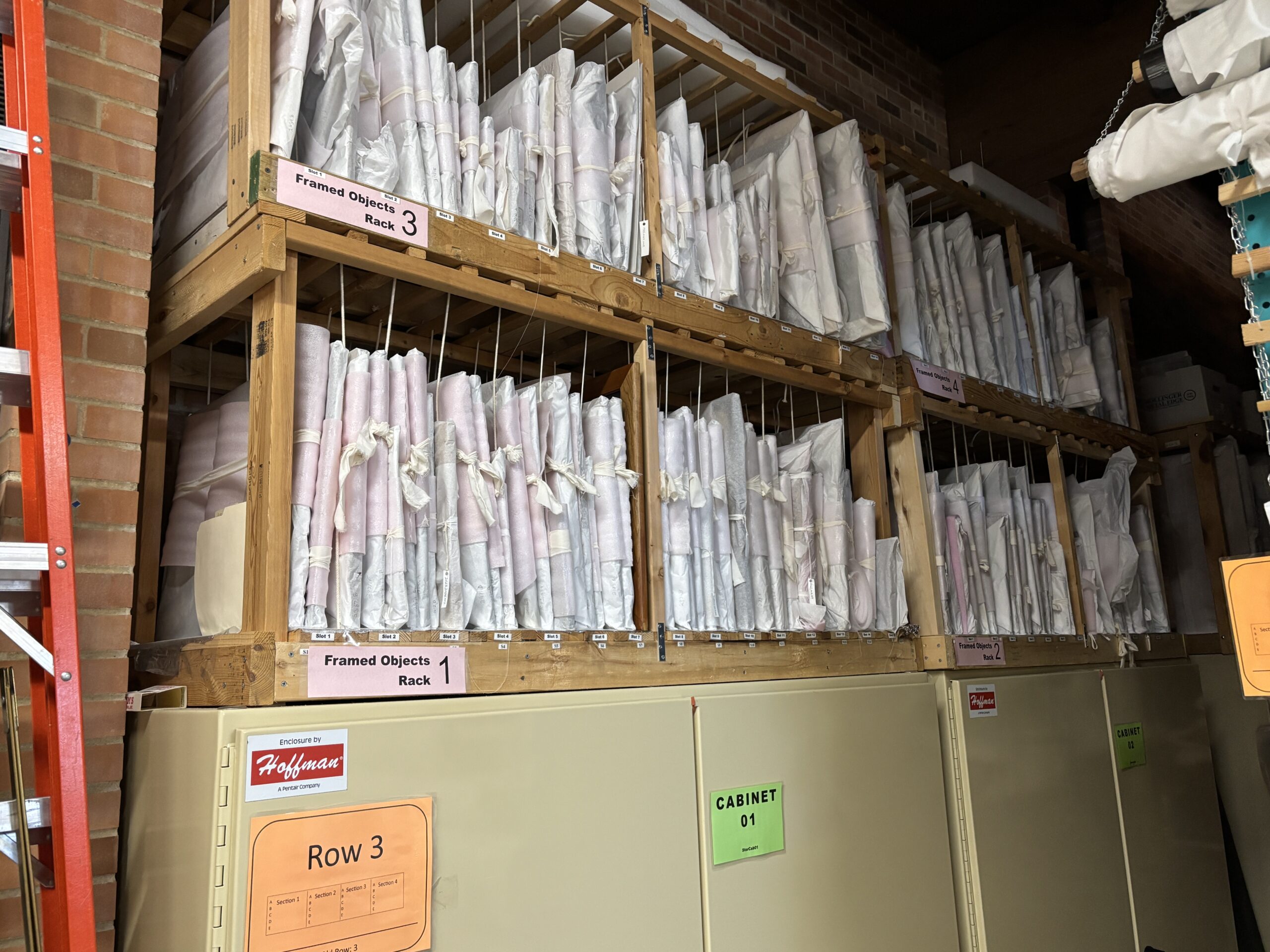

When heating systems come on, paintings can experience a climate shift before the people in the room notice anything unusual. Warm air lowers relative humidity, exterior walls develop cold zones, and radiators create local pockets of heat and moving dust. The result can be contraction, cracking, slack canvas, distorted panels or accelerated aging.
Artists do not need museum-grade mechanical systems to reduce these risks. They do need to understand the room as part of the artwork’s environment.
Stability matters more than chasing one perfect number
Conservation guidance varies according to material, condition and local climate, but the central principle is consistent: avoid extremes and rapid fluctuations. The Canadian Conservation Institute considers 16°C to 25°C an acceptable temperature range for most paintings and warns that relative humidity below 35 percent can increase cracking and delamination, while sustained high humidity raises the risk of distortion and mould.
The U.S. National Park Service gives a narrower working range for paintings: 18°C to 24°C and 40 to 55 percent relative humidity. These numbers are useful guides, not a reason to force a room through abrupt corrections. A stable 45 percent is generally safer than repeated swings between 35 and 60 percent.
Map the risky places in the studio
Begin with location. Avoid storing or hanging work directly above radiators, heating vents or working fireplaces. Do not press paintings against poorly insulated exterior walls. Keep work out of attics, garages and damp basements, where temperature, humidity and water risk are difficult to control.
Place an inexpensive digital temperature-and-humidity monitor near the artwork—not beside the thermostat across the room. Check it at different times for at least a week after the heating season begins. A second monitor can reveal whether a storage wall behaves differently from the center of the studio.
Record the readings. The pattern matters more than a single number. Note sudden drops after the heat turns on, increases during wet weather, and differences between daytime and night. If conditions swing sharply, move the work before buying equipment.
Protect paintings from the room
Store framed paintings vertically on padded racks or separated with rigid boards so surfaces and frames do not touch. Keep everything raised from the floor to reduce flood and cleaning risks. Unframed works on rigid panels should be supported so they cannot bow or slide; unstretched canvas should be stored flat or rolled only with appropriate materials and professional guidance.
For paintings on canvas, the Canadian Conservation Institute recommends airtight, impermeable backing boards to reduce the effect of daily humidity changes and physical impacts. Glazed, backed frames or other enclosures can provide additional protection in uncontrolled spaces, but sealed systems should be designed carefully so they do not trap moisture.
Do not place a household humidifier beside a painting. It can create a high-humidity pocket or leak. If humidification is necessary, use a properly maintained room system, monitor the result and clean the equipment to prevent microbial growth. Dehumidifiers require the same discipline: drainage, maintenance and measured use.
Know when to stop and call a conservator
New flaking, lifting paint, a changing crack pattern, fresh mould, condensation inside glazing, or a wooden panel beginning to warp are not problems to solve with glue or household cleaners. Photograph the condition, isolate mould-affected work from the rest of the collection, avoid unnecessary handling and consult a qualified conservator.
Winter care is not about turning a studio into a laboratory. It is about noticing that heat, moisture, walls and airflow are active materials in the life of a painting. A monitor, a weekly record and a safer location can prevent damage that no later restoration can fully erase.