
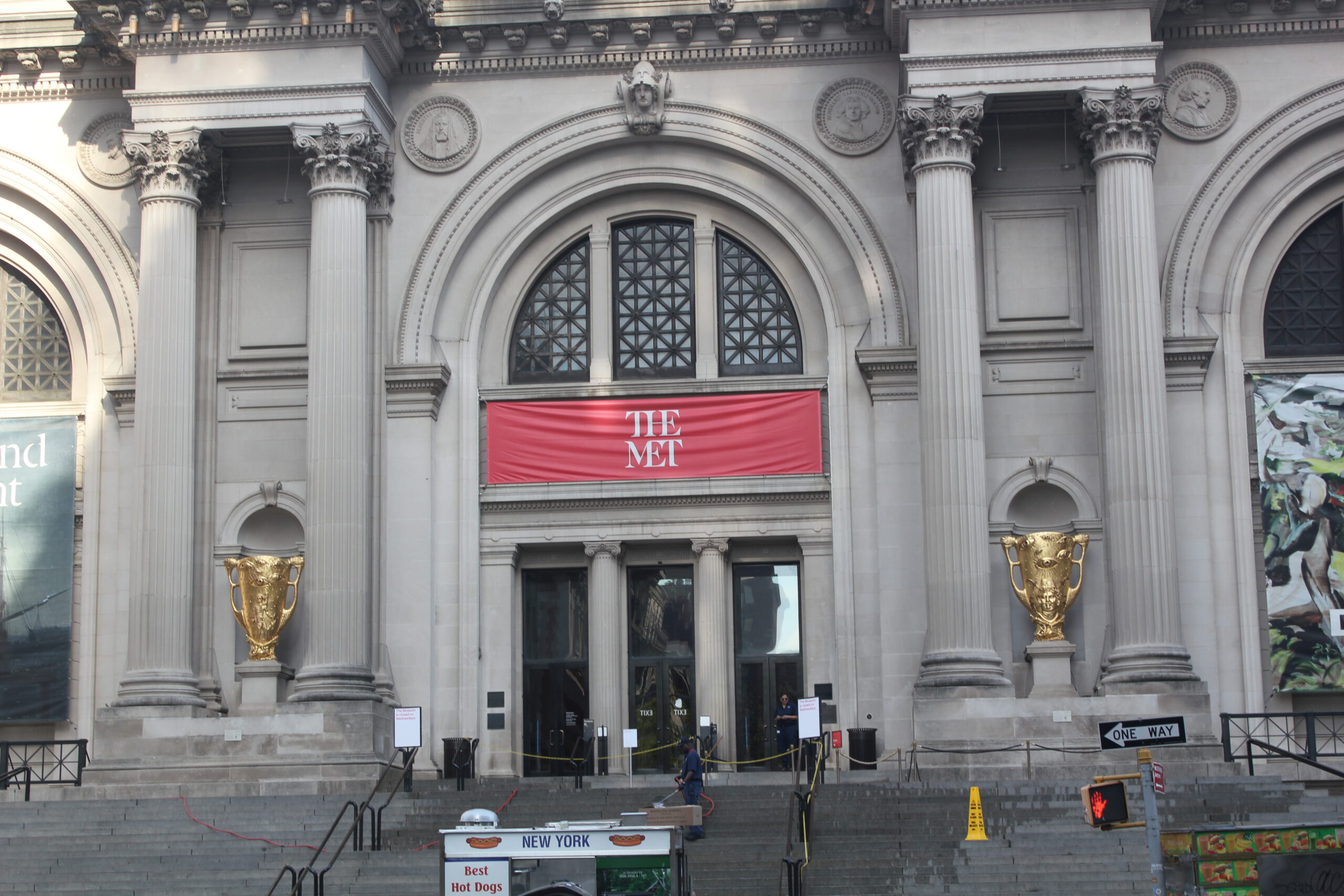

The Metropolitan Museum of Art has announced a Costume Institute exhibition built not around spectacle, royalty or fantasy, but around the objects people touch and wear every day. extraORDINARY: Fashion and the Poetics of the Everyday will open at The Met Fifth Avenue on May 9, 2027, and continue through January 9, 2028.
The announcement places jeans, T-shirts, puffer coats, paper, plastic and metal at the center of a museum inquiry. The premise is deceptively simple: designers transform familiar things through craft, construction, material experiment and conceptual wit, yet the earlier lives of those things continue to shape how the new work is understood.
Ordinary materials carry extraordinary memory
A white shirt is never only a silhouette. It can carry traces of labor, ceremony, uniform, care and repetition. Denim can speak through fading and repair. A puffer coat can be read as insulation, urban identity, industrial fabrication or sculptural volume. By beginning with recognition, the exhibition can ask visitors to notice how much cultural information is already embedded in the supposedly plain.
The Met says the exhibition will combine works from the Costume Institute’s collection with key loans and new acquisitions. It will also examine how wearing, styling and caring for garments change their meaning over time. That emphasis matters. Fashion history is often told through designers and runway moments, but clothes acquire another history on the body—through use, maintenance, adaptation and attachment.
The exhibition’s opening gallery will feature selected garments from Jun Takahashi’s autumn/winter 2024–25 Undercover collection, Watching a Working Woman. The collection was inspired in part by Wim Wenders’s film Perfect Days, and its runway presentation included a poem by Wenders about the daily life of a working mother. Familiar garments are layered and joined until ordinary dressing becomes a material expression of overlapping identities and responsibilities.
A museum changes the scale of attention
Placing common materials inside The Met does not automatically make them profound. The curatorial challenge will be to keep the exhibition from romanticizing consumption or treating every familiar object as a revelation. Its strongest possibility lies elsewhere: in teaching a slower kind of looking.
A museum display can reveal seams, surfaces, joins and substitutions that are easily missed in a shop, a street or a screen. It can place a mass-produced form beside a designer’s transformation of it and make the act of attention itself visible. For artists, that is a useful reminder that originality does not always begin with an unprecedented material. It can begin with a changed relationship to something already known.
The theme also arrives at a moment when material choices are under increasing scrutiny. Paper, plastic and metal are not neutral design vocabulary; they have supply chains, environmental costs and social associations. The Met’s announcement does not present the exhibition primarily as an environmental project, but the subject will inevitably invite questions about what objects are made from, how long they last and what kinds of care they receive.
The public announcement is only the first frame
The Costume Institute Benefit, widely known as the Met Gala, is scheduled for May 3, 2027. The museum notes that the event is the Costume Institute’s primary source of annual funding for exhibitions, publications, acquisitions and operations. Instagram is supporting the exhibition and benefit, with major funding from Moncler and additional support from Condé Nast.
Those partnerships will bring attention, but the exhibition’s lasting value will depend on the works and arguments in the galleries. Which objects will be allowed to retain their social histories? Whose everyday life will be represented? How will the display distinguish care from nostalgia and transformation from extraction? The answers will determine whether “the everyday” becomes a broad slogan or a precise field of inquiry.
For now, the announcement establishes a compelling direction. The Costume Institute is asking visitors to look again at forms they may believe they already understand. That is one of art’s most durable acts: not inventing a different world, but returning the existing one to attention.