
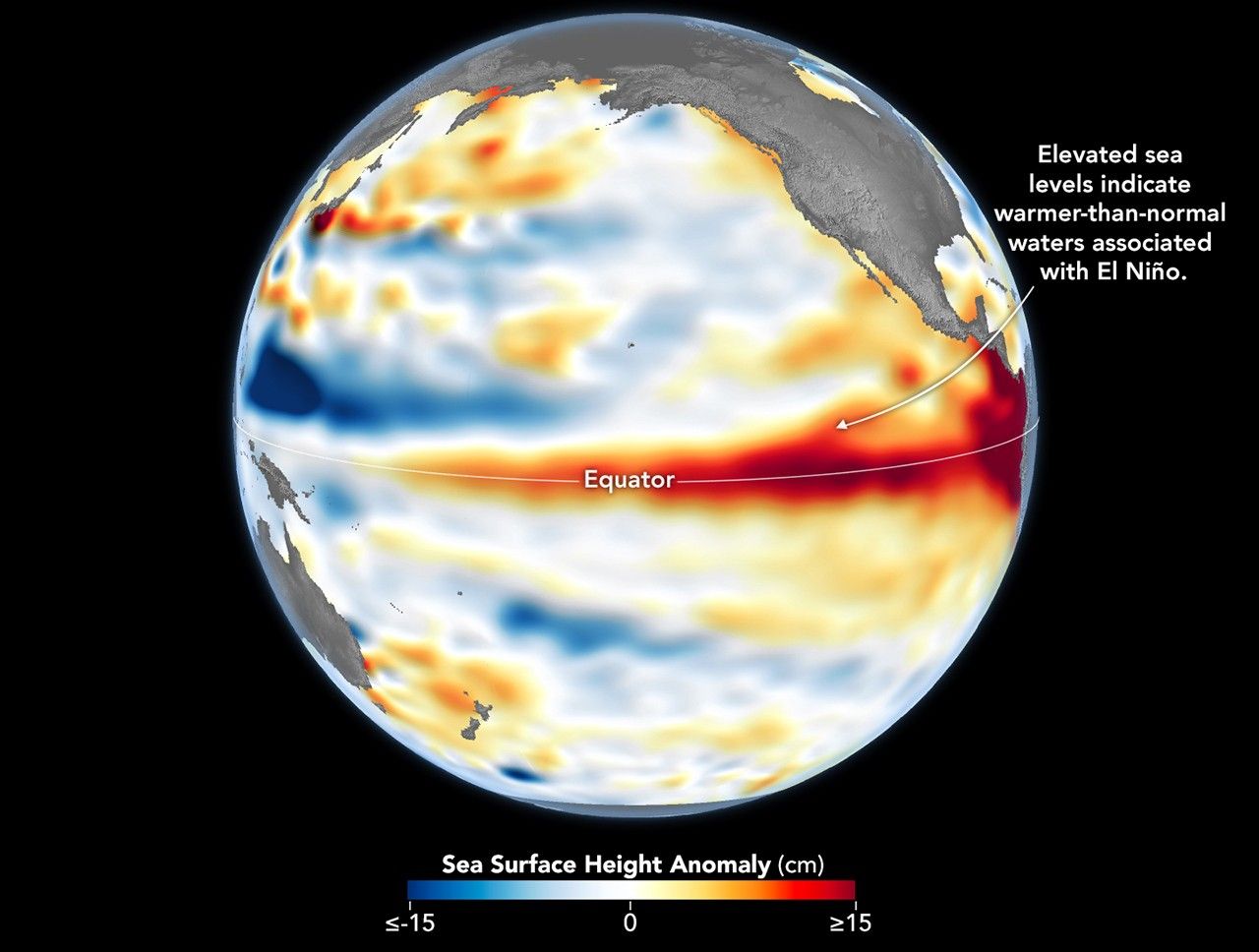

El Niño is no longer only a forecast for weather services and agriculture ministries. It is becoming a cultural emergency plan. UNESCO’s Culture × El Niño initiative, updated on November 5, places museums, archives, archaeological sites, cultural landscapes, living heritage and creative livelihoods inside the preparedness work for the exceptionally strong 2026–2027 event.
The shift is significant. Cultural losses are often counted after a flood, wildfire, landslide or storm. UNESCO’s campaign is built around anticipatory action: using forecasts, risk information and early-warning systems before the hazard reaches a collection, a site or a community.
Climate patterns become cultural conditions
El Niño begins with unusually warm surface waters in the central and eastern equatorial Pacific, but its effects can alter rainfall, temperature and storm patterns far beyond the ocean where it forms. UNESCO notes that droughts, floods, storms, landslides and wildfires associated with the event can damage buildings, museums, archives, libraries and archaeological sites. They can also interrupt cultural practice and livelihoods tied to heritage and tourism.
The World Meteorological Organization said on November 5 that the event is expected to peak in November or December and persist into early 2027. Its regional effects are not uniform. In the South-West Indian Ocean, WMO expects below-average cyclone activity overall, while warning that a catastrophic event remains possible and that rainfall outlooks differ sharply across countries and seasons.
That complexity is precisely why a single global emergency message is not enough. A museum facing flood risk needs a different plan from a cultural landscape exposed to drought or a community whose living traditions depend on seasonal access to land and water.
Preparedness is a cultural practice
UNESCO’s campaign proposes regional webinars, rapid risk assessments, contingency planning, updated emergency contacts, collection-protection guidance and support for documentation, evacuation, temporary storage and stabilization. The organization has allocated an initial $150,000 from its Heritage Emergency Fund and says further resources will be required as impacts develop across several regions.
The most important idea is not the size of the first allocation. It is the recognition that culture belongs inside disaster-risk systems before an emergency. A heritage office should know how to reach civil protection. A museum should know which objects move first and where they can go. An archive should know what can be elevated, isolated or duplicated. A cultural practitioner should not have to invent those relationships while a hazard is already unfolding.
For artists, preparedness can also protect the less visible infrastructure of a practice: unfinished work, tools, digital masters, community partnerships and spaces that may not be classified as heritage sites. Artists often work in buildings with limited environmental control and without institutional recovery budgets. When floods or fires arrive, the loss can include years of process as well as finished objects.
Local knowledge belongs in the forecast
UNESCO emphasizes that Indigenous Peoples are often among the most exposed and that their knowledge of environmental signals is a resource for anticipation and response. This should not be treated as a decorative addition to technical forecasting. It points toward preparedness that is built with communities rather than delivered to them.
Cultural heritage is not only a set of structures to be protected from weather. It includes practices, relationships, routes, seasonal knowledge and forms of collective memory that can help communities understand change. A response that preserves a building while displacing the people who give it meaning is incomplete.
From emergency response to planned care
The Culture × El Niño initiative is being coordinated with the United Nations Office for Disaster Risk Reduction and partners including ICCROM and ICOM. Its promise lies in connecting scientific outlooks with the specific decisions cultural workers must make.
The campaign should also be measured by what happens before the photographs of damage appear. Are contact lists tested? Are storage areas checked against local flood maps? Are evacuation priorities agreed with communities? Are artists and small cultural organizations included in local planning? Are funds released early enough to buy materials, move objects or document vulnerable places?
El Niño will not affect every region in the same way, and preparedness cannot eliminate every loss. It can, however, replace surprise with choices. When culture is included in advance, care becomes part of climate readiness rather than an appeal made after the fact.