
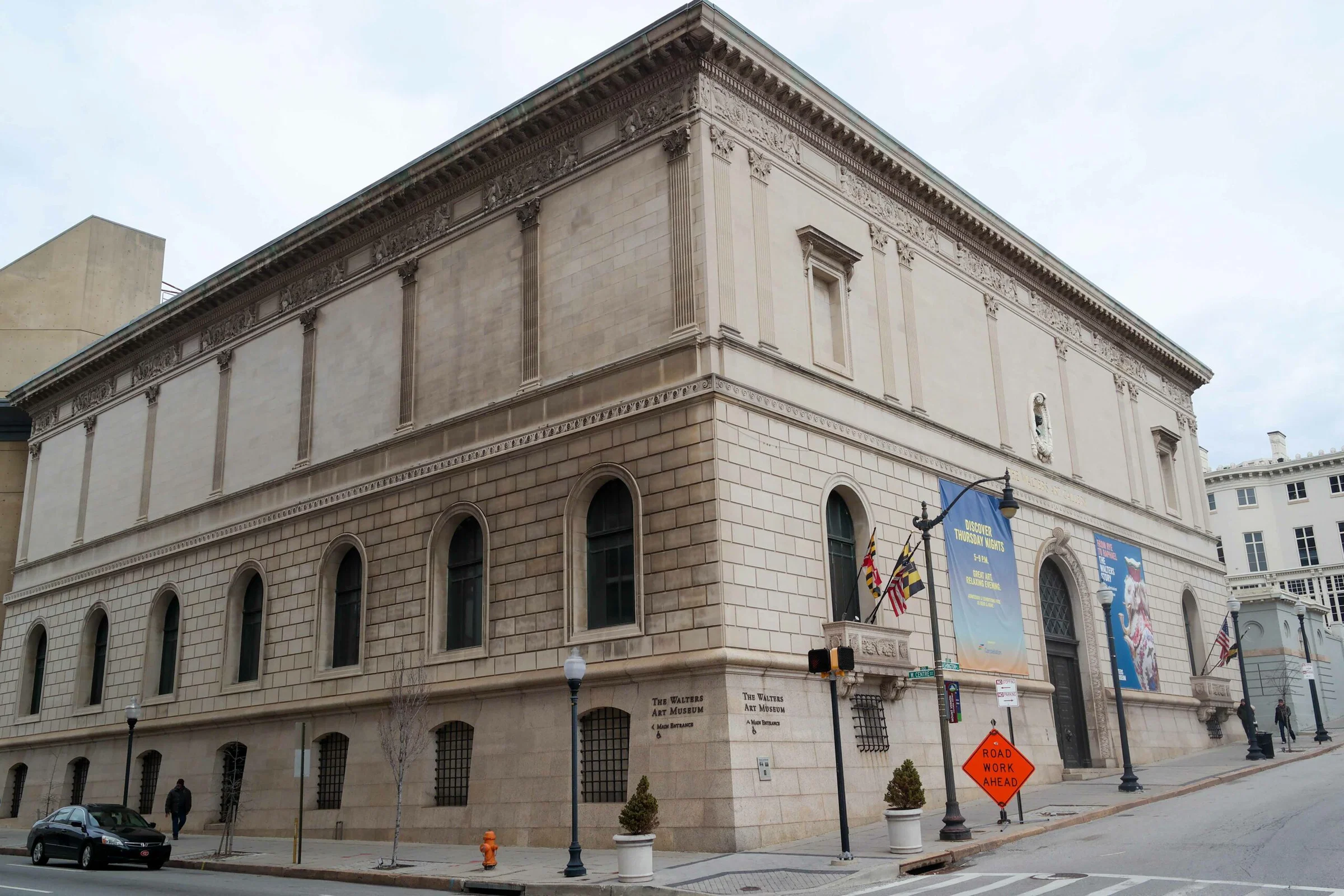

Beauty can preserve a memory of harm even when the original act has become invisible. At the Walters Art Museum in Baltimore, Luxury & Loss: Feather, Shell, Tusk, Horn brings ninety-four objects together to examine how prized animal materials became artistic media—and how centuries of demand helped push species toward endangerment.
Opening November 7, the exhibition is organized around kingfisher feather, tortoiseshell, elephant ivory and rhinoceros horn. The Walters’ collection spans seven millennia and cultures across the world, giving the museum unusual range for showing how luxury travels between regions, techniques and systems of power.
Material history is environmental history
An ivory carving can be discussed through virtuosity, iconography and patronage. The exhibition asks viewers to hold another fact at the same time: the material came from an animal, and its desirability belonged to a trade large enough to alter wild populations.
The same double vision applies to the blue brilliance of kingfisher-feather ornaments, the translucent pattern of tortoiseshell and the carved surface of rhinoceros horn. Each material acquired value through rarity and transformation. That value encouraged extraction, while the finished object often concealed the ecological chain behind it.
Admiration does not have to erase consequence
Museums face a difficult task when displaying objects made from species now protected by international trade restrictions. If interpretation focuses only on damage, skilled makers and complex histories disappear. If it focuses only on beauty, the environmental cost becomes decorative background.
The Walters places those readings together. Historic objects establish how these materials circulated and why people desired them. Contemporary works using faux, ethically sourced or repurposed historic materials ask whether visual attraction can survive without repeating the same extraction.
Contemporary artists answer the collection
Jenny Kendler’s Music for Elephants uses an antique piano with ivory keys to play a score shaped by an algorithmic prediction of elephant extinction. Kate MccGwire transforms discarded rooster feathers into a caged, serpentine form. Amy Boone-McCreesh uses faux tortoiseshell to examine the continuing construction of scarcity and luxury. Tuan Andrew Nguyen imagines a conversation between the spirits of extinct animals.
These artists do not attempt to make the historical objects innocent. They show how an inherited material problem can become a contemporary creative method: expose the supply chain, change the material, redirect desire or give the absent animal a voice.
What this means for artists
Environmental responsibility begins before an artwork is finished. Artists using feathers, shell, bone, coral, hide, antique ivory or other animal-derived material need to know the species, source, age, documentation and law governing possession, sale and transport. An object that is legal to own may still be restricted from crossing a border or entering commerce.
Substitution is not merely technical. Faux materials, reclaimed components and historical stock can change the meaning of a work. Artists should document why a material was chosen and make that decision visible when it is conceptually relevant. A clear materials record also protects future conservators, collectors and institutions from having to guess.
Luxury & Loss does not ask viewers to stop seeing beauty. It asks them to see more completely: the hand that carved, the person who desired, the network that traded and the living creature from which the material came. That expanded field of vision is where environmental art history begins.