
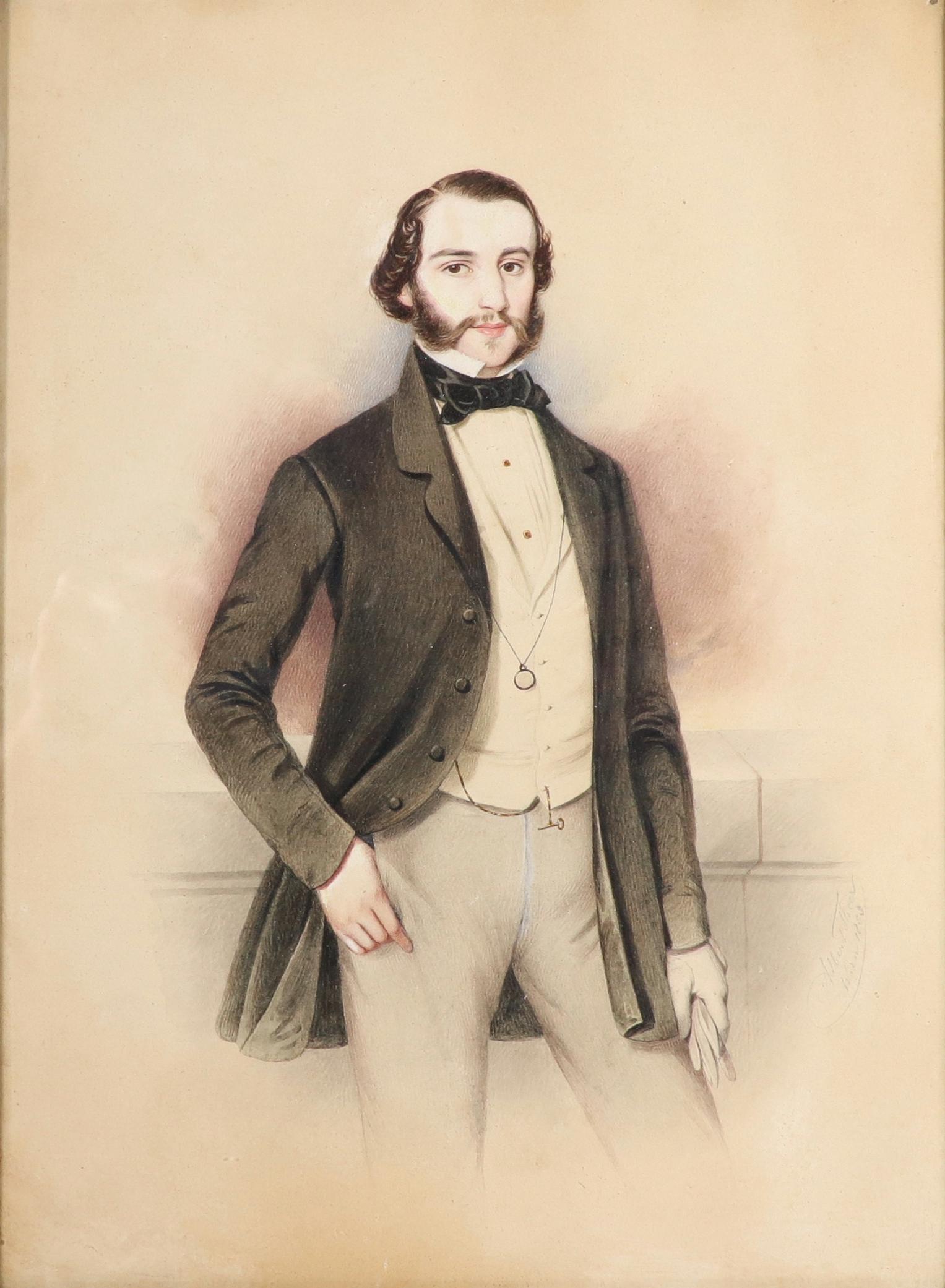

The watercolor is small enough to be held in one hand. Painted by Albert Theer in 1847, it portrays a woman in a blue dress with jewelry and flowers in her hair. Its material scale is modest; the history it carried across 86 years is not.
The work belonged to Eduard Epstein, a Viennese textile merchant and collector persecuted after Nazi Germany annexed Austria. In 1940, as Epstein tried to take what remained of his collection abroad, most works were approved for export. The Theer miniature was not. Austria’s Museum of Military History acquired it for a nominal amount.
A family object becomes state property
Official Austrian accounts say Epstein’s business was liquidated, his home searched by the Gestapo, and he was imprisoned for nearly a year after trying to move assets out of the country. The watercolor’s transfer cannot be separated from that machinery of coercion.
Decades later, Austria’s Commission for Provenance Research investigated the work, and the Art Restitution Advisory Board recommended its return. In August 2026, Austrian representatives delivered it in Minnesota to Jacqueline “Jackie” Sondell, Epstein’s great-niece and heir.
Sondell’s family history gives the object its emotional weight. Independent reporting from the Minnesota Star Tribune described the miniature as having little market or historical value while being priceless to an heir whose grandparents died in the Holocaust. Restitution here is not calibrated to auction price. It is an acknowledgment that a family was deprived of the ability to decide what to keep.
The return continues in public
Sondell has lent the watercolor to the Minneapolis Institute of Art, where it is displayed in the Judaica gallery from November 3, 2026, through May 3, 2027. The museum’s encyclopedic collection spans more than 5,000 years and six continents, giving the intimate object a setting capable of connecting one family’s loss to a global history of collecting and displacement.
The display is also a reminder that restitution does not require an object to vanish from public view. Ownership and access are separate decisions. Once the work returned to the heir, she chose to share it—and the institution could present it with the story of coercion intact.
For museums and collectors, the case underscores the importance of provenance research even when an object is small, unattributed in family memory or economically minor. For artists and families, it shows why inventories, letters, photographs and export records can matter generations later.
A miniature can survive as a bureaucratic entry for decades. Restitution restores something more than possession: it restores agency. After 86 years in which institutions decided the work’s fate, the final decision belonged again to the family from whom it was taken.