

John Akomfrah’s Arcadia begins with a historical movement that never stopped reshaping the planet. Across five screens, plants, animals, pathogens, people and commodities cross between the Americas and Afro-Eurasia, while deserts, ice fields, coral reefs, storms and shipwrecks place human history inside a larger ecological field.
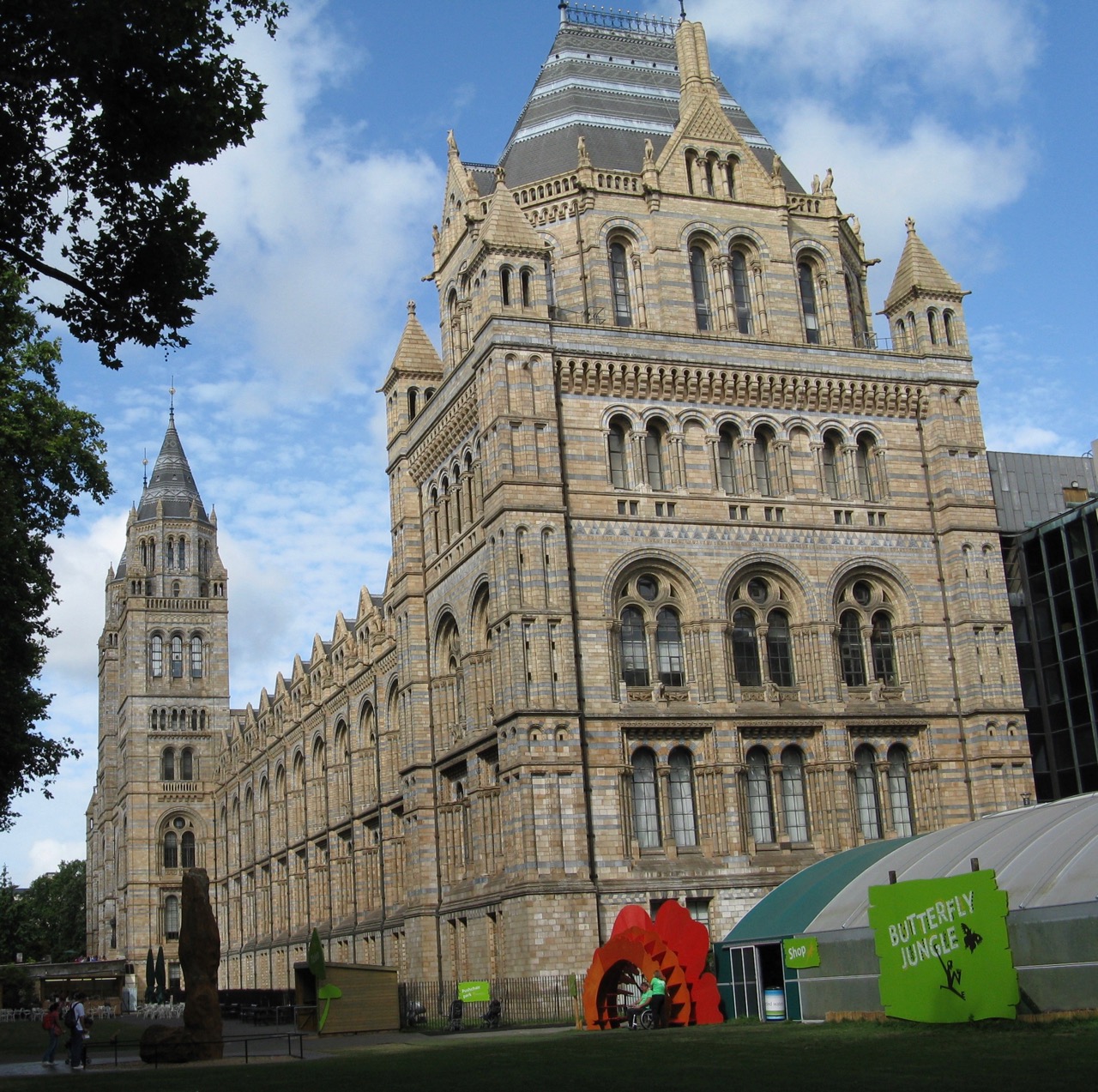
The film installation opened at London’s Natural History Museum on November 6, 2026, and runs through May 2027. It is the work’s London debut and the fourth presentation in the museum’s free contemporary-art program. The host is not incidental: the Natural History Museum describes itself as a world-leading research center, with more than 80 million specimens spanning 4.5 billion years.
The Columbian Exchange as environmental history
Arcadia takes the Columbian Exchange from the 1400s onward as its structure. The term can sound neutral, but Akomfrah’s images insist on consequences: colonial power, coerced movement, disease and commerce changed ecosystems along with societies.
Five channels allow those transformations to appear at once rather than as a clean sequence. A landscape may feel sublime until a cargo vessel or ruined structure interrupts it. The visual field holds beauty and extraction together, resisting the idea that nature exists outside political history.
Akomfrah has said that humans are never the only actors on the historical stage. In this work, a pathogen, a crop or an ocean current can redirect lives as decisively as an empire. That perspective is especially resonant in a natural-history museum, where specimens preserve evidence of movement, classification and scientific collecting.
What artists can learn from the museum setting
The placement of Arcadia beside a major scientific collection changes how the film is read. Its imagery does not simply illustrate environmental data. Instead, art creates a space where scale, duration and contradiction can be felt before they are resolved into information.
For artists working with environmental subjects, that distinction matters. Ecological art is strongest when the environment is not a decorative theme but a force shaping form, research and context. Akomfrah’s multi-screen structure makes entanglement physical: viewers must choose where to look, accept that events exceed one frame, and assemble meaning from simultaneity.
The museum’s adjacent “Fixing Our Broken Planet” initiative brings contemporary science into the same visit. Yet Arcadia does not offer a checklist of solutions. Its task is different: to make visible the long histories that produced today’s ecological conditions and to complicate any story in which people act upon a passive natural world.
In Arcadia, migration is biological, cultural and cinematic. The planet appears not as background but as an archive of contact. By placing that archive across five restless screens, Akomfrah asks viewers to see environmental change as both an inherited history and a present-tense responsibility.