
Na Mira’s new commission at the Museum of Modern Art begins with an unsettling fact: many technologies that shape ordinary vision were also shaped by military needs. Infrared imaging, radio frequencies, spatial sound, and the camera’s disciplined point of view can reveal a world, but they can also train people to see it in particular ways.
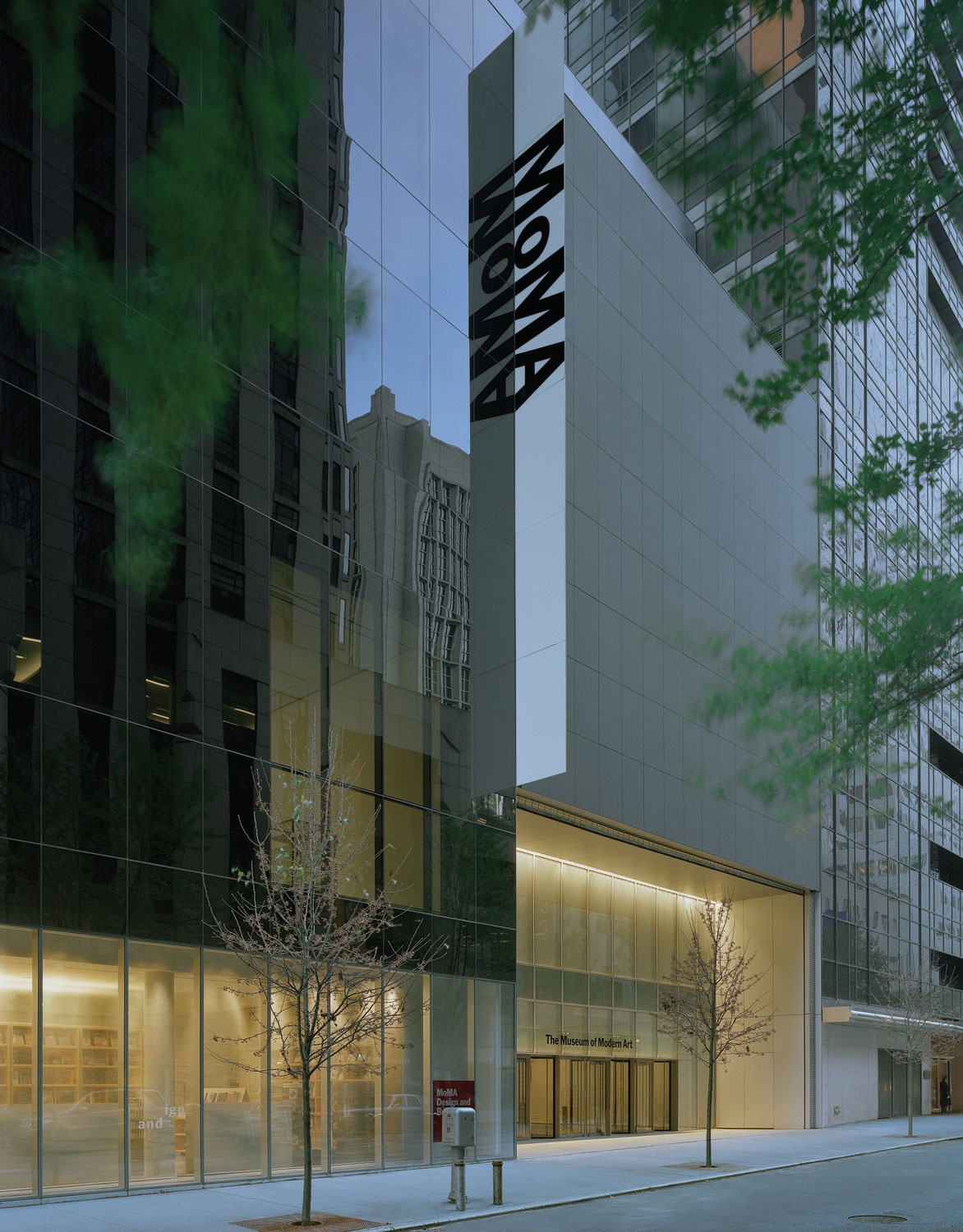
NO SMOKING, opening November 14 at MoMA, is Mira’s first solo museum exhibition in New York and her largest presentation to date. The museum commissioned the installation for its Kravis Studio, making the institution both host and producer of the work’s current form.
Images made at the edge of visibility
At the center of the installation is footage Mira recorded inside an empty cinema at Fort Bliss and at the adjacent White Sands Missile Range along the US–Mexico border. MoMA describes the sites together as the country’s largest military installation.
In the gallery, infrared video appears on monitors tuned so that the signal repeatedly breaks into color. Holographic projections shift with the viewer’s position instead of offering a single stable perspective. A sound environment built from field recordings, feedback, and music samples by Chuquimamani-Condori moves through the room.
Mira has described her practice as working with what is difficult to see. Here, that difficulty is not a puzzle to be solved by sharper resolution. The glitches, disappearances, and changing viewpoints question the assumption that a more complete image is automatically a more truthful one.
A living artist extends a media history
MoMA connects the commission to Nam June Paik’s idea of broadcast television as a two-way signal capable of communicating beyond ordinary perception. Mira carries that history into a present defined by sensor systems, remote vision, border infrastructure, and images that can be generated or altered before a viewer knows how they were made.
The work also draws on fûkeiron, a Japanese theory from the late 1960s that treated landscape as evidence of political conditions. Mira does not film a conventional battle scene or offer a documentary explanation of a military base. She lets architecture, signal behavior, heat, sound, and absence reveal the systems embedded in the landscape.
Why the commission matters now
Contemporary image culture often promises frictionless clarity. Phones enhance night scenes, platforms compress and sharpen video, and machine-learning systems fill missing information. Mira moves in the opposite direction. She makes instability visible and asks viewers to notice how their own position changes what appears.
For artists, the commission offers a useful distinction between using technology as spectacle and examining the history carried by a tool. A medium is never only its current interface. Its sensors, standards, and assumptions may come from surveillance, entertainment, medicine, science, or war. Those origins do not determine every future use, but they remain part of the material.
NO SMOKING does not ask the viewer to reject imaging technology. It asks who built the signal, what it excludes, and how power enters perception before an image is even interpreted. In a culture crowded with seamless pictures, Mira makes the break in the signal the place where attention begins.