
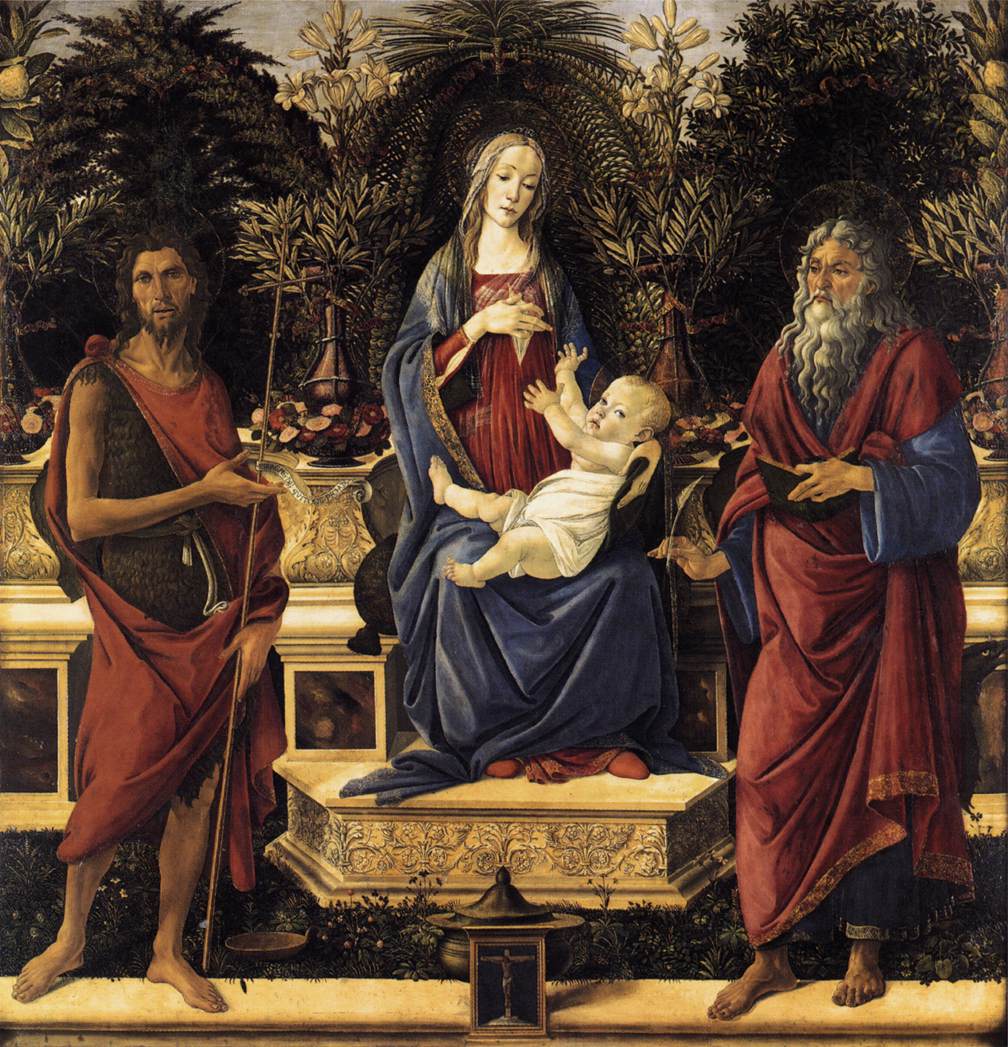

A rare early painting by Sandro Botticelli has returned to public view at the Ashmolean Museum in Oxford, more than ninety years after it was last shown there. The Virgin and Child Enthroned, painted around 1470, entered the galleries on November 11 as a three-year loan from the Klesch Collection.
The return is more than a reunion between a museum and an object. When the work appeared at the Ashmolean in 1934–35, it was presented as the product of Botticelli’s workshop. Subsequent scholarship and technical research have shifted that understanding: the museum now describes it as an autograph work by the Florentine master.
A painting seen again
The picture dates from a formative period in Botticelli’s career, before the mythological paintings that would make his name nearly synonymous with Renaissance Florence. The enthroned Virgin occupies a shallow architectural space while the Christ Child turns toward the viewer, balancing devotional gravity with the alert physical presence that characterizes the artist’s early work.
Its reappearance follows an export-deferral process in the United Kingdom and its acquisition by the Klesch Collection. The long-term loan now places the painting in a public collection with significant holdings of Italian Renaissance art, allowing it to be read in company rather than in isolation.
Conservation changes what the eye can know
Before the display, the painting underwent conservation during the summer of 2026. According to the Ashmolean, discolored varnish and later retouching were removed. The treatment recovered cooler tonal relationships and details that had been obscured, changing not only the surface appearance but the evidence available to scholars and visitors.
A newly carved arched frame also restores a visual structure closer to the type of setting in which a small devotional panel might have been encountered. Frames can be treated as decoration, yet in Renaissance painting they mediate scale, architecture, and the boundary between sacred image and surrounding world. Here, the frame helps the painting read as a complete object.
Why attribution is never only a label
The work’s changed status—from workshop painting in the 1930s to a work accepted as Botticelli’s own—offers a concise lesson in how art history evolves. Attribution is built through comparison, provenance research, materials analysis, conservation, and sustained argument. It can change when a painting is cleaned, when archives are revisited, or when scholars see works together.
That process matters to artists as well as specialists. It reminds us that technique leaves evidence: underdrawing, revisions, paint handling, materials, and the small decisions that distinguish one hand from another. It also shows how museums can make research visible by returning a work to public view with its history of interpretation intact.
The Ashmolean loan is therefore significant on two levels. It restores public access to a painting that has spent most of the past century outside regular display, and it lets visitors encounter a work whose identity has been transformed by the very practices—looking, testing, conserving, and debating—that keep art history alive.