

John Akomfrah’s Arcadia has opened at London’s Natural History Museum, placing a five-screen meditation on migration, colonialism and ecological transformation inside an institution built around the study of life on Earth. The setting makes the work’s argument difficult to avoid: environmental history and human history cannot be separated.
The installation traces the Columbian Exchange, the movement of plants, animals, people, pathogens, commodities and ideas among the Americas, Europe and Afro-Eurasia from the fifteenth century onward. Across the screens, deserts, ice fields, forests and seas are interrupted by cargo, shipwrecks, disease and the machinery of trade.
Ecology is also a history of power
The term “exchange” can sound balanced. The histories Akomfrah invokes were not. Conquest, enslavement, extraction and empire determined who and what moved, under whose authority and at whose cost. Species crossed oceans; so did epidemics and economic systems that transformed land at continental scale.
Arcadia does not treat nature as scenery behind those events. Landscapes appear as participants and archives. A crop can carry a history of displacement. A ship can be a vehicle for people, goods, organisms and disease at once. An apparently remote ecosystem may bear the material consequences of decisions made elsewhere centuries earlier.
A natural-history museum changes the frame
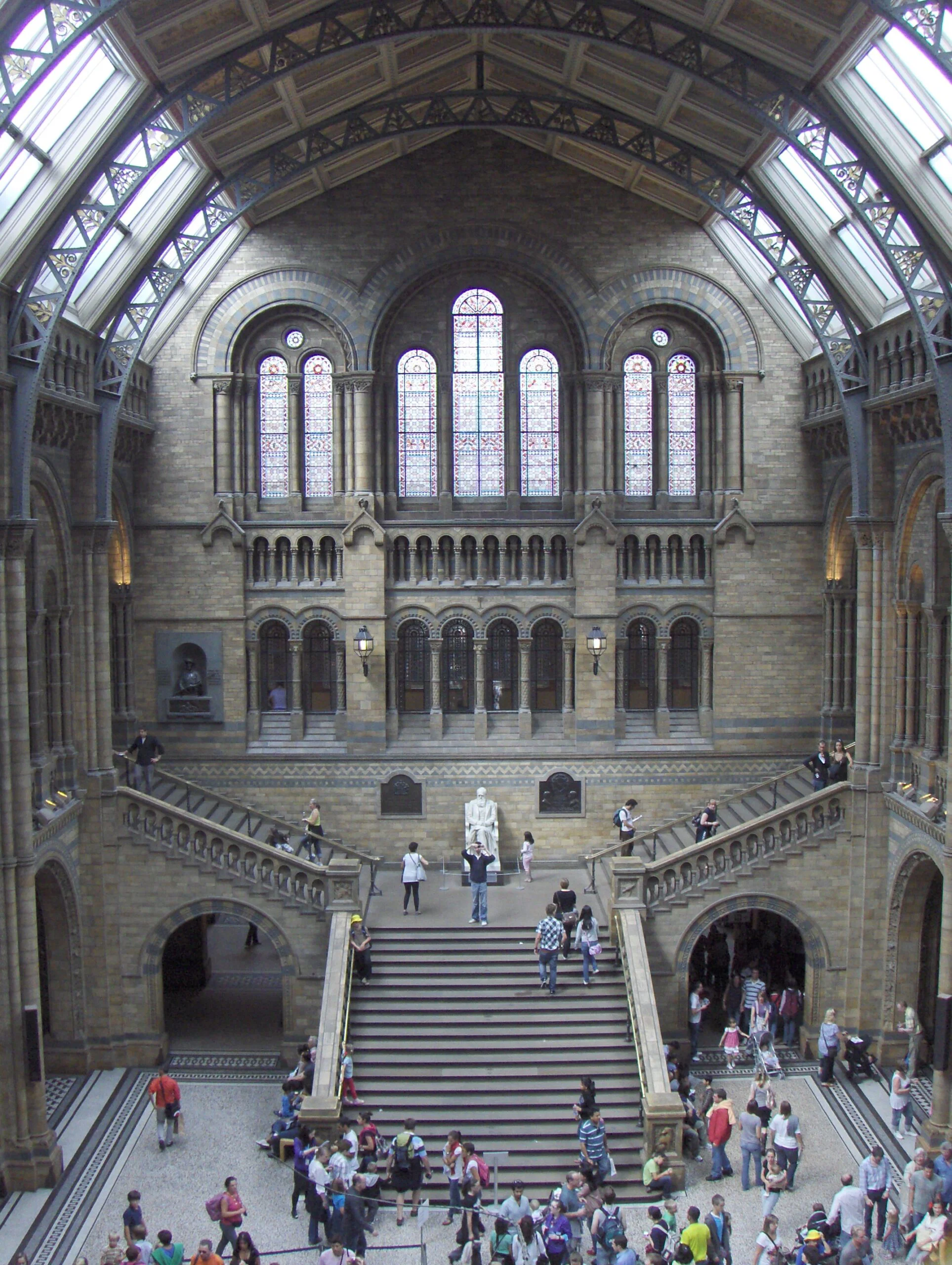
The Natural History Museum holds collections assembled over more than three centuries. Presenting Arcadia there places Akomfrah’s images beside objects shaped by scientific exploration and collecting. The dialogue encourages viewers to ask not only what a specimen is, but how it arrived, who named it and what networks of travel and authority made its classification possible.
The museum is one of the world’s most internationally recognized institutions of natural history, and it is the actual presenter of the London debut. The installation is part of its contemporary art program and runs through May 2027. That institutional role matters because the work is not using the museum as a neutral backdrop. It activates the histories embedded in the collection around it.
What artists can learn from entanglement
For artists addressing climate and ecology, Arcadia offers an alternative to the isolated image of disaster. It builds meaning through accumulation and collision: beauty beside extraction, migration beside botany, deep time beside commercial speed. The environmental crisis appears not as one event but as a system of relationships.
That approach also resists a simple division between environmental and social justice. Land, labor, disease, trade and memory move through the same frame. Akomfrah’s multi-screen form lets those histories remain simultaneous rather than forcing one to become an illustration of another.
In the museum, the work becomes a question addressed to both art and science: how should institutions tell the story of a living world when the evidence of life is inseparable from the routes of empire that gathered it?