
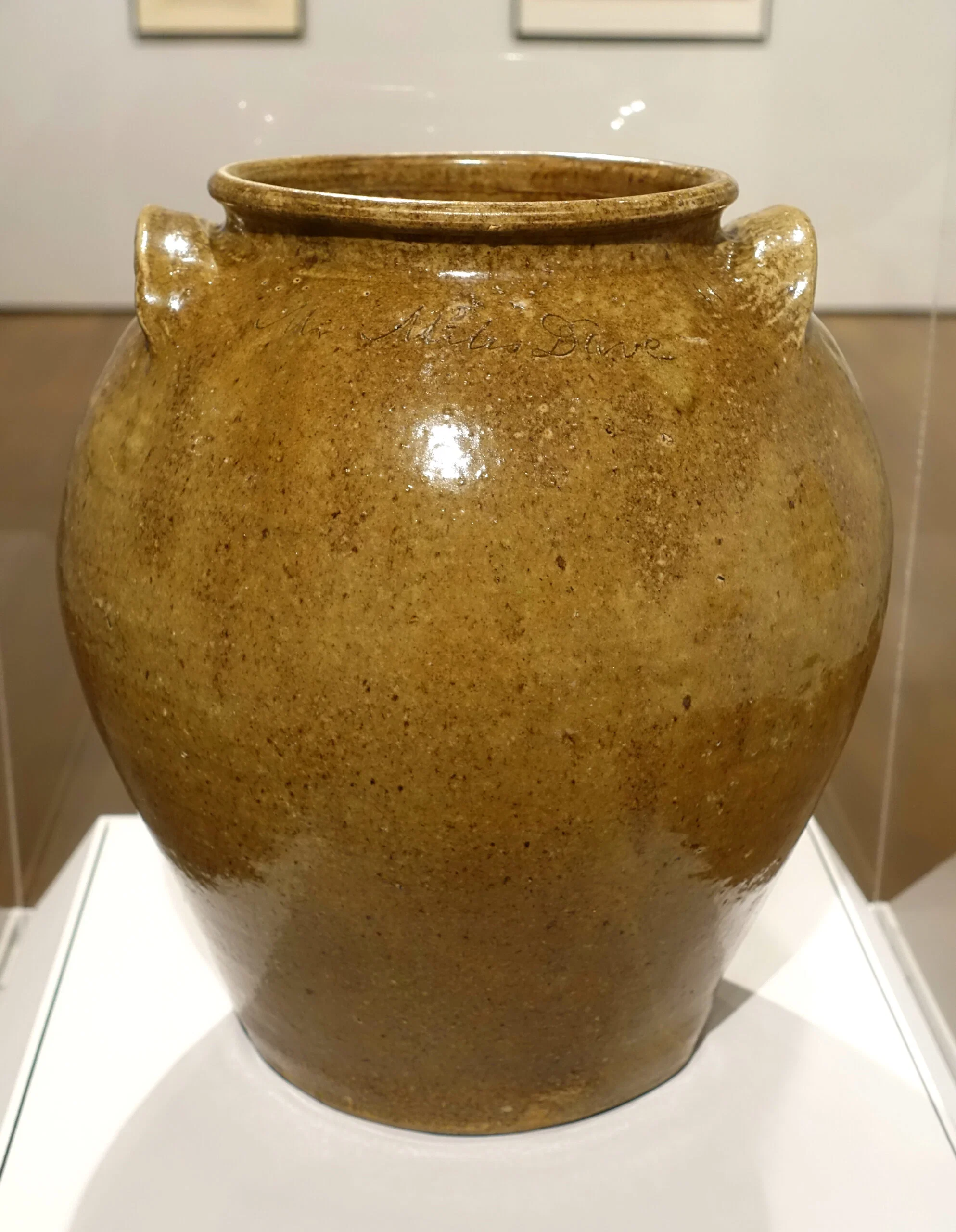

A museum has returned legal ownership of an 1852 jug by David Drake to the enslaved potter and poet’s descendants, then purchased the vessel from them so it can remain on public view. The Newark Museum of Art’s agreement is significant not because an object changed rooms, but because authority over it changed hands.
The museum acquired the brown stoneware jug in 2022 and displayed it in its American art galleries. In summer 2026, after other institutions had begun resolving ownership of Drake’s ceramics with his family, Newark contacted the descendants. The museum restored the work to the Dave the Potter Legacy Trust and subsequently bought it back at an appraised value reported as approximately $135,000.
Ownership came before access
That sequence matters. Public access was not treated as a reason to avoid the ownership question. The family first received the right to decide what should happen to a work made under enslavement; the museum then negotiated to keep it in its collection.
Drake, who lived from around 1800 into the 1870s, made monumental alkaline-glazed stoneware in South Carolina’s Edgefield District. He signed, dated and sometimes inscribed his vessels with verse at a time when literacy among enslaved people was criminalized. His surviving ceramics are therefore both extraordinary works of form and material and rare records of a named artist asserting presence within a system that denied his freedom.
The Newark resolution follows the Museum of Fine Arts, Boston’s 2025 agreement with Drake’s descendants. The Boston museum described its arrangement as its first ownership resolution for works wrongfully taken under the conditions of slavery in the United States. Other museums have since worked with the family trust on returns, purchases and long-term loans.
A model built on consent
Restitution debates are often framed as a contest between keeping objects visible and returning them to rightful owners. Newark’s agreement shows that those goals do not have to be opposites. A museum can acknowledge that possession and title are not the same thing, recognize descendants as decision-makers and still preserve public access through a new transaction.
The distinction also changes interpretation. The jug no longer appears simply as an institutional holding. Its credit line records that the museum returned the work to Drake’s descendants and purchased it from their trust. Provenance becomes part of the public story rather than a technical note hidden behind it.
For museums, the practical lesson is active provenance work: identify objects whose ownership histories were shaped by slavery, seek out descendants before a claim is forced and budget for ethical reacquisition when a family wants a work to remain in public care. For audiences, the lesson is equally direct. Access is strongest when it rests on consent.