
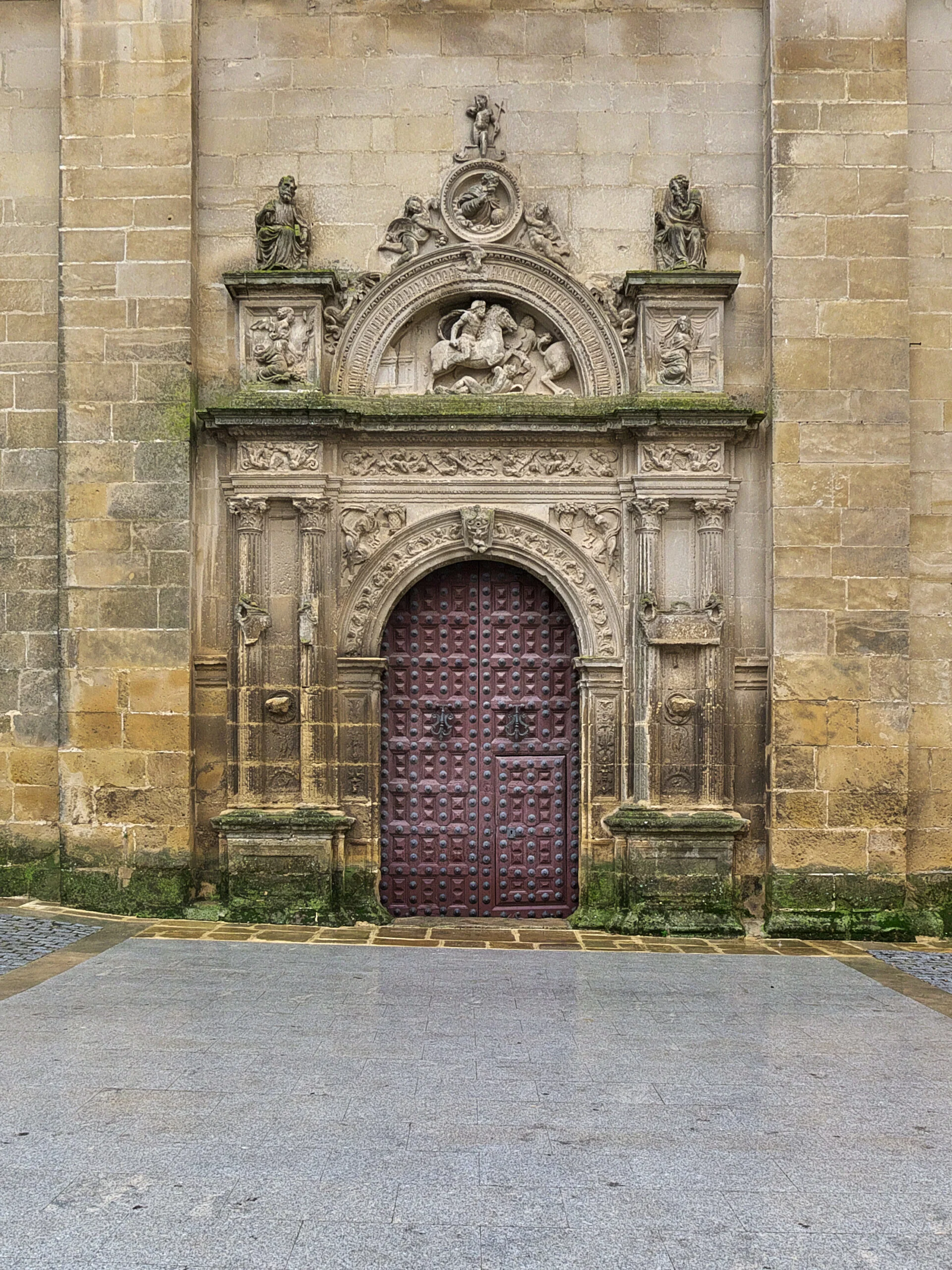

In 2016, Juan Francisco León Catena and his father began removing walls inside a house in the historic center of Úbeda, Spain. What appeared was not ordinary masonry but the monumental facade of a long-lost church: roughly fifteen meters wide and eleven meters high, hidden within the building for centuries.
A decade later, the discovery has reached a new turning point. After a prolonged legal dispute, León’s right to compensation under Spain’s historical heritage law has been recognized, and a valuation process has placed the amount above one million euros. At the same time, local authorities and the owner are discussing how the structure might finally be conserved and made visible.
A house became a container for a monument
The facade belonged to the church of the former Hospital of San Jorge, also known as the Hospital of Pero Almides. The institution dates to 1347, while the uncovered stonework is later and has been attributed to the circle of the Spanish Renaissance architect Andrés de Vandelvira, whose work helped define Úbeda and neighboring Baeza.
The discovery transformed a private renovation into a public responsibility. Work on the property became subject to heritage restrictions. Plans for a family home gave way to archaeological study, conservation reports and negotiations over access.
Ten years between revelation and rescue
The passage of time has added urgency. A conservation assessment cited by El País warned that damaged roofs in adjacent buildings were allowing water to penetrate the structure, contributing to decay in timber and creating a risk of collapse. The owner has argued that making the facade visible should no longer wait.
Reporting by Cadena SER on 12 November described a preliminary municipal plan with two phases: first opening the front portions of the affected buildings so the stonework can be seen, then restoring the facade. Legal and archaeological steps remain before that plan can proceed.
The ethics of an accidental discovery
The story is extraordinary not only because a Renaissance monument survived inside a house. It shows what can happen when private property suddenly contains cultural heritage. The discoverer carries costs and restrictions; the public gains a claim to knowledge and access; institutions inherit a duty to act before exposure causes new damage.
For centuries, the facade endured because it was concealed. Its next survival will depend on the opposite condition: sustained attention, transparent conservation and a workable agreement between owner and city. The moment of discovery lasted minutes. The work of bringing the monument back into public life has already taken ten years.