
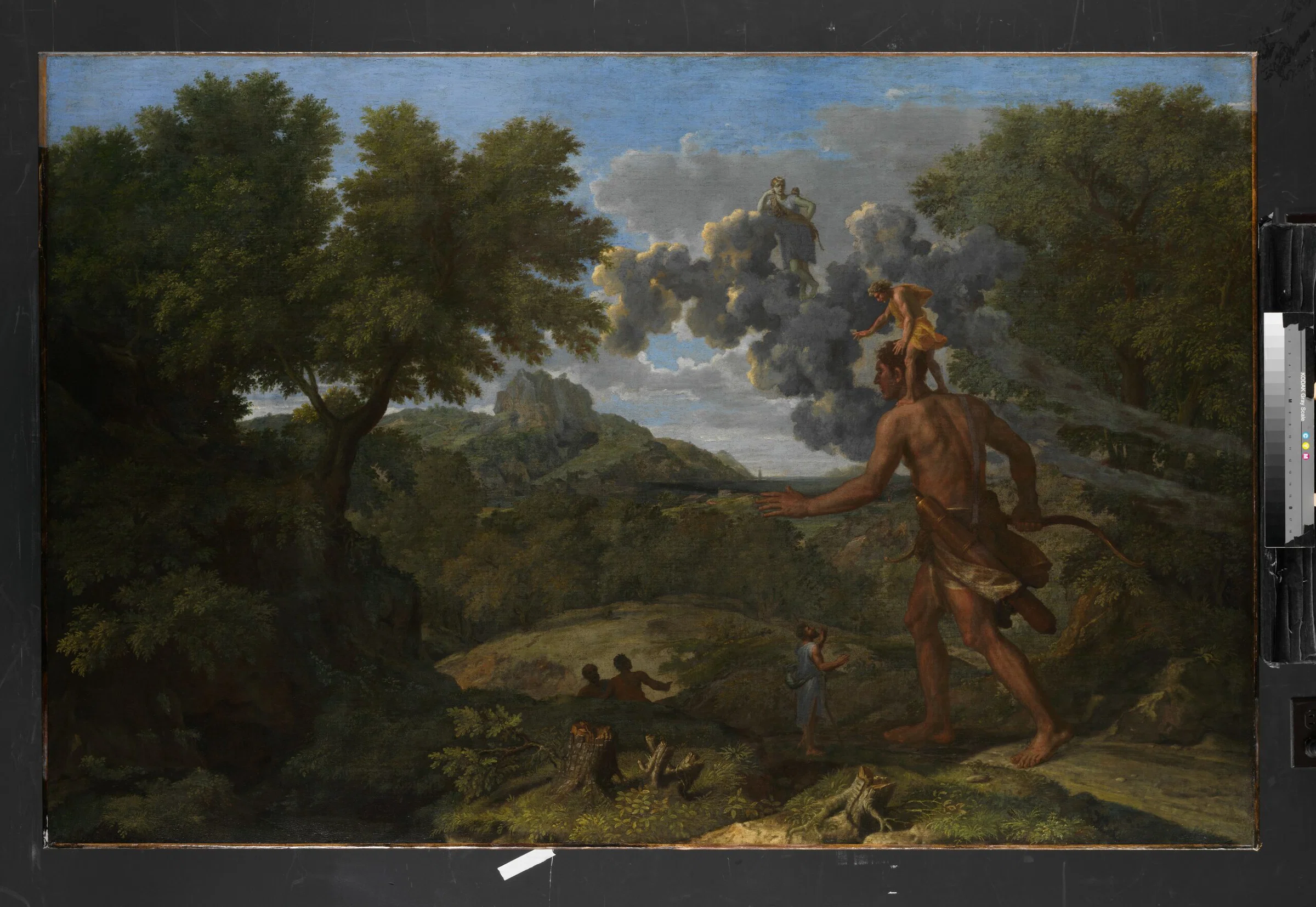

A current installation at The Metropolitan Museum of Art asks viewers to read European painting not as a window onto a passive landscape, but as evidence of changing relationships between people and the natural world. Ecologies of Painting, on view through 17 January 2027, brings together works made from about 1525 to 1775 and traces a movement from ecological embeddedness toward claims of human dominance.
The exhibition is hosted and presented by The Met, a museum of established worldwide recognition. Its environmental argument is central rather than incidental: the selected paintings examine how cultures imagine nature, labor, resource use and the boundary between human and nonhuman life.
Nature is not only the subject
Nicolas Poussin’s Blind Orion Searching for the Rising Sun turns a mythic body into part of a vast atmospheric system. Pieter Bruegel the Elder’s The Harvesters binds seasonal labor, food, class and landscape into one field of activity. Other works connect observation, science, colonial power and agricultural idealization.
The installation also asks viewers to consider paintings as material objects. Linen begins as flax. Panels come from trees. Pigments may depend on minerals, plants, animals and long-distance extraction. A landscape painting is therefore not outside ecology; it is made from transformed ecosystems and the labor that moves those materials.
An older image can hold a current question
Environmental art is often associated with contemporary documentation, activism or new media. The Met’s approach widens the field. Historical works can reveal the assumptions that shaped today’s crisis: who is pictured as controlling land, whose labor is made picturesque and which resources appear limitless.
For artists, this offers a productive method. Ecological meaning does not have to arrive as a literal image of pollution or climate disaster. It can be carried by material choice, scale, viewpoint, supply chain and the relationship between figure and ground.
The installation’s strongest proposition is that conceptions of nature are culturally constructed. Paintings do not merely reflect those conceptions; they help produce them. Looking carefully at old masters can therefore become an environmental practice—one that identifies the visual habits through which domination, interdependence and responsibility have been made to feel natural.