
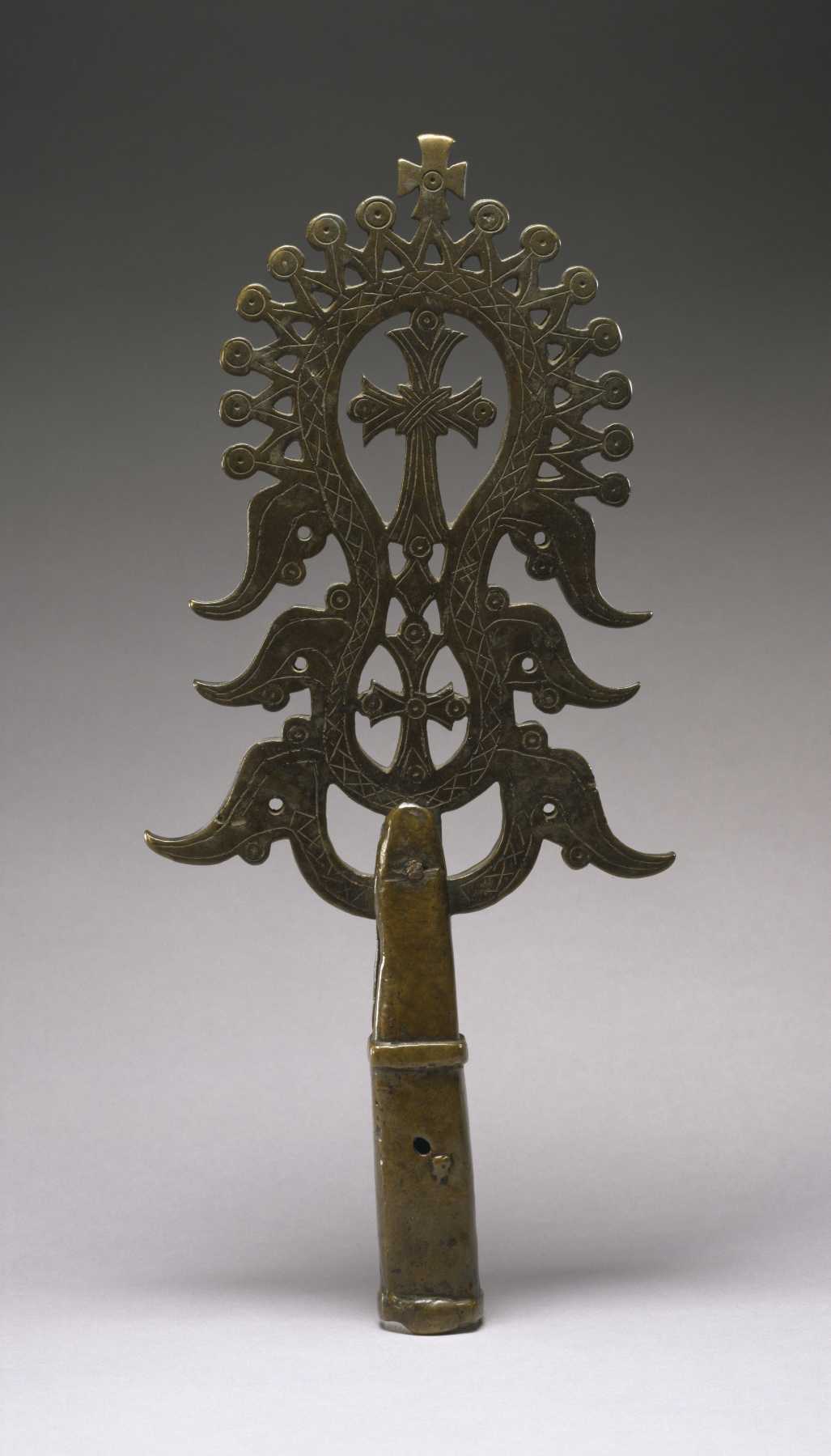

Five Ethiopian cultural objects have begun a journey home through an unusual partnership built around research rather than possession. Two 15th-century illuminated manuscripts and three inscribed metal crosses were formally transferred to the Ethiopian Heritage Authority at the Ethiopian Embassy in London on November 18.
The handover is the first completed transfer in a long-term collaboration involving Ethiopian authorities, the Toledo Museum of Art and collector Robert McCarthy. The objects are expected to join a display of restituted heritage at the National Museum of Ethiopia in Addis Ababa.
Evidence changed the objects’ future
The manuscripts had been documented in Ethiopia after 1970, a fact that raised serious concerns about their later removal. Provenance research led to the decision that they should return. Before the handover, the manuscripts were digitized so that researchers could continue to study their contents after the physical works left the collection.
The three crosses, dating from the late 18th to early 20th century, were selected for return through consultation with Ethiopian partners. Inscriptions may help connect them more closely to the religious communities and places from which they came.
A model for objects with incomplete histories
The wider partnership addresses a problem that extends far beyond these five works. Many cultural objects entered private and museum collections during periods when documentation standards were inconsistent and export records were rarely demanded. A missing paper trail does not erase an object’s origin, but it can leave ownership and stewardship unresolved.
Rather than treating uncertainty as a reason to do nothing, the arrangement creates a structure for joint research. The Toledo Museum of Art is expected to acquire a much larger group from McCarthy’s Ethiopian collection. Works shown to have left improperly can be returned; objects with legitimate export histories may remain; and uncertain cases can be considered with Ethiopian authorities rather than decided unilaterally.
From ownership to stewardship
The emotional force of the return lies in the objects’ continuing religious and cultural meaning. Illuminated books and processional crosses are not simply examples of medieval or early modern craftsmanship. They belong to living histories of faith, language, memory and place.
The process also recognizes that access need not depend on permanent possession. Digitization can support scholarship, while physical return restores the possibility that the works will be interpreted within the culture that made and used them.
Five objects are a modest number beside the scale of cultural displacement. Yet the structure behind their return is consequential. It shows how a collector, a museum and a country of origin can move beyond a defensive argument over title and instead build a shared process for evidence, care and repair.