
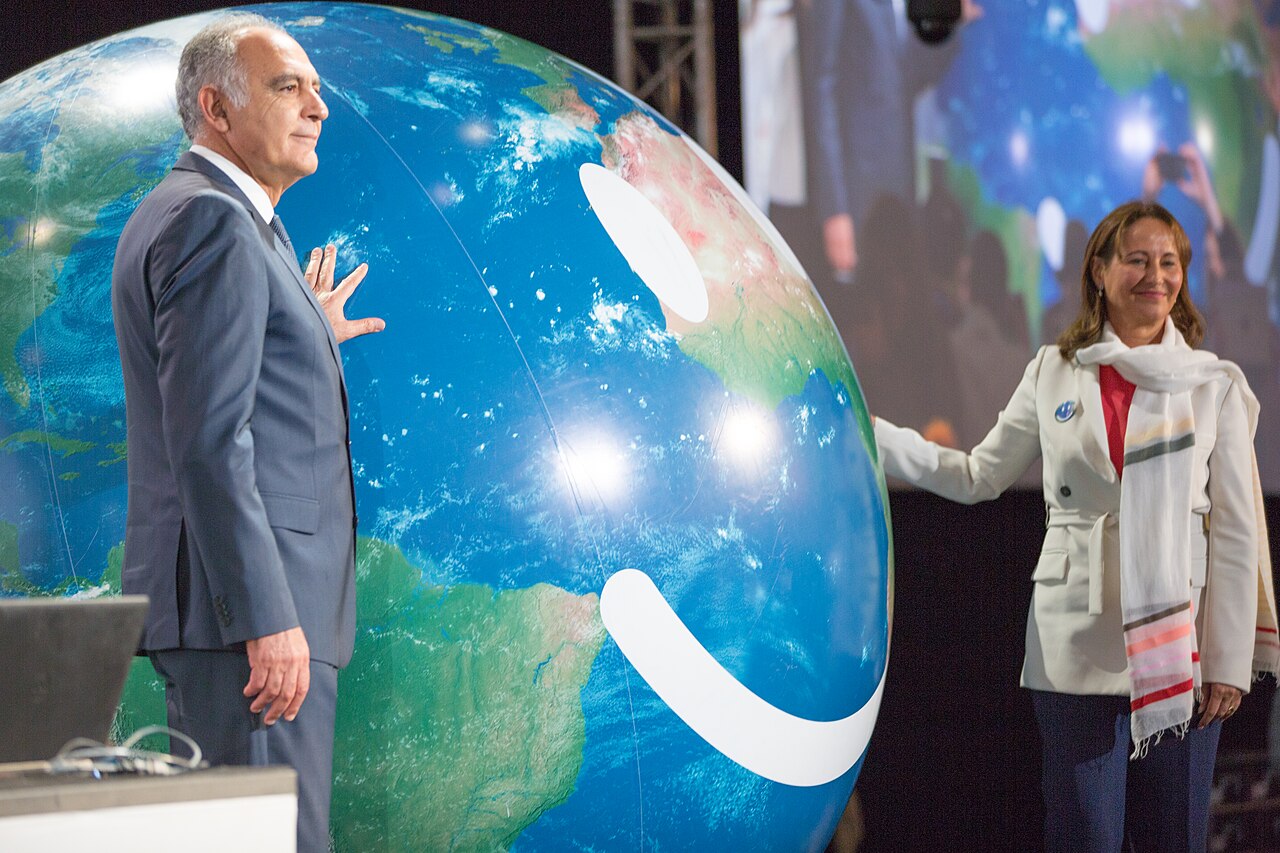

As COP31 closed in Antalya on 20 November, the cultural sector’s climate role was being framed less as a communications accessory and more as a form of civic infrastructure. Artists, filmmakers, musicians and storytellers were not present only to make climate science emotionally legible. They were also part of discussions about policy, public participation and the knowledge communities need to adapt.
The UN Climate Change initiative Entertainment and Culture for Climate Action organized programming across the conference under a 2026–2030 strategy framework. Its stated aim is to connect cultural expression with engagement, collaboration and practical climate action. UNESCO’s COP31 program likewise placed culture, heritage and Indigenous and local knowledge alongside science, education and access to reliable information.
From message-making to participation
Artists have long translated climate data into images, films, performances and stories. That work remains important: facts rarely move through society without narrative, symbol and lived experience. But the COP31 cultural agenda points toward a broader role. Creative practitioners can help design public processes, preserve memory, record non-economic loss and create spaces where communities negotiate change.
Those functions are not interchangeable with scientific analysis or government authority. They operate in a different register. A community archive can document what a climate-displaced population refuses to lose. A film can make an adaptation plan understandable beyond technical circles. A public artwork can turn an abstract water-risk map into a site for discussion. In each case, culture helps people recognize themselves within climate policy.
This shift also changes the standard by which environmental art is judged. Visibility is not enough. The more consequential questions are who participated, whose knowledge shaped the work, what relationships remain after the event and whether the project supports a community’s capacity to act.
Heritage enters the implementation debate
During COP31, ICOMOS issued an Antalya declaration calling for cultural heritage to be included throughout climate policy and implementation. The declaration treats heritage not only as something endangered by heat, floods, fire and sea-level rise, but as a source of knowledge and resilience.
That argument matters to artists because heritage is not limited to monuments. It includes cultural landscapes, craft knowledge, memory practices and the ways communities understand land and water. When those systems are damaged, the loss cannot always be measured in replacement costs. Creative work can help record, transmit and reactivate forms of knowledge that conventional climate accounting may overlook.
At the same time, artists should resist the expectation that culture can compensate for weak policy. A compelling exhibition cannot replace emissions cuts, resilient infrastructure or equitable finance. The cultural sector is most useful when it works alongside those measures, making them more participatory and attentive to place.
A practical agenda for cultural institutions
Museums, arts organizations and independent producers can take several lessons from the COP31 discussion. Commission artists early in climate planning, not after technical decisions have been made. Budget for community participation and long-term stewardship. Treat archives and oral histories as adaptation resources. Measure the environmental cost of production without reducing every artistic decision to a carbon calculation.
Institutions can also publish what they learn. Contracts, material experiments, travel policies and energy data become more valuable when others can adapt them. The strongest climate work builds shared capacity rather than a one-time image of concern.
COP31 did not settle culture’s place in global climate governance. It did, however, make the direction clearer. The emerging question is no longer whether artists belong in the climate conversation. It is how their methods can be integrated without instrumentalizing their work—and how cultural knowledge can shape implementation where people actually live.