
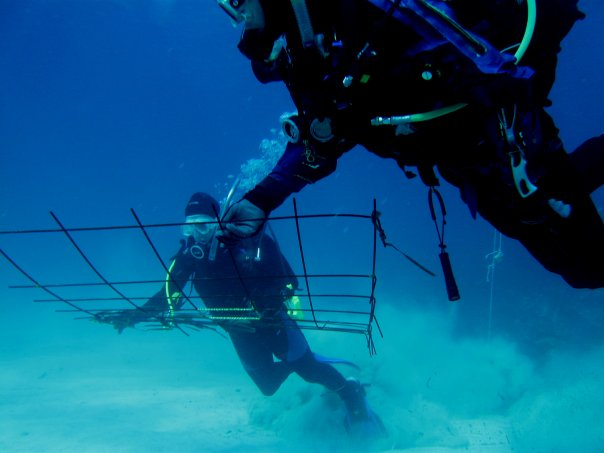

UNESCO has published the Alexandria Declaration on Underwater Cultural Heritage, a statement that widens the public meaning of preservation. Shipwrecks, submerged settlements and other traces beneath seas, rivers and lakes are not treated only as objects to rescue. The declaration connects their protection with scientific research, ocean literacy, environmental stewardship, resilient coastal communities and sustainable development.
The text was endorsed in Alexandria, Egypt, on August 20 and published by UNESCO on October 28, marking the first International Day for Underwater Cultural Heritage and the 25th anniversary of the 2001 Convention. Its timing is significant: climate change, coastal development, environmental degradation, looting and illicit trafficking increasingly act on the same sites at once.
Protection remains the foundation
The declaration does not weaken the basic rule that heritage must first be safeguarded. Underwater sites are especially vulnerable because damage can be invisible until an object appears on the market or a construction project alters the seabed. Archaeological context—the position of an object, its relationship to a vessel or settlement, and the surrounding material—can carry more historical information than an isolated artifact.
By placing protection before development, the statement rejects the idea that submerged heritage is a reservoir of souvenirs or commercial treasure. At the same time, it argues that careful stewardship can generate knowledge, education and public benefit without sacrificing archaeological integrity.
Culture and the ocean share a risk map
The declaration’s most consequential shift is to connect cultural policy with environmental policy. Rising seas, stronger storms, erosion and changing coastlines can expose, scatter or bury sites. Ports, dredging, cables and offshore infrastructure can create additional pressure. A cultural agency cannot manage those forces alone; protection requires cooperation among archaeologists, marine scientists, coastal communities, planners, law-enforcement authorities and museums.
For artists, that integrated view opens a wider field of responsibility. Submerged heritage is not merely visual material. It may embody community memory, migration, trade, conflict, labor and loss. Artists working with archives, coastlines or maritime histories should distinguish documentation from extraction, and public interpretation from the removal of objects or stories from their context.
A standard to measure, not a slogan
The declaration calls for partnerships, knowledge-sharing and capacity-building, and suggests measuring progress not only by what has been physically saved but also by the knowledge and durable community benefits that protection produces. That makes implementation the next story.
Useful indicators will include whether threatened sites are documented before damage occurs, whether local professionals receive sustained training, whether research is publicly accessible, whether tourism remains compatible with conservation, and whether recovered objects are accompanied by transparent provenance and context.
Alexandria gives underwater heritage a broader mandate: protect the material record, but also strengthen the relationships that allow people to understand and care for it. The declaration is not a finished solution. It is a sharper test for governments and institutions that invoke the ocean’s past while making decisions about its future.