

Italian artist and environmental engineer Andrea Conte, known as Andreco, will bring a pointed question to Duke University on November 4: what can an artistic practice do in a time of ecological crisis?
The event is a conversation rather than an exhibition, and its significance lies in the practice behind it. Andreco works across public installations, wall painting, performance, video and participatory processes. His projects treat environmental data and political ecology not as background research, but as material that must be translated into public experience.
From engineering to ecological imagination
Conte holds a doctorate in environmental engineering and has conducted research on nature-based solutions for water management, energy saving and climate adaptation. His studio describes a practice focused on ecosystem regeneration and relationships between human and more-than-human life.
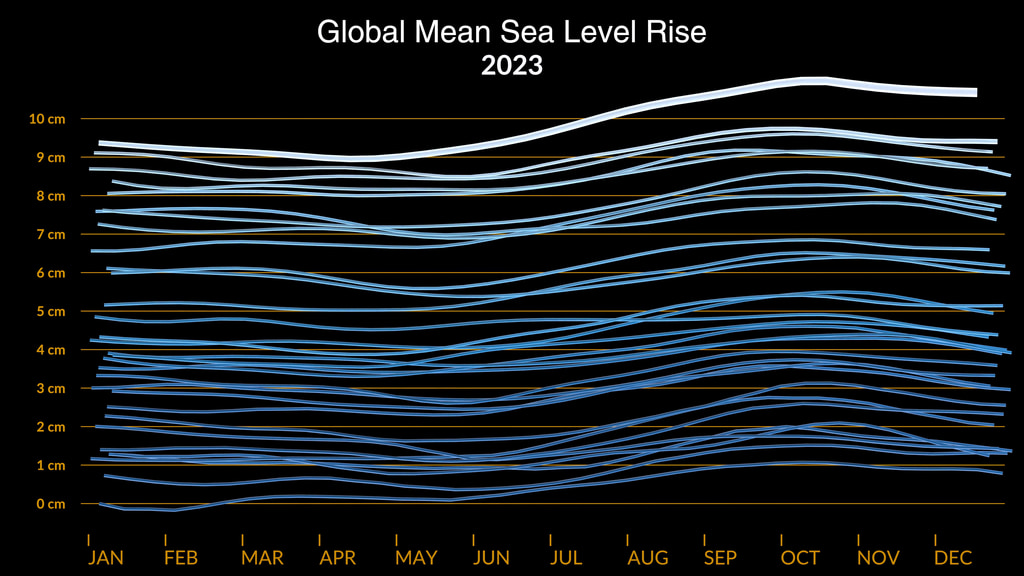
That combination does not mean art becomes a diagram of science. Data can describe sea-level rise or heat, but it cannot by itself tell a community how those changes feel, whose histories are exposed, or which futures seem possible. Andreco’s work uses symbols, collective making and public space to connect measurable processes with lived experience.
Ecological art is also a method
The Climate Art Project, initiated by Conte in 2015, has linked art, science and climate justice through site-specific interventions, performances, workshops and murals. Other strands of his practice address rivers, urban forestry and environmental racism. The recurring structure is collaborative: the artwork grows through research and contact with the territory where it appears.
For artists, that approach offers an important distinction. Environmental subject matter does not automatically create ecological practice. A landscape image can ignore material waste, local knowledge and the conditions of its production. Conversely, a work may be ecological because it changes a process: who participates, what materials circulate, how a site is understood, or whether stewardship continues after the public moment.
Questions worth carrying into the studio
Artists can begin by defining the scale of the environmental claim. Is the work interpreting scientific evidence, documenting a place, organizing participation or proposing an intervention? Each role carries different responsibilities. Scientific claims should be traceable. Community collaboration should not be reduced to visual texture. Materials and travel should be considered without pretending that any project can achieve perfect purity.
Credit also matters. When knowledge comes from scientists, residents, Indigenous communities, activists or technicians, those contributions should remain visible. An ecological artwork becomes more credible when its network of knowledge is acknowledged rather than absorbed into the artist’s name.
Andreco’s return to a university setting places ecological art where it belongs: in conversation across disciplines, but not dissolved into them. Art cannot substitute for environmental policy or engineering. It can make the assumptions around those systems perceptible, create shared symbols and open a space in which people imagine themselves as participants rather than spectators.