
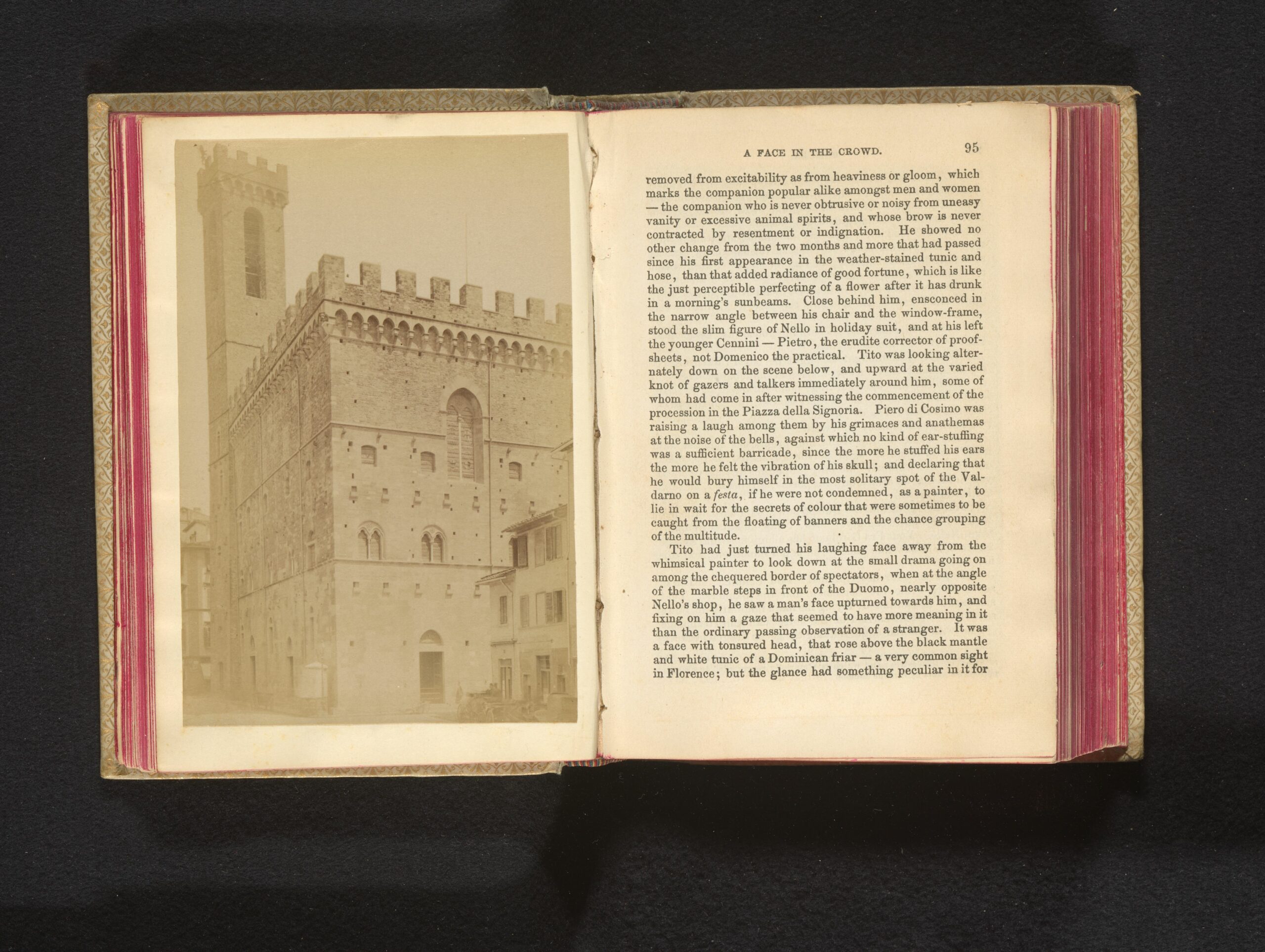

For roughly a century, a banquet has waited in darkness. The Banquet of Psyche, a monumental seventeenth-century tapestry in the holdings of Florence’s Museo Nazionale del Bargello, has been out of public view while dust, tears, open seams, missing weft, and weakened silk accumulated across its surface.
On October 19, the tapestry began a new journey. Rolled into a specially designed support, the more-than-twelve-square-meter textile was carried on foot from the Bargello to the tapestry and carpet laboratory of the Opificio delle Pietre Dure in Palazzo Vecchio. There, at least four specialist conservators are expected to spend about 30 months studying and treating it.
A royal scene with a hidden history
The work is attributed to the Grande Galerie du Louvre manufactory, active in Paris in the first half of the seventeenth century, and to the weavers Girard Laurent and Maurice Dubourg. Its imagery follows designs associated with the Flemish painter Michiel Coxcie. Psyche sits before a laden table, attended by servants and young musicians, within an architectural setting that opens onto a landscape. Putti, garlands, and ornamental bands frame the scene.
The tapestry entered the Bargello collection in 1888 through the bequest of the French collector and dealer Louis Carrand. It is the only one of the three large Carrand tapestries at the museum that had not yet undergone restoration, leaving a major part of the collection effectively inaccessible to both the public and scholarship.
Conservation begins with evidence
The first phase will document the tapestry and investigate its materials, techniques, and earlier repairs. That evidence will guide cleaning and the consolidation of damaged fibers and woven passages. The treatment is also expected to include a new lining and suspension system so the work can eventually be displayed safely.
Earlier interventions are part of the conservation problem. Repairs made in the past have altered the textile’s structural stability in some areas, reminding us that restoration is never a simple return to an original state. Every treatment adds another layer to an object’s history and must be understood before new work begins.
Four hands, thirty months
The project brings together the Galleria dell’Accademia di Firenze and Musei del Bargello with the Opificio delle Pietre Dure, one of the world’s most respected conservation institutes. A €100,000 contribution from Fondazione Il Bargello through Italy’s Art Bonus supports the work.
The scale of the undertaking is cinematic, but its real drama is patient and technical. Conservators will work centimeter by centimeter across wool and silk, balancing visibility with stability and historical evidence with the physical demands of future display.
The Bargello is a world-recognized museum, and this is not an exhibition announcement. The event is the recovery of an object that has been absent from view for generations. Its eventual return will not erase the century underground; it will make that absence legible as part of the tapestry’s life.
The Banquet of Psyche depicts abundance, music, service, and spectacle. Its rescue depends on a different kind of choreography: a slow procession through the streets of Florence, a laboratory built for fragile textiles, and years of work by people whose finest achievement may be to make the fabric strong enough to be seen again.