
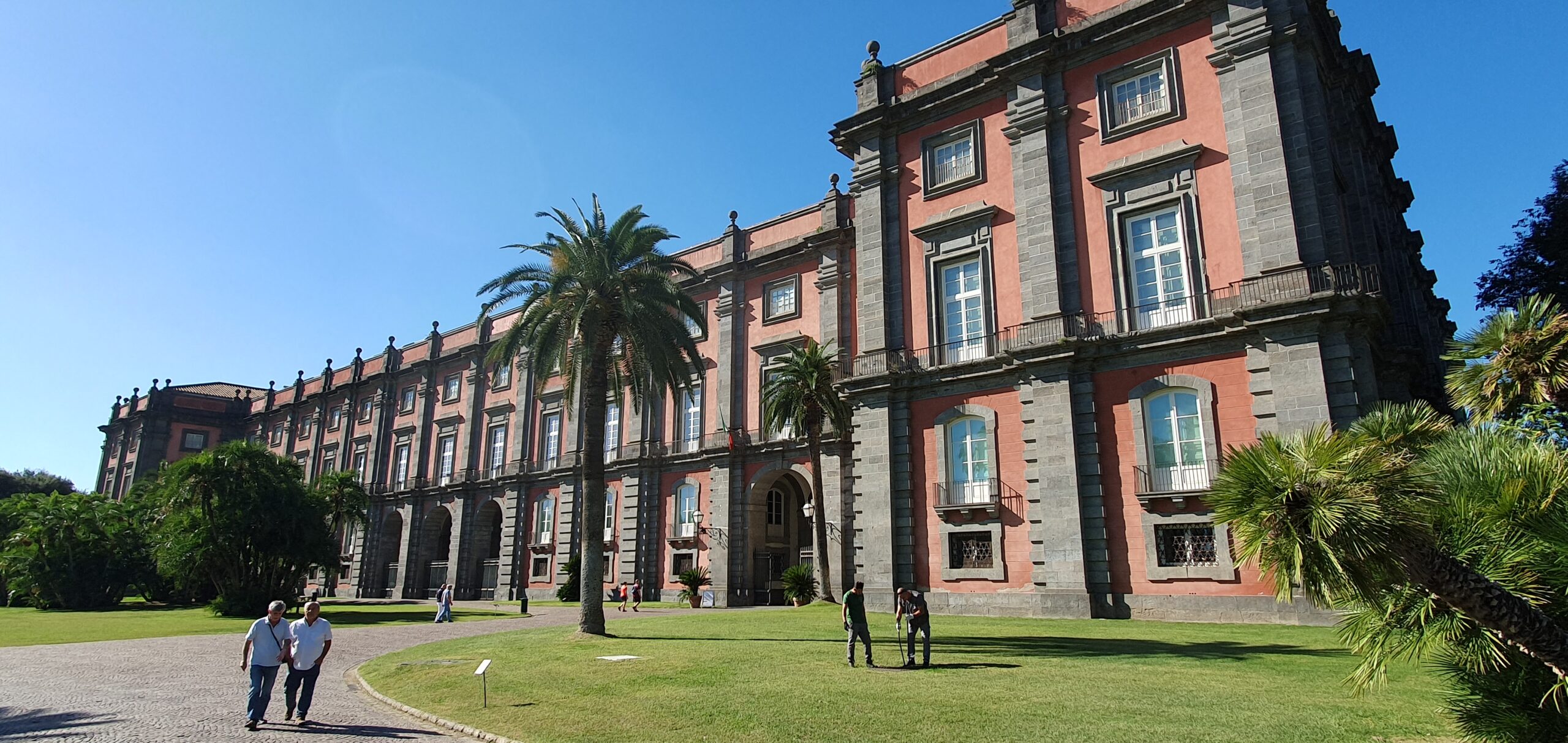

At the Royal Palace of Capodimonte in Naples, the most consequential new architectural intervention is designed not to be seen.
An integrated photovoltaic system now sits on the roof of the historic complex, hidden from ground-level views. Combined with trigeneration, efficient lighting, new climate systems and broader infrastructure work, it allows the Museo e Real Bosco di Capodimonte to produce about ninety percent of its energy needs.
The project has returned to public attention following new reporting on the museum’s environmental performance. Its significance reaches beyond a single building: Capodimonte offers a practical case for how protected cultural heritage can reduce emissions without treating conservation and climate responsibility as opposing values.
Energy infrastructure becomes conservation infrastructure
Museums use energy differently from most public buildings. Temperature, humidity, light and air quality affect collections as well as visitors. A failure of climate control can damage paintings, furniture, works on paper and decorative surfaces. Reducing energy consumption therefore cannot mean simply turning systems off.
Capodimonte’s project joined renewable generation with new heating, cooling and low-consumption lighting. According to the museum, the work cut energy consumption by more than fifty percent and reduced carbon dioxide emissions by an amount it compares to the effect of twenty thousand trees.
The intervention also expanded climate-controlled space, improving conditions for works and audiences. Sustainability here is not an accessory attached to public messaging. It changes the operating system through which the museum protects its collection.
The problem of visibility
Historic buildings often face a difficult design question: should contemporary environmental technology announce itself or disappear into the architecture? At Capodimonte, the photovoltaic roof was engineered as an integrated and reversible system, concealed from surrounding views. The museum describes it as the first pilot of its kind authorized by an Italian heritage authority for a building of this significance.
Invisibility can be read as compromise, but it can also be understood as precision. The intervention accepts that the palace’s historic roofline has cultural value while refusing the conclusion that heritage status requires continued dependence on an inefficient energy model.
The design does not offer a universal formula. Some contemporary additions should be legible as works of their own time. Other sites may lack the orientation, structure or regulatory conditions needed for solar generation. Capodimonte’s achievement is not that every museum should imitate its roof, but that preservation authorities, engineers and museum leaders found a site-specific solution rather than using complexity as a reason for inaction.
A new measure of museum leadership
The redevelopment began through a public-private partnership between the museum and ENGIE within a program initiated by Italy’s Ministry of Culture. The partnership links capital improvements with long-term management of energy and technical services.
That structure deserves attention as museums confront rising utility costs and climate obligations. Energy retrofits require money, specialist knowledge and maintenance beyond a single construction campaign. A dramatic opening photograph matters less than whether the system continues to perform after five, ten or twenty years.
Transparent reporting will be essential. Institutions should publish actual consumption, emissions, conservation outcomes and maintenance performance—not only projected savings. Comparable evidence can help other museums understand which interventions produce meaningful results and which function mainly as symbolic branding.
What artists can take from Capodimonte
Artists may not control a museum’s roof, but they increasingly work within the environmental systems of institutions. Exhibition design, shipping, fabrication, lighting and climate requirements all shape a project’s footprint. Capodimonte demonstrates that technical constraints can become part of creative and institutional problem-solving rather than a reason to lower ambition.
It also changes the conversation about heritage. A historic building is not preserved by freezing it at one technological moment. It survives through carefully judged adaptation. The palace can retain its architectural presence while the systems above and within it respond to contemporary ecological conditions.
The most powerful part of the project may be precisely what visitors cannot see. Above galleries filled with historic art, the roof is doing new cultural work: generating energy, stabilizing the environment below and showing that stewardship now includes both the objects a museum inherits and the climate in which their future will unfold.