

Design Museum Gent has reopened after a four-year, €20 million expansion that treats the building itself as an exhibition about material responsibility. The new five-level DING wing adds approximately 2,000 square metres for exhibitions, workshops, lectures, and public activity while linking the museum’s historic buildings through a new central entrance.
The project is more than an architectural upgrade. It tests circular materials at institutional scale, placing municipal waste, bio-based surfaces, adaptive climate design, and public participation inside the everyday experience of a museum.
Waste becomes the public face of the museum
The new façade is made from more than 82,000 locally produced Gent Waste Bricks. The lime-cured bricks incorporate municipal construction waste and were developed for the project as a lower-carbon alternative to conventional fired masonry. Rather than hiding recycled material in back-of-house construction, the museum makes it part of the building’s visual identity.
Inside, the environmental argument continues through choices visitors can touch and use. Ten toilets demonstrate different material possibilities, including seaweed panelling, recycled household plastics, and tiles made with volcanic ash. A shaded interior zone developed with landscape architect Bas Smets creates a woodland-edge microclimate. Reused materials appear throughout the renovation.
These details turn sustainability from an institutional statement into direct encounter. Visitors do not only read about circular design; they walk past it, sit beside it, and use it. The building gives experimental materials the kind of public trial that small prototypes rarely receive.
A collection presented as a toolkit
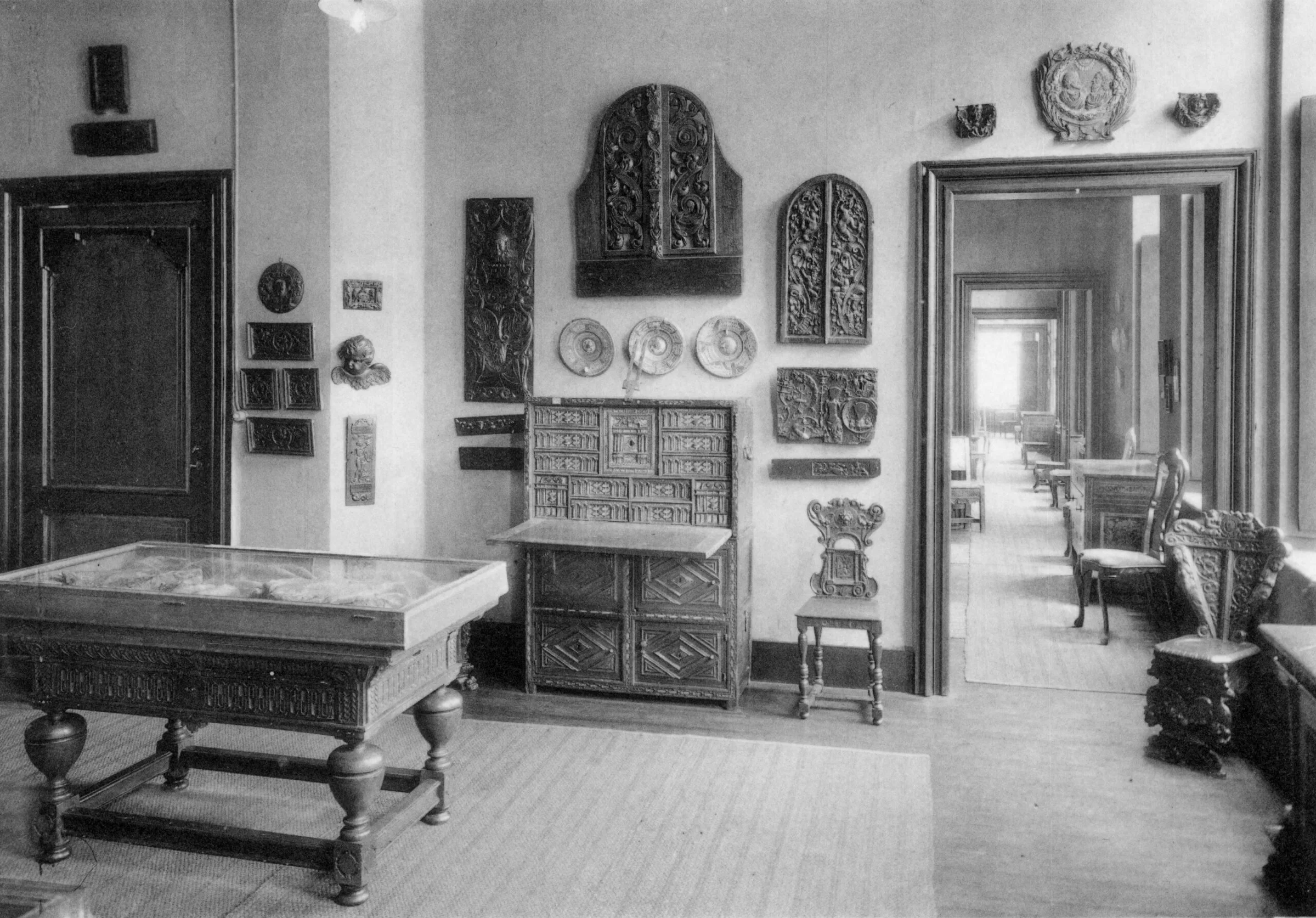
The museum was founded in 1903 as a “museum of models,” offering examples of strong craftsmanship to working artisans. Its new presentation revives that idea for a century shaped by climate pressure, material scarcity, and social fragmentation. Historical objects are treated as resources for thinking about future design rather than as a closed chronology of styles.
Temporary exhibitions extend the same approach. Public Matter(s): Design and Democracy examines how political systems are designed. CO-LAB functions as a participatory laboratory, while the free exhibition Connect invites visitors of different ages to experiment. The reopened institution presents design as a civic practice that shapes how people live together.
What artists and institutions can use
For artists, the museum offers a practical model for making material research legible. A sustainable claim becomes more persuasive when the origin, processing, limitations, and sensory qualities of a material can be experienced in the work. Documentation should include not only what a material replaces, but how it performs, ages, and can be repaired or reused.
For museums planning renovations, DING demonstrates the value of aligning capital investment with programming. The same questions asked by the architecture—what can be reused, who participates, how can a building remain adaptable—also shape the exhibitions and public spaces. Sustainability is therefore not confined to an engineering report; it becomes part of curatorial identity.
The project also creates a strong communications structure. A single renovation can generate stories about architecture, craft, municipal waste, experimental materials, urban heritage, public access, and design education. That range gives an institution multiple entry points for local residents, tourists, schools, designers, and environmental audiences.
No renovation is impact-free, and an environmentally ambitious building should still be assessed through operational energy, maintenance, durability, transport, and long-term use. Design Museum Gent’s contribution is to make those questions visible. Its reopened site asks the public to judge design not only by appearance, but by what it consumes, preserves, teaches, and makes possible.