

We often remember a place through the route we took to reach it. A bend in a river, a road crossing a field, the outline of trees against the sky can remain with us long after we have left. Elisabeth Munro Smith gives those remembered lines a physical form, working with materials that carry traces of both nature and human intervention.
A Landscape Made of Relationships
Vines, wire, wood, paper, yarn and paint become part of her vocabulary. A curve may meet a measured edge; a slender upright may rise from a small constructed base. These relationships suggest the ways we experience land and the ways we divide or organize it.
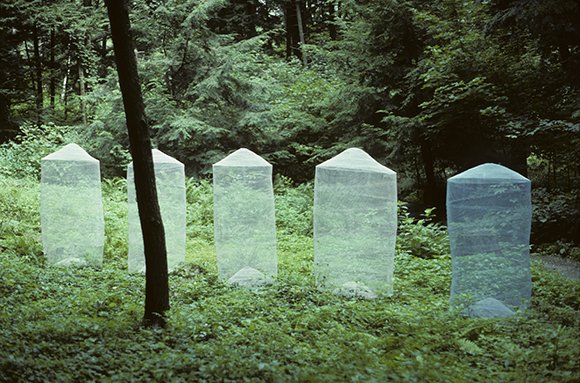
In the outdoor installation Holders, dated 1990, pale vertical forms stand among trees. Their presence changes our reading of the setting without concealing it. We notice the space around them, the light passing through and the distinction between what has grown there and what has been placed there.
The choice of materials matters to this reading. A vine carries a shape formed through growth, while wire can be bent and directed by hand. Yarn introduces a different association with making and with the time required to build a surface. Bringing these materials together allows Elisabeth to examine how a structure can feel both deliberate and open to change.
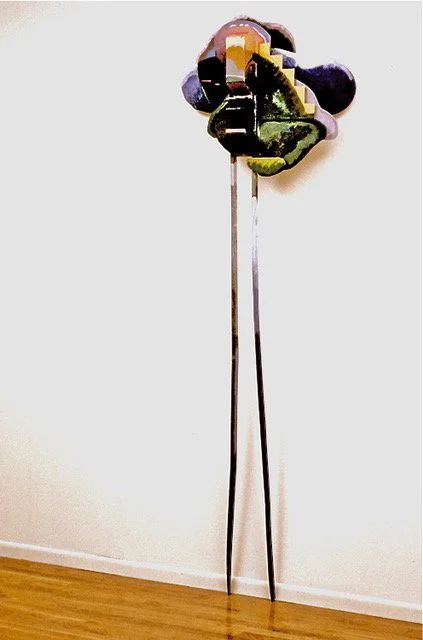
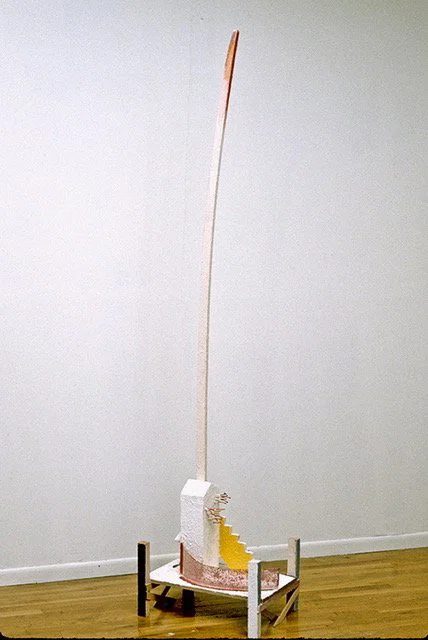
In standing works such as If I’d Known and I Only Remember, slender lines rise above small constructed forms. They suggest direction without telling us where to go. The titles add the language of recollection, encouraging a reading that allows for what remains uncertain. A remembered place, after all, is rarely as complete as the map that once helped us find it.
The Distance Between a Map and a Memory
Childhood travel and the experience of following routes on maps helped shape Elisabeth’s interest in place. That early attention to distance and direction continues through a practice that encompasses outdoor installations, wall works and intimate needlepoint pieces.
Scale changes the encounter. An installation asks us to consider our position within a setting. A smaller work brings us close to the decisions made by hand. Across these different forms, line provides a way to connect a physical location with the less orderly experience of remembering it.
Holders offers another way to consider that uncertainty. Set outdoors, its pale forms share the view with the trees behind them. Their translucency allows the setting to remain present within the installation. The work can be understood through its own arrangement, yet it also draws our attention to the surroundings that give that arrangement its scale and atmosphere.
The smaller needlepoint works bring this inquiry into a more intimate register. Here, looking can follow the accumulation of individual decisions across a surface. Moving between such different scales, Elisabeth gives us more than one way to approach the idea of place. We may recognize an outline or sense a direction before we understand what memory has brought to the encounter. That gradual recognition gives the work room to unfold.
What holds my attention is the space Elisabeth leaves for recognition. Her work need not describe a particular journey for us to recall one of our own. The materials offer a starting point, and memory carries us further.
Explore the artist’s work at elisabethmunrosmith.com
For artists
Would you like to see your work featured by ArtTour International?