

A climate exhibition cannot credibly stop at its subject. If a museum asks audiences to confront extraction, waste and ecological damage while building the show through unnecessary flights, disposable materials and single-use architecture, the method undermines the message.
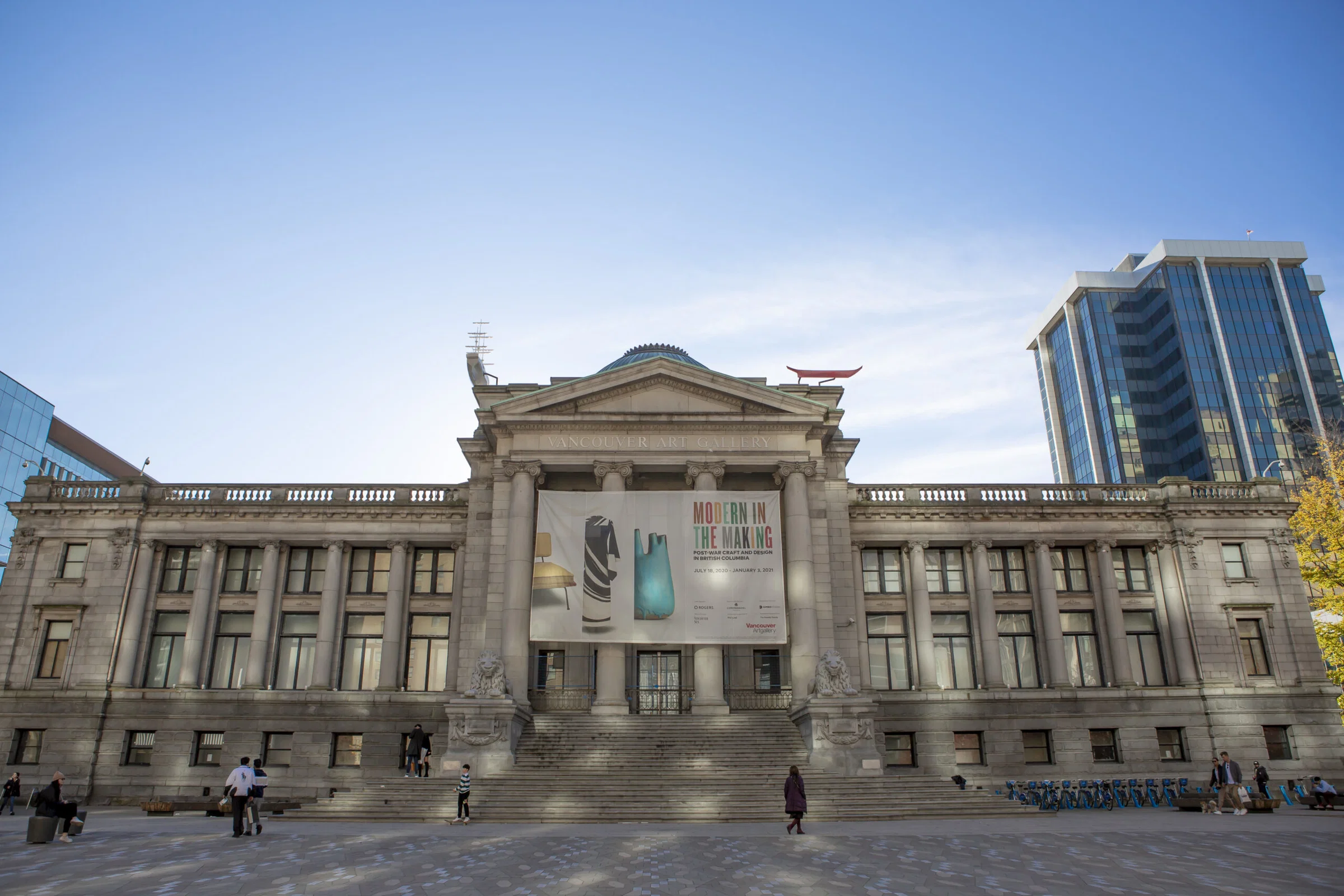
The Vancouver Art Gallery is testing a more demanding approach with Future Geographies: Art in the Century of Climate Change, on view through January 10, 2027. The museum describes it as the first major Canadian exhibition to examine the climate crisis and contemporary art on a global scale. More than 35 works range from video installations to living sculpture.
The exhibition is organized by the Vancouver Art Gallery, an institution recognized by the International Committee for Museums and Collections of Modern Art as one of North America’s most innovative visual-arts institutions. That international standing matters, but so does the museum’s willingness to treat its own operations as part of the curatorial question.
The display is also an environmental system
For Future Geographies, the Gallery says it reviewed every stage of exhibition-making. It prioritized local artists and works from its own collection to reduce shipping, moved works by ground where possible, combined curatorial trips, reused or sustainably sourced display materials, donated leftover lumber and eliminated solvent-based adhesives and vinyl wall text.
Those choices are not spectacular. That is precisely why they matter. Museum emissions and waste often accumulate through ordinary decisions: a wall rebuilt for one show, a courier flight treated as automatic, a graphic applied for a few months and discarded.
The Gallery also partnered with a fabrication shop that provides diversion reports and works with a company that turns wood waste into reclaimed lumber. More than forty University of British Columbia students contributed videos connecting individual artworks with climate science and action.
Artists imagine; institutions account
The exhibition brings global environmental concerns into contact with local specificity. Artists include Teresita Fernández, Josh Kline, Cannupa Hanska Luger, Jean Shin and Clarissa Tossin, alongside British Columbia-based artists Brian Jungen, Gabrielle L’Hirondelle Hill and Lawrence Paul Yuxweluptun Lets’lo:tseltun. A newly commissioned work by Jeffrey Gibson is also included.
The artworks do not need to function as scientific diagrams. Art can make scale felt, connect climate to memory and land, or reveal how material systems enter daily life. But the institution around the work has a different responsibility: to measure what it can, reduce what it can and disclose the practices it is testing.
That division of labor creates a stronger model than asking every artwork to deliver a solution. Artists can remain speculative, emotional or critical. Museums can make concrete changes to shipping, fabrication, travel and reuse.
From themed exhibition to institutional habit
The most important promise is that the lessons will not end with the show. The Gallery says the project is a testing ground whose findings are intended to shape future planning and production. Its ongoing commitments include reusing walls, plinths and furniture, reducing air travel, cutting printed materials and extending the life of technology.
Audiences should still ask for evidence over time. A list of measures is the beginning of accountability, not its completion. Future reporting can show which practices became standard, what emissions were avoided and where the hardest tradeoffs remain.
Future Geographies offers a useful proposition for cultural institutions: climate programming is strongest when the exhibition does not merely represent environmental responsibility. It rehearses it.