
Folds of green bronze rise and curl over one another, layered like petals or the drape of a cloak, each smooth surface catching a soft sheen of light. The form leans gently forward from a block of dark, veined marble, and nothing in it stands still. In Jean Jacques Porret’s Ode to Joy, metal seems to breathe, and joy takes the shape of motion held in balance.
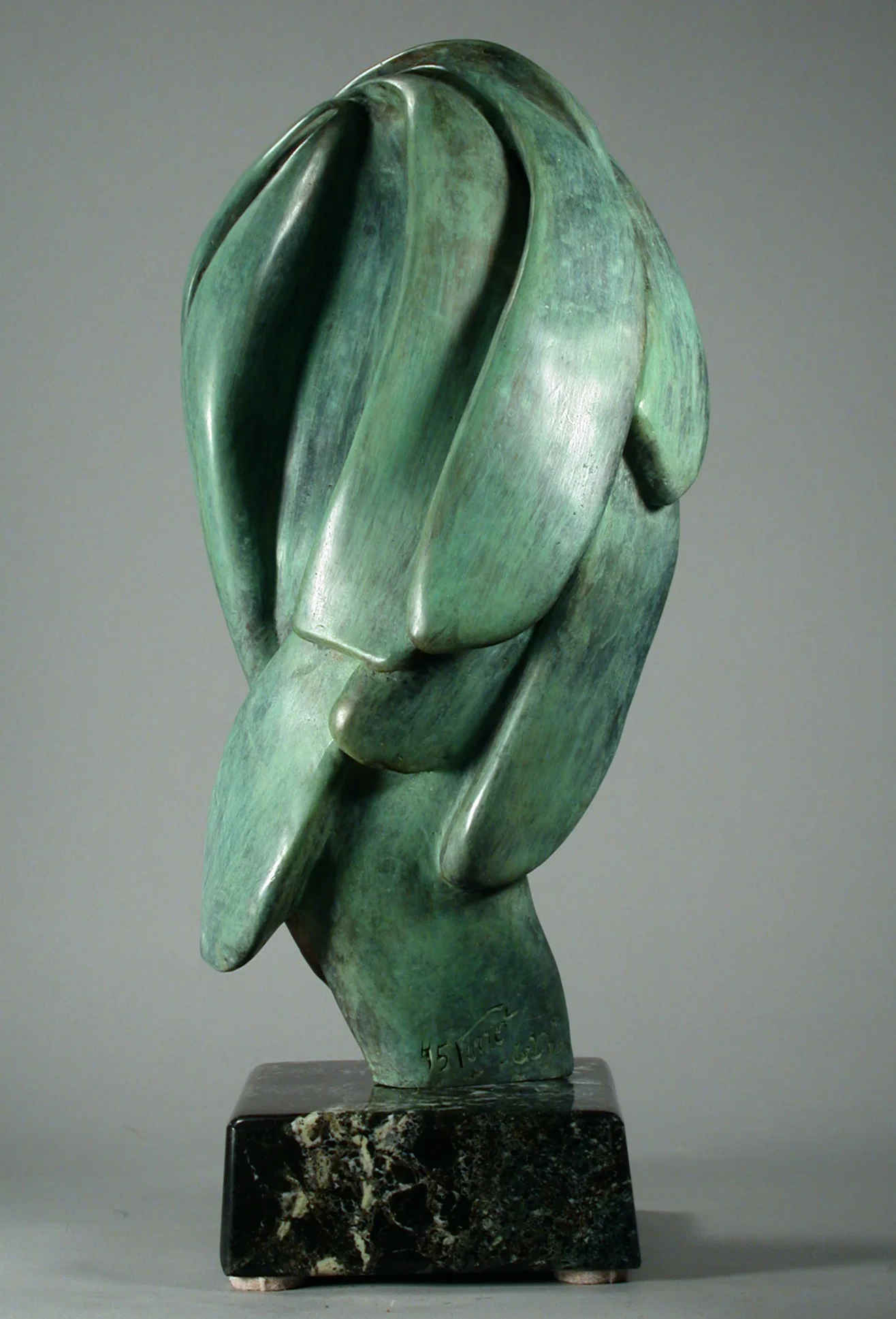
The Feeling Within the Form
Although his sculptures are figurative in style, Jean Jacques explains that they are not truly about the human body. They are about the emotions and ideas a body can awaken, carried in fluid curves and in a balance that often feels delicately precarious. Each piece holds its own sentiment and symbolism, and it is that inner life, rather than anatomy, that invites us to linger.
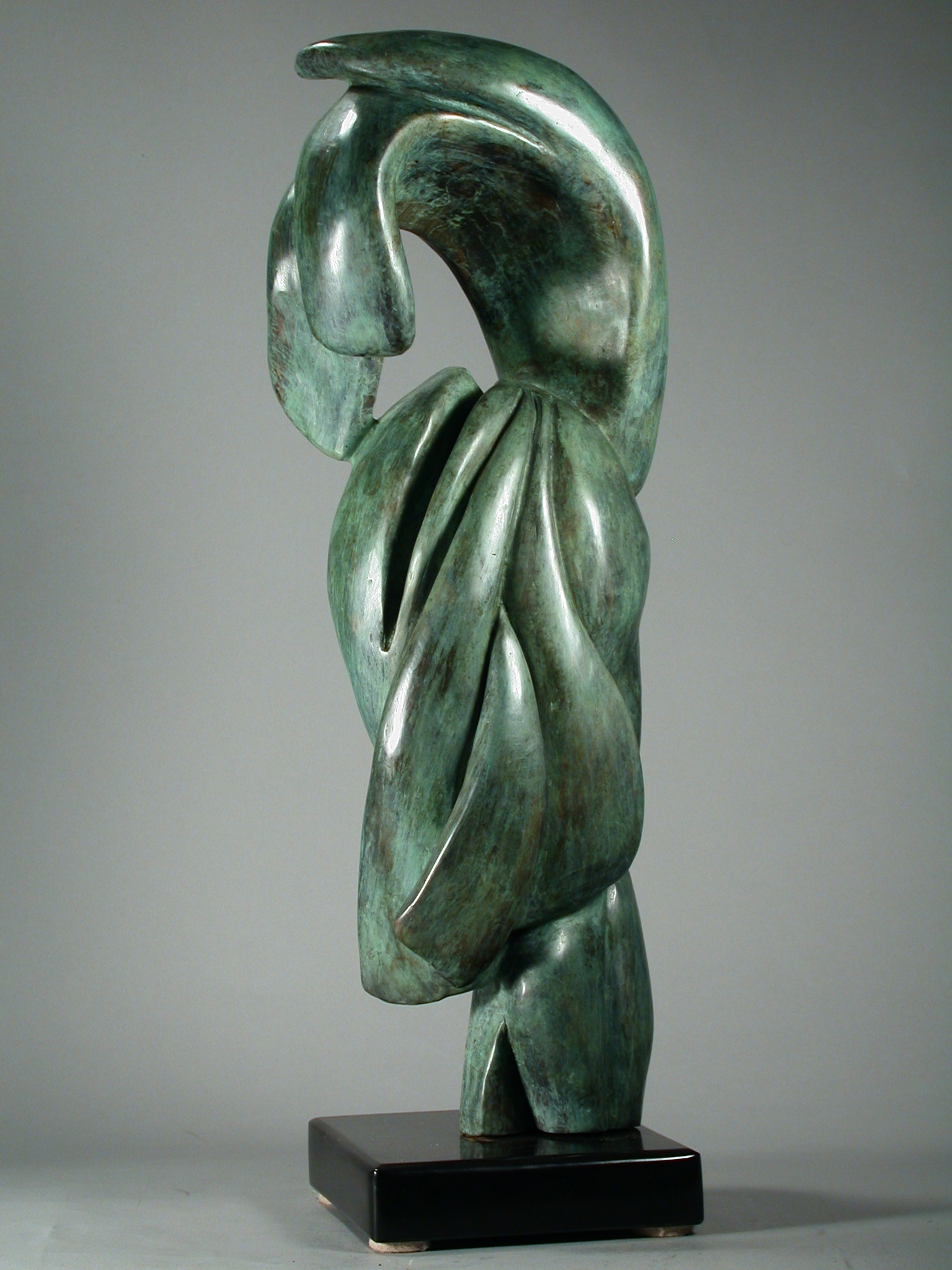
Sourire Intime makes this visible. A long, arching form bows its crest downward, as if turning toward someone close, while beneath it the bronze gathers into soft, wrapped folds that taper to a narrow base. The green patina deepens in the hollows and brightens on the curves, and the whole figure seems caught in a private moment of tenderness. The intimate smile of the title is never drawn; it is felt in the gesture.
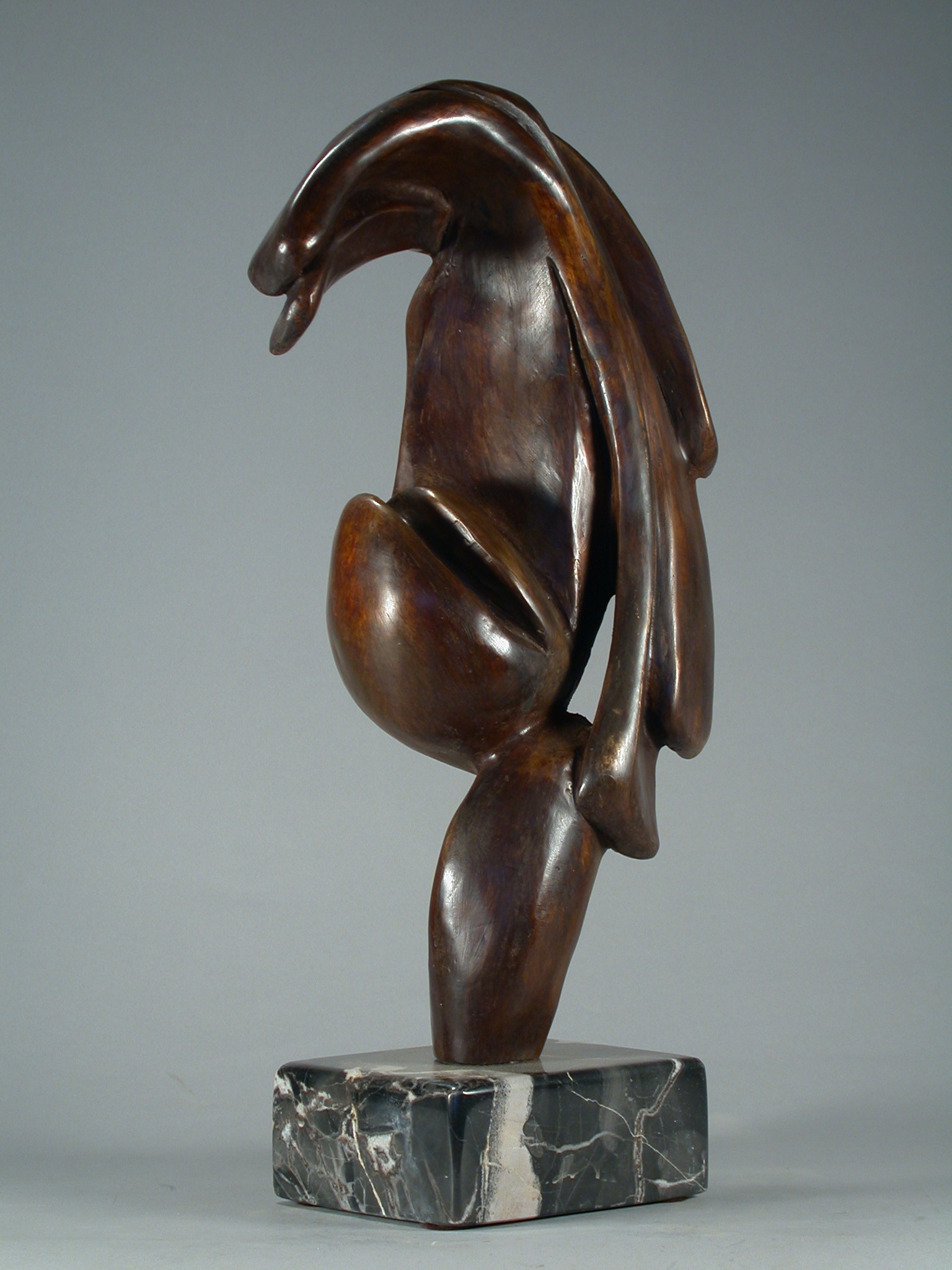
In Temps Perdu, the patina turns to a warm, polished brown. A hooked crest bends low over a rounded swelling, and long, slender forms fall away behind it, all resting on a single tapered support above gray veined marble. The sculpture feels poised between movement and stillness, much like a memory surfacing and receding, and its glowing surface asks to be approached slowly.
A Path Toward Bronze
Jean Jacques found his way into art at a young age, through a deep passion for carving and woodwork. His training was largely self-guided, yet he did not travel alone. Renowned sculptors including Pomodoro, Chillida, Ramseyer, Etrog, and Henry Moore shared their wisdom and encouraged his curiosity. In their company, he was drawn toward bronze and the demanding craft of lost-wax casting. He describes bronze as a responsive material, one that is “sweet to the touch,” and that tactile affection is present in every surface he shapes.
His early hands-on work with wood still seems to live in these bronzes, in the way each fold appears carved by patience and in the way light travels across every curve.
Jean Jacques’s sculptures do not ask us to recognize a figure. They offer something quieter: a feeling given weight and balance, waiting for us to meet it with our own sense of wonder.
Contact the artist: jjporret.com
For artists
Would you like to see your work featured by ArtTour International?