

The Columbian Exchange is often taught as a map of arrows: potatoes, horses, sugar, disease, people. John Akomfrah turns those arrows into weather, bodies, cargo, ruins and restless water.
Arcadia, opening November 6 at London’s Natural History Museum, is a five-screen film installation about the environmental and human transformations set in motion by the movement of plants, animals, pathogens, commodities, technologies and people between the Americas and Afro-Eurasia from the fifteenth century onward.
At a museum built around the collection and classification of life, the work’s London debut carries unusual force. The scientific specimen and the cinematic image both preserve evidence, but they organize history differently.
Landscape is not a backdrop
Akomfrah’s images move across deserts, ice, mountains, storms, coral reefs, shipwrecks and forests reclaiming ruins. The scale is seductive. It is also interrupted by signs of trade, disease and extraction. Nature does not sit outside history as a pristine setting damaged later by human action; it is entangled with migration, empire and commerce from the beginning.
That approach matters now because environmental crisis is often represented through isolated symbols: a fire, a melting glacier, a bleached reef. Arcadia asks viewers to see systems and long duration. A crop moved across an ocean can reorganize diets, labor and land. A pathogen can alter populations. A commodity can redraw a coastline through ports, plantations and extraction.
Five screens resist a single account
The multi-screen form allows several times and places to coexist. Akomfrah does not have to reduce the Columbian Exchange to one narrator or a neat chain of cause and effect. Images can echo, contradict and accumulate across the viewer’s field of attention.
This is more than an aesthetic choice. Environmental history rarely arrives in a single frame. The benefit of a product may be visible in one place while its ecological cost remains distant. A museum display may celebrate discovery while leaving the conditions of collecting unspoken. Simultaneous images can hold those realities together without pretending they are equal.
For artists working with climate and ecology, the method offers a useful principle: scale does not have to mean spectacle alone. It can mean building a form capable of carrying several systems at once—material, historical, emotional and political.
The museum changes the work
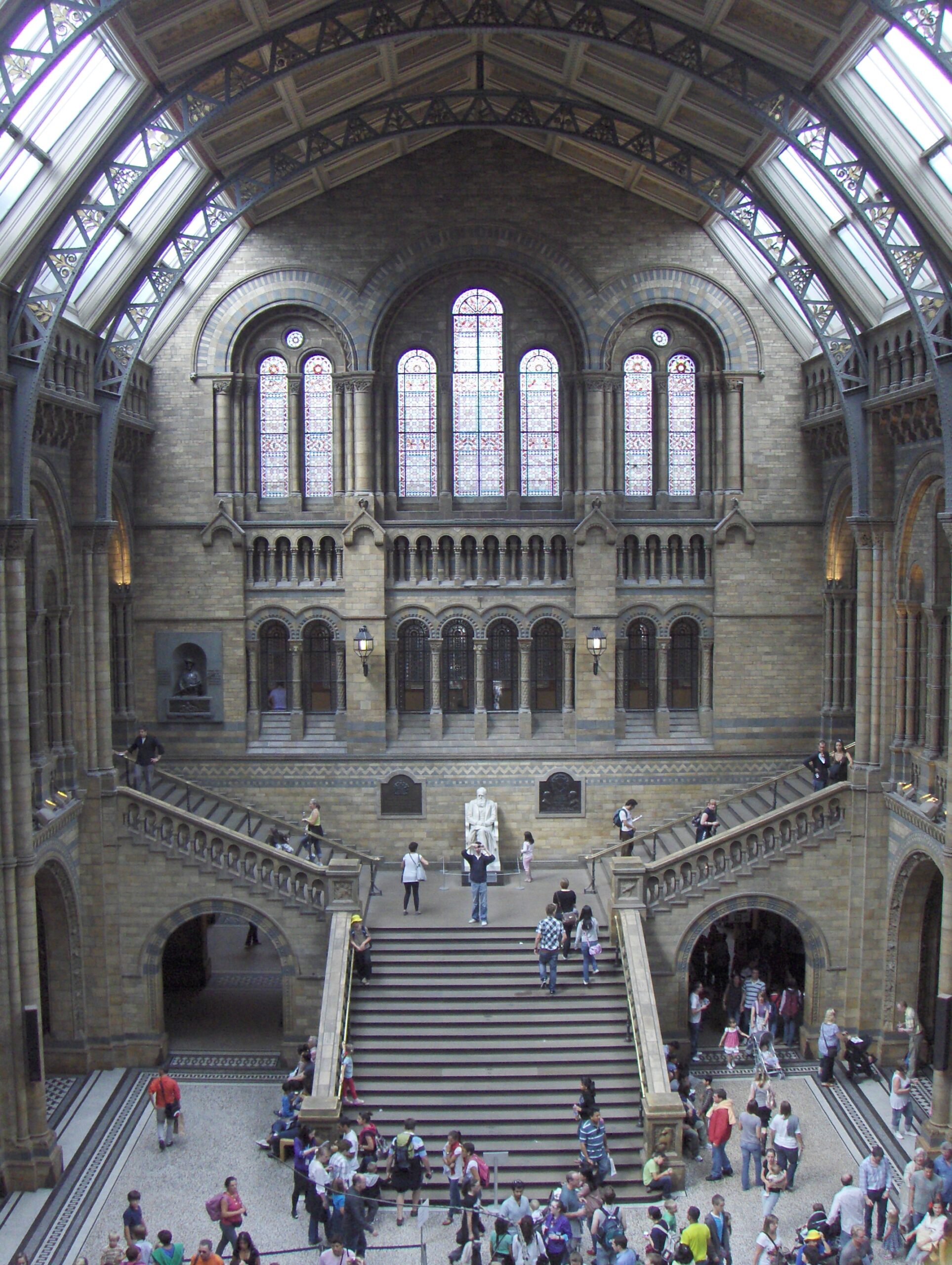
The Natural History Museum describes Arcadia as part of its contemporary-art programme and places it alongside collections assembled over more than three centuries. That context makes the institution itself part of the encounter. Specimens can reveal biodiversity and extinction, but their labels, routes and methods of acquisition also reflect human power.
The installation sits near the museum’s Fixing Our Broken Planet gallery, which focuses on nature-based responses to environmental crisis. The pairing creates a productive tension. Art can hold ambiguity, grief and historical entanglement; science can test mechanisms and interventions. Neither should be asked to impersonate the other.
From exchange to responsibility
The title Arcadia invokes an idealized natural refuge. Akomfrah fills that refuge with evidence that no landscape is untouched by movement and memory. The result is not an argument against exchange. It is an insistence that exchange has consequences, and that those consequences are distributed unequally across people and ecosystems.
That is where the work meets the present. Climate change, invasive species, industrial agriculture and biodiversity loss do not respect the borders through which policy is organized. Their histories travel through the same routes of trade and power that the film makes visible.
Arcadia is on view at the Natural History Museum, London, from November 6, 2026, through May 2027. The museum is internationally recognized and is the official host of the presentation.