
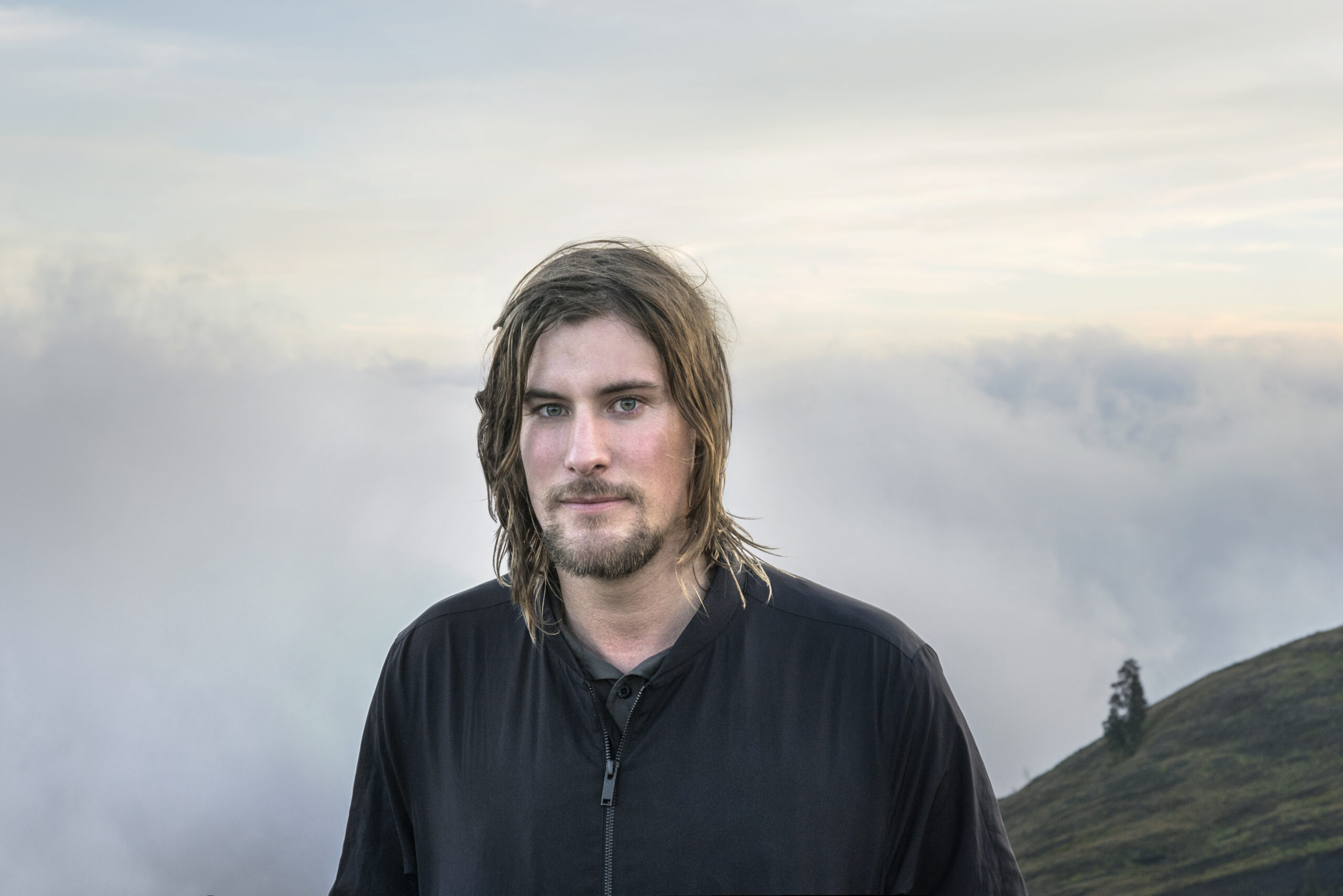

Julian Charrière will open Deep End at the Museum of Contemporary Art, Los Angeles, on November 15. The exhibition is the French-Swiss artist’s first solo museum presentation in Los Angeles and one of the inaugural projects supported by the Eric and Wendy Schmidt Environment and Art Prize.
The commission brings recent work together with a new installation focused on the fragility and resilience of planetary water systems. MOCA describes an immersive exhibition in which geological time, human history and possible reparative futures meet. It will run through June 6, 2027.
Water as evidence, medium and scale
Charrière’s practice has long moved between field research and image-making. He works with photography, film, sculpture and installation, often entering environments shaped by extraction, climate change or technological ambition. Water is not a picturesque backdrop in that practice. It records heat, contamination, migration, industry and deep time.
Deep End arrives as museums are asking what environmental art can do beyond illustrating crisis. The strongest work in this field does not turn scientific facts into decoration. It changes the viewer’s sense of duration, proximity and responsibility. An immersive installation can make a planetary system perceptible without pretending that one exhibition can resolve it.
The structure of the new prize is also significant. It supports artists working across art, architecture, design, climate, conservation, sustainability and environmental justice. That list acknowledges that ecological questions do not remain inside conventional media or departments. They require collaboration among researchers, communities, fabricators and institutions.
What artists can learn from the project
Artists working with environmental subjects often face a difficult balance. The research must be credible, yet the work cannot become a diagram. The image must be compelling, yet beauty cannot erase the systems being examined. Charrière’s practice suggests that these tensions can become the form of the work rather than problems hidden behind it.
For an artist developing a comparable project, the practical questions begin early: Who holds the relevant knowledge? What permissions are needed for fieldwork? How will materials, transport and energy use relate to the subject? What evidence belongs in the gallery, and what can be carried by publication, film or public programming? A strong environmental project is often an ecosystem of outputs rather than a single object.
The exhibition’s accompanying catalogue extends that model. Research-intensive work can reach different audiences through installation, moving image, writing and education. Those formats also create a record after an immersive environment is dismantled.
A prize with institutional consequences
Because Deep End inaugurates a new environmental art prize, it will help define what the program values. The important measure will not be scale alone. It will be whether the commission connects aesthetic experience to the material and political realities of water without reducing either.
MOCA’s decision to place an environmental award inside its contemporary program is part of a broader shift. Climate and conservation are moving from occasional themes toward long-term curatorial infrastructure. For artists, that can create new resources and audiences—but it also raises expectations for research, transparency and the environmental footprint of production.
Julian Charrière: Deep End is on view at MOCA Grand Avenue from November 15, 2026, through June 6, 2027.