
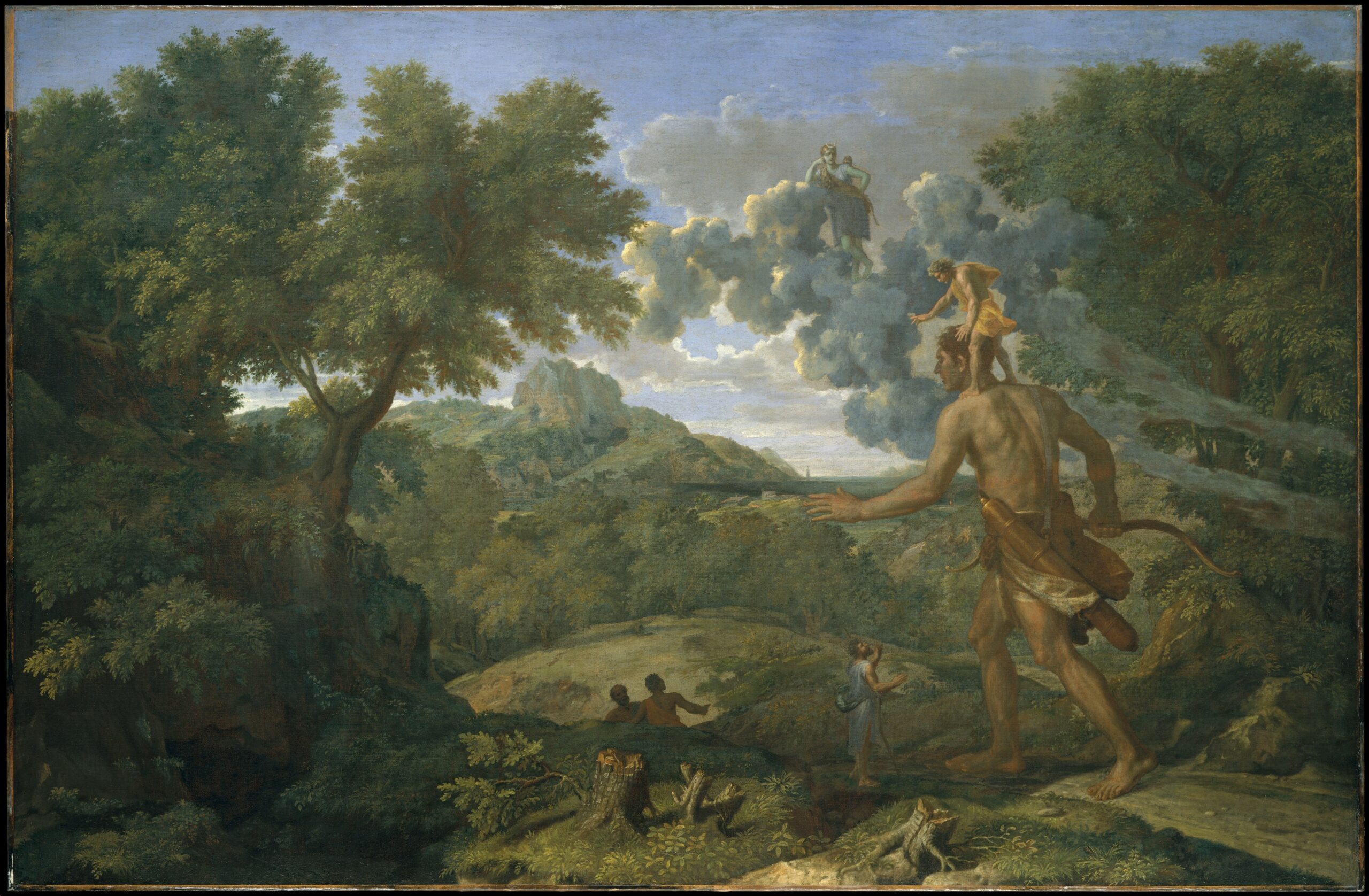

A landscape painting can appear to offer nature at a distance: a field, a storm, a forest, a mythic horizon. The Metropolitan Museum of Art’s current installation Ecologies of Painting asks viewers to look again. The works in Gallery 638 show that nature is never merely a backdrop. It is material, labor, power, myth, climate, and a system in which human life is embedded.
On view through January 17, 2027, the installation brings together European paintings made from about 1525 to 1775. The Met describes a historical movement from images of people existing within natural systems toward pictures that assert control over land and resources. That shift makes the gallery relevant to the present without pretending that centuries-old paintings were made with today’s environmental vocabulary.
Nature is inside the painting
The ecological argument begins with the object itself. A painting transforms flax into linen, trees into panels and stretchers, and minerals into pigments. These materials do not stop having environmental histories when they enter a museum. They carry extraction, trade, craft, chemistry, and decay into the gallery.
Nicolas Poussin’s Blind Orion Searching for the Rising Sun, used as the installation’s lead image, turns a mythic giant into part of a turbulent landscape. Clouds, water, trees, and bodies are not separate layers; they push and respond to one another. In works of agriculture and rural labor, cultivated land can look harmonious while obscuring the social systems that organize who works, who owns, and who consumes.
From belonging to dominion
The installation’s most useful idea is that concepts of nature are culturally constructed. A field can be represented as home, property, commodity, danger, divine force, or proof of human mastery. The image teaches viewers how to understand the land it depicts.
That insight matters for contemporary ecological art. Artists today often work with climate data, damaged landscapes, living organisms, or reclaimed materials, but the older paintings remind us that environmental meaning also lives in composition and viewpoint. Who is placed above the land? Who disappears into it? Which kinds of labor become picturesque? What is treated as limitless?
Lessons for artists now
An ecological practice need not illustrate a crisis literally. It can examine the materials of art making, the routes by which they arrive in the studio, the energy and waste of production, or the inherited visual conventions that make domination look natural.
The Met’s installation also demonstrates the value of rereading a permanent collection. Environmental programming does not always require a new commission or a separate climate exhibition. Curatorial framing can reveal ecological questions already present in familiar works and bring historic art into a conversation about the present without flattening either period.
Because the exhibition is hosted by The Metropolitan Museum of Art, its institutional setting meets ATIM’s requirement for exhibition coverage at a world-recognized museum. More importantly, its argument is genuinely environmental: human and nonhuman histories are intertwined, and the materials and images of art participate in that relationship.
The gallery’s quiet challenge is to stop asking where nature appears in a painting. A more revealing question is where it does not.