
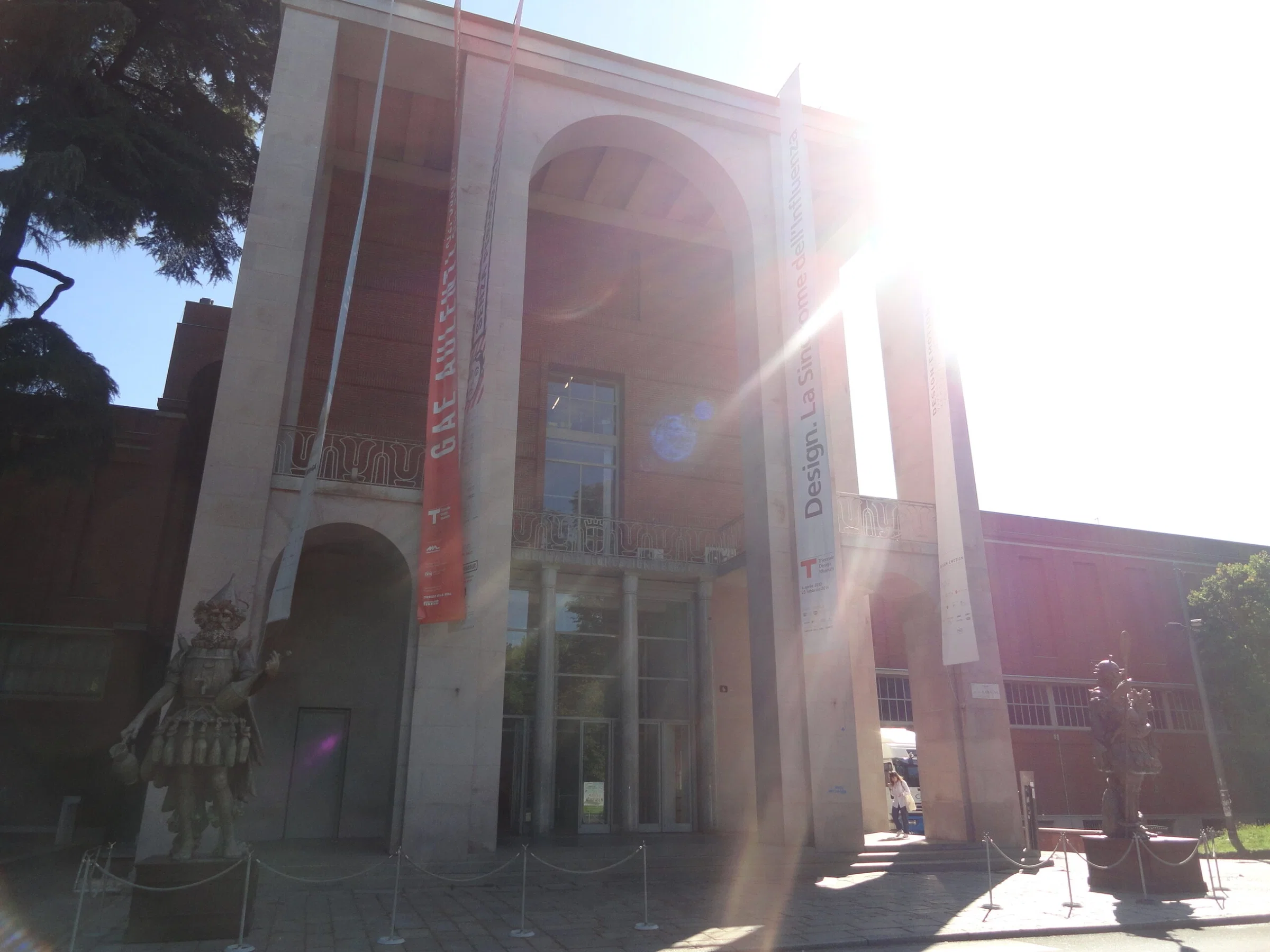
Monica Bonvicini has turned three decades of titles into a single durational sound work. Presented at Triennale Milano from November 20 through 22, Retrospective consists of a voice reciting roughly 2,000 titles from works the artist has made since the 1990s.
The piece does not summarize a career through signature objects. It asks what remains when the objects disappear and only their names are heard. Titles that once introduced installations, sculptures, videos, drawings and other works accumulate into a new composition, shifting between inventory, poem and self-portrait.
A retrospective without objects
Bonvicini’s practice has long examined architecture, gender, language and structures of power. In Retrospective, language becomes the architecture. Each title carries the trace of an absent work, but the sequence creates relationships that were never visible when the works were encountered separately.
The format also unsettles the authority of the conventional survey exhibition. A retrospective usually depends on selection: curators choose milestones, galleries establish a chronology and objects stand in for a life’s work. Bonvicini replaces that hierarchy with duration and repetition. The listener receives a career as an uninterrupted field of words.
Titles as material
Artists often treat titles as explanatory labels added after the real work is finished. Bonvicini’s sound installation makes the opposite argument. A title can frame perception, carry political tension, deliver humor or refuse clarity. Once spoken aloud, it also acquires rhythm, tone and bodily presence.
Hearing the titles together exposes recurring concerns without reducing the work to a fixed interpretation. Certain words and structures return; others interrupt the pattern. The sequence becomes a record of how an artist’s vocabulary changes while core questions persist.
A current practice built from its own archive
The presentation at Voce Triennale is especially apt because the venue’s SONDA format is devoted to sound experimentation. The work is not an archival lecture transferred to speakers. It is an encounter that depends on time: visitors cannot grasp 2,000 titles at once, and no single moment can stand for the whole.
That incompleteness is part of the experience. A career is too large to be contained by a checklist, yet a list can reveal how meaning forms through accumulation. By making her catalogue audible, Bonvicini turns documentation into an artwork and asks whether language describes a practice or quietly constructs it.