
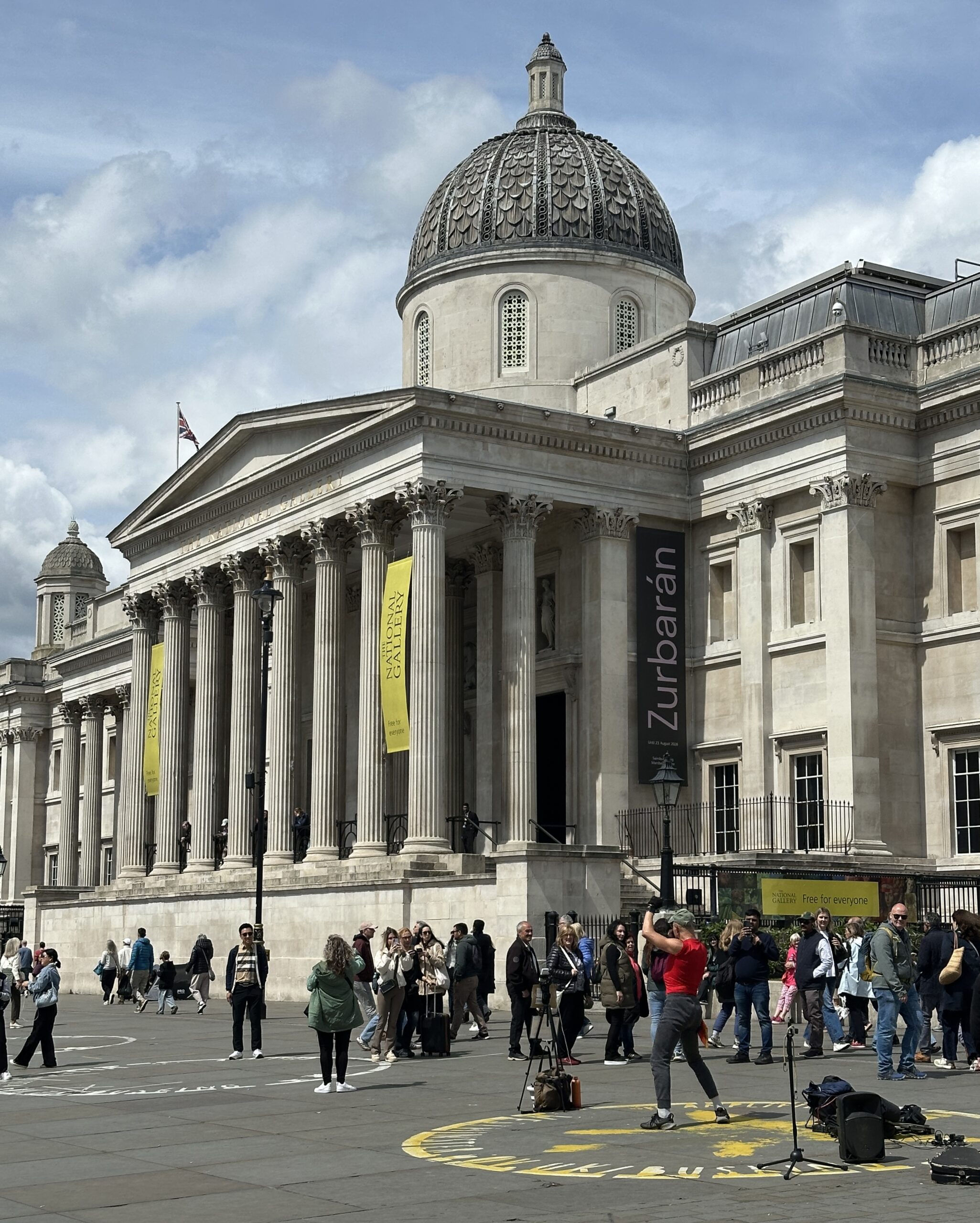

The National Gallery in London has published the first recommendations from NG Citizens, a five-year experiment that places members of the public inside the museum’s decision-making process. The initiative began with 50 people aged 16 and over, selected by civic lottery after invitations went to 15,000 households across the United Kingdom. They met over five sessions between November 2025 and March 2026 to consider what a national gallery should mean to the people it serves.
The resulting proposals are not a visitor-satisfaction survey. They ask the museum to reconsider how it welcomes people, explains the histories around its collection, uses technology, shares paintings and resources across the country, and balances free access with commercial pressures. The National Gallery says a smaller Citizens’ Panel will continue working with it through 2030.
From consultation to shared responsibility
Museums routinely invite feedback, but the structure of a citizens’ assembly is different. Participants are given time, evidence and access to specialists before deliberating together. Civic lottery recruitment is intended to reach beyond the people who already attend cultural consultations or feel comfortable speaking in museum settings.
That distinction matters. A focus group can tell an institution which message is landing. A deliberative assembly can challenge the assumptions behind the message itself. The National Gallery’s participants addressed questions that are often treated separately: access, representation, interpretation, technology, national reach and financial sustainability.
There were also boundaries. According to the published reporting, participants were not asked to propose major changes to the building, buying or selling paintings, or measures that might compromise the Gallery’s arm’s-length relationship with government. Transparency about those limits is essential. Public participation becomes credible only when people can see both the influence they have and the decisions that remain elsewhere.
What artists should watch next
The most consequential phase begins now. Recommendations acquire meaning through budgets, timelines, staff responsibilities and measurable changes. For artists, the implementation could affect how national collections explain context, commission interpretation, work with communities and circulate resources beyond a capital-city building.
The proposal to use technology for more personalised routes through the collection deserves particular scrutiny. Done well, digital tools can help visitors build connections across periods, subjects and lived experiences. Done poorly, personalisation can narrow discovery or substitute an interface for human interpretation. Artists and educators should ask who designs those routes, what data informs them and whether multiple readings remain visible.
The call for a collection that reflects the United Kingdom more fully also raises a long-term question: how will a museum whose historic strength lies in European painting respond through acquisitions, loans, interpretation and partnerships? The answer will not be contained in one exhibition or a single label. It will be visible in repeated institutional choices.
A test of institutional courage
NG Citizens gives the National Gallery a public mandate to experiment, but it also creates a record against which future decisions can be assessed. The continuing panel offers a mechanism for memory and accountability rather than a one-off burst of consultation.
For other museums, the useful lesson is not simply to copy the format. It is to decide which decisions the public can genuinely influence, recruit beyond the usual cultural constituencies, compensate the time and expertise involved, and publish what changes as a result. Participation earns trust when institutions can show the line from deliberation to action.