
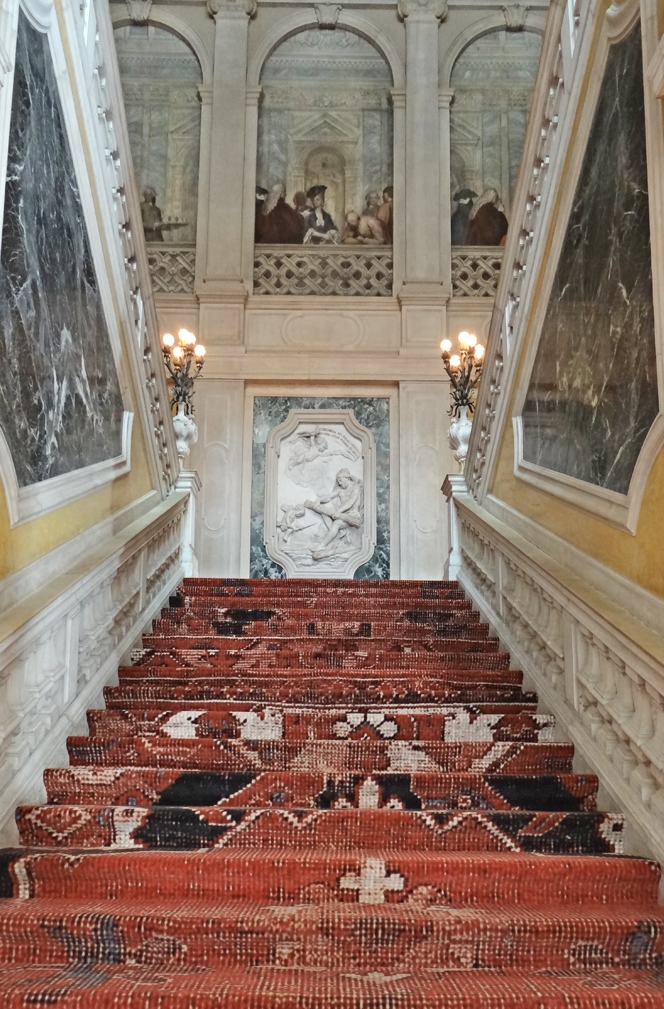

Palazzo Grassi is changing the way one of the world’s largest private contemporary-art collections meets the public. From March 21, 2027, the Venetian museum will replace its long-running cycle of temporary exhibitions with a permanent presentation of more than 100 major works from the Pinault Collection.
The decision marks a structural shift. Since opening in 2006, Palazzo Grassi has hosted 27 exhibitions, including monographic projects and thematic displays that drew from François Pinault’s holdings while regularly changing their focus. The new installation will give selected works a longer public life inside the building, while the collection’s other Venetian venue, Punta della Dogana, and the Bourse de Commerce in Paris continue separate exhibition programs.
Pinault Collection describes the holdings as a living collection assembled through more than half a century of discoveries, encounters and personal choices. In an interview published by Le Monde on October 16, Pinault said the permanent display will bring together 106 works by 54 artists. His wider collection numbers around 10,000 works.
From rotation to duration
Temporary exhibitions are built around change: a new thesis, a new loan list, a new marketing cycle. Permanent displays make a different promise. They allow visitors to return to the same work, institutions to build longer interpretive narratives and artists to become reference points rather than passing attractions.
That duration can be especially meaningful in contemporary art, where private collections often surface only in fragments. A permanent route reveals not only individual masterpieces but the collector’s choices—what is centered, what is absent and how one generation is placed beside another. It turns collecting into a visible form of art history.
The move also arrives at a moment when museums and galleries are reconsidering the economics of constant turnover. A stable core can reduce the pressure to rebuild every gallery on a short cycle, although it does not eliminate the costs of conservation, interpretation, public programs or periodic reinstallation.
What artists should watch
For artists represented in the opening display, long-term visibility can alter how work is encountered. Repeated exposure supports scholarship, education and memory. It can also shape market narratives, especially when a private collection becomes a public destination with the authority of a museum.
The practical questions will become clearer when the full checklist is released. Which artists appear repeatedly? How are women and artists from outside the traditional Western canon represented? Will the arrangement change over time, and how will new acquisitions enter the story? A permanent presentation is never neutral; its architecture, labels and sequencing produce arguments even when the collection is described as personal.
For cultural publishers, the richest story will be larger than a list of famous names. The opening offers an opportunity to follow how a private collection explains itself, how Venice receives it outside the Biennale rhythm and whether longer display periods deepen public understanding of contemporary work.
A new anchor in Venice
Palazzo Grassi’s decision gives Venice another year-round collection experience in a city often narrated through temporary international events. The building becomes less a sequence of separate exhibitions and more a durable encounter with one collector’s vision.
That permanence should invite return visits, not close debate. If the collection remains “living,” as its owners insist, the public will be able to measure that claim over time—through changes in interpretation, additions to the display and the artists whose work is allowed to stay in view.