
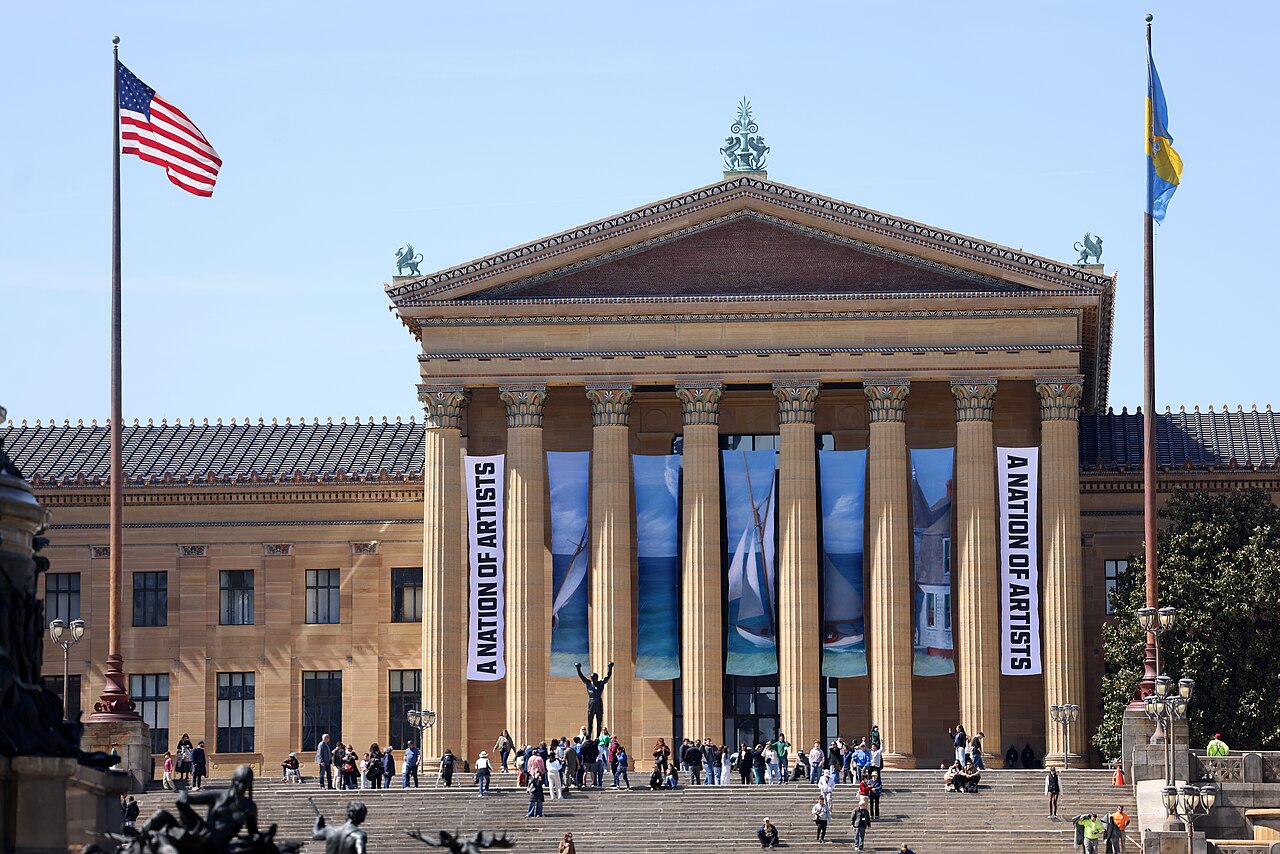

The Philadelphia Museum of Art has opened a Marcel Duchamp retrospective that brings nearly every phase of the artist’s radical career into one chronological exhibition. On view from October 10, 2026, through January 31, 2027, the presentation gathers approximately 300 works across painting, drawing, sculpture, photography, film, printed matter and the category-defying objects Duchamp called readymades.
It is the first major United States retrospective devoted to Duchamp in more than 50 years. The scale alone makes it consequential, but Philadelphia gives the exhibition a particular charge. The museum holds the world’s largest repository of Duchamp’s work, including The Bride Stripped Bare by Her Bachelors, Even and Étant donnés, the secret tableau he developed over two decades.
A career larger than the readymade
Duchamp is often reduced to a single provocation: the urinal submitted as Fountain in 1917. The retrospective complicates that shorthand by placing the readymades alongside early paintings, optical experiments, films, photographs, wordplay, publications and his portable “museum,” Box in a Valise. Seen together, the works reveal less a rejection of craft than a sustained investigation of who determines artistic value and how ideas move through objects, institutions and audiences.
The exhibition was organized with the Museum of Modern Art in New York and the Centre Pompidou, and it follows a spring and summer presentation at MoMA. In Philadelphia, the artist’s work returns to a collection shaped by his relationship with patrons Louise and Walter Arensberg, whose bequest helped make the city a permanent center for Duchamp study.
What it means for artists now
Duchamp’s legacy can feel so familiar that its original risk disappears. Yet the exhibition restores a useful lesson: an artist’s medium may be a system of decisions rather than a single material. Selection, framing, naming, reproduction, display and institutional context can all become part of the work.
That does not make every found object art, nor does it eliminate the importance of skill. It asks a harder question: can an artist make the logic of a choice visible enough that an audience encounters the world differently? Duchamp’s most durable works succeed because their provocations were not isolated stunts. They belonged to an evolving practice of contradiction, humor, eroticism, chance and intellectual play.
The museum is preparing for heavy demand with timed entry and warns visitors to allow up to two hours for queuing and viewing. That operational detail underscores the continuing public appetite for an artist who spent much of his career challenging the machinery of artistic fame.
For contemporary artists, the retrospective offers both permission and caution. It validates experimentation across formats, identities and channels, while demonstrating that conceptual freedom gains force through sustained inquiry. A gesture may attract attention. A coherent body of questions can alter art history.