
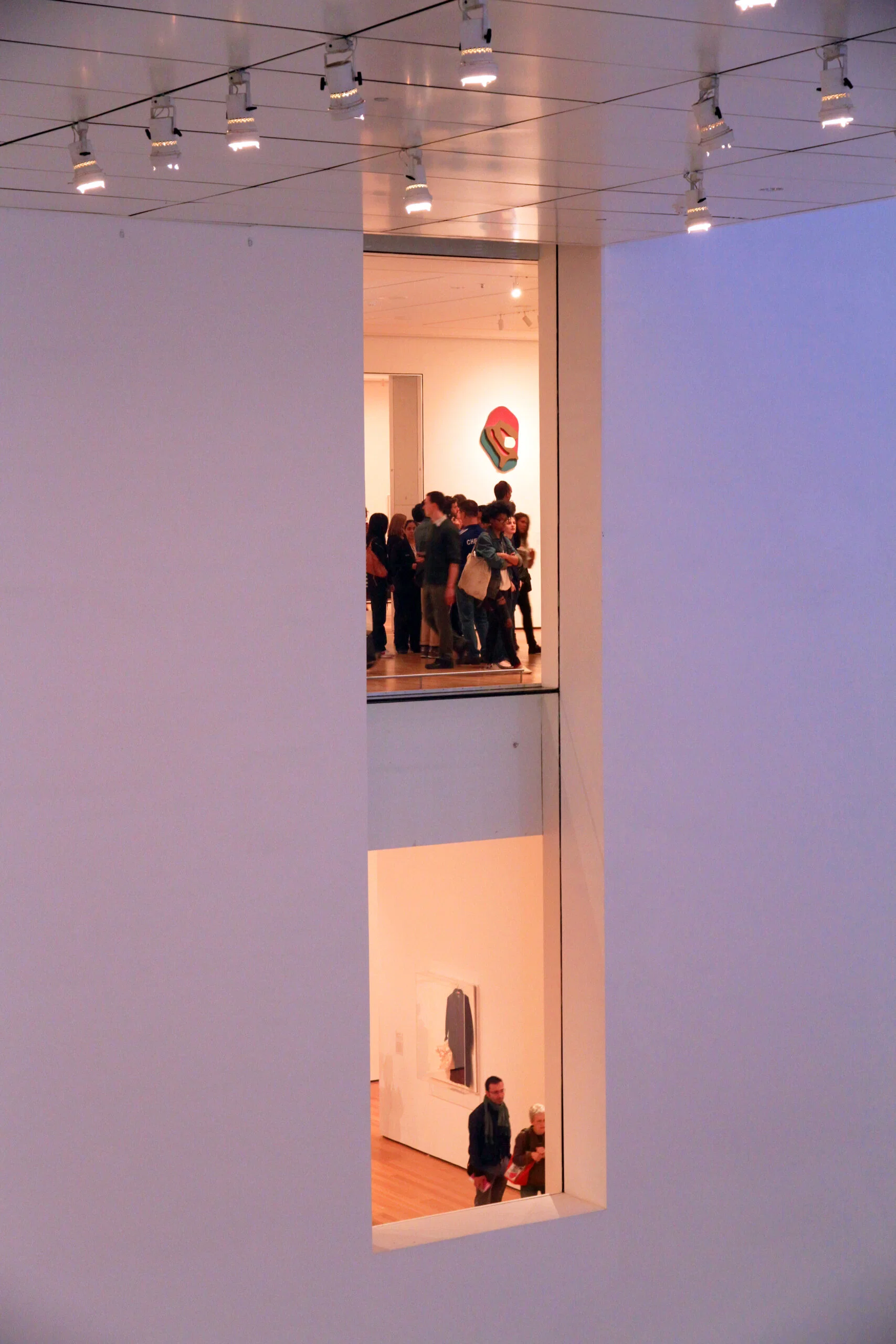

The Museum of Modern Art opens Philip Guston: In the Studio on November 21, placing the painter’s late interiors and uneasy figures in a concentrated encounter with the room where he worked. On view through February 7, 2027, the exhibition brings together paintings from the 1970s, when Guston’s return to figuration became a way to look at violence, memory, doubt and the ordinary objects surrounding him.
The event matters because Guston’s studio was not simply a backdrop. It was a testing ground in which shoes, cigarettes, light bulbs, hands and staring eyes could become carriers of political and psychological weight. MoMA’s presentation treats those motifs as evidence of a process: looking, remembering, questioning and revising.
The ordinary object as pressure point
Guston’s late paintings are often immediately recognizable, but recognition is not the same as comfort. A familiar object can feel comic in one passage and menacing in the next. The thick pinks, reds and smoky grays do not soften the unease; they make it more physical.
MoMA frames the works within the long arc of an artist who documented political turmoil and racist violence in the 1930s and 1940s, became prominent for abstraction in the 1950s, and then returned to figuration. That shift was not a retreat from modern painting. It was a demand that painting confront what abstraction could no longer hold for him.
Why the studio still matters
For artists, the exhibition offers a useful counterpoint to the idea that relevance depends on chasing novelty. Guston repeatedly returned to a limited set of images, but repetition allowed those images to acquire history. The studio became a place where the same object could be tested again under different emotional and ethical pressures.
That method also complicates the mythology of the isolated artist. Guston spent long stretches working in Woodstock, yet the paintings remained sharply alert to the social world. Withdrawal, in this case, did not mean detachment. It created the duration necessary for an image to become difficult rather than merely topical.
A compact exhibition with a large question
The title In the Studio suggests intimacy, but the works refuse to stay private. Bodies appear fragmented; rooms feel compressed; objects accumulate like witnesses. The paintings ask how an artist can absorb the violence of public life without turning it into spectacle.
That question gives the exhibition its present-tense force. Guston’s answer was neither documentary certainty nor symbolic distance. It was a stubborn, self-questioning form of painting in which the familiar becomes strange enough to be seen again.