
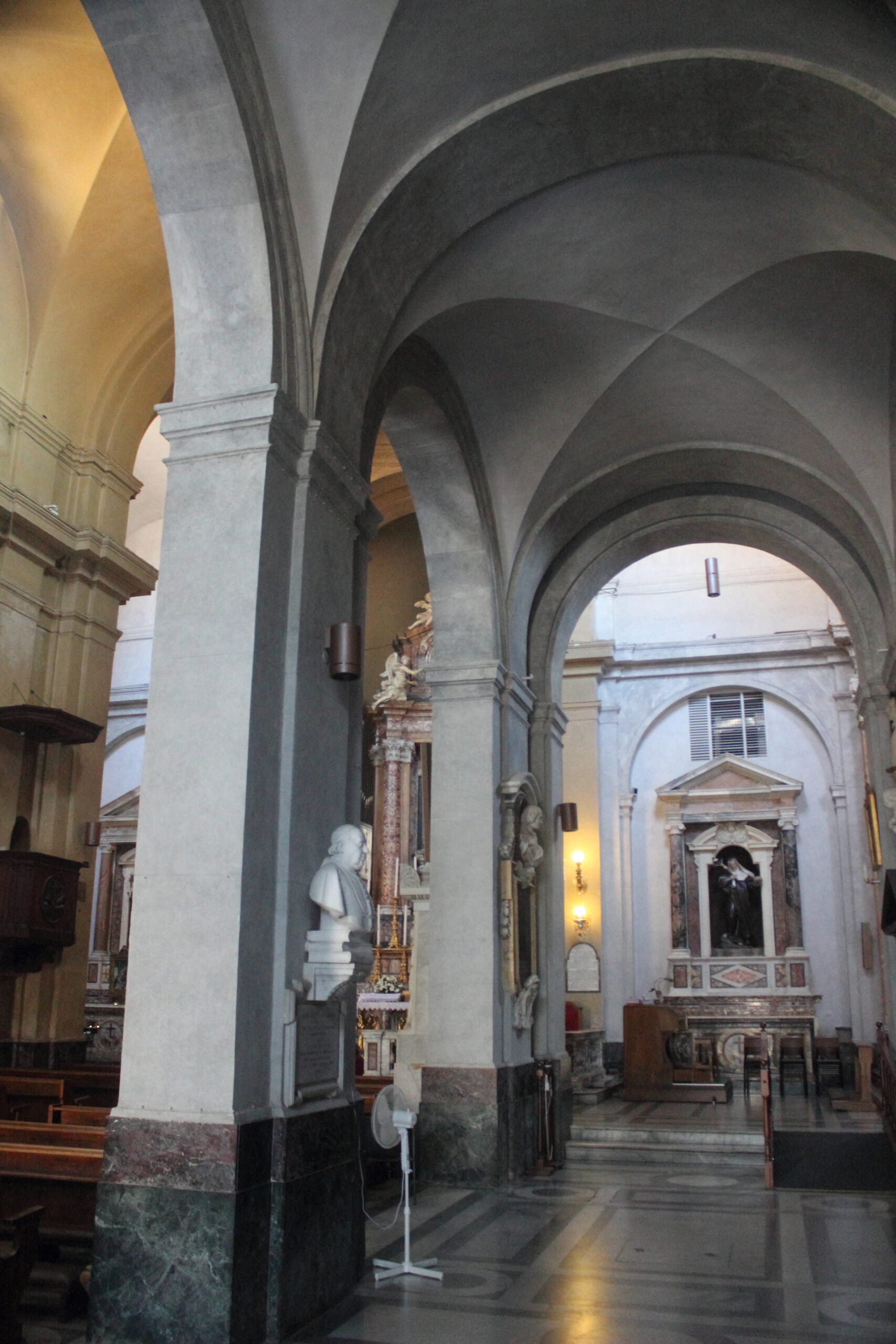

Behind the sacristy of San Francesco a Ripa in Rome, a small cell carries a history much larger than its walls. Tradition holds that Francis of Assisi stayed there during visits to seek an audience with Pope Innocent III. In 2026, eight centuries after the saint’s death, the room’s devotional ensemble has been restored as a single work of memory.
The Special Superintendency of Rome coordinated conservation of 50 silver-sheet reliquaries, removal of dust from the monumental wooden altarpiece that holds them, and diagnostic investigation of painted icons of Saint Anthony of Padua and Saint Louis of Toulouse. The intervention was carried out between July and September and publicly presented in October.
A room built from layers of belief
The cell is not presented as archaeological proof of every story attached to it. Its power comes from the accumulation of use, devotion, image and retelling. What began as a place of hospitality became a sanctuary. The objects now preserved there belong to later centuries, yet they give material form to an enduring Franciscan memory.
The 50 reliquaries are arranged within a wooden altar made between the late 17th and early 18th centuries. Together they form a symbolic family tree of the Franciscan order. Oxidation and corrosion had dulled the silver surfaces; conservation sought to restore legibility without erasing age.
Conservation as a way of reading
The project combined treatment with research. Diagnostics on the two painted icons examined materials and technique, allowing conservators and art historians to learn from the objects while stabilizing the ensemble. The scientific director, art historian Alessandra Acconci, emphasized treating the cell not as a collection of isolated pieces, but as a unified space whose furnishings, images and devotional objects tell one story together.
That principle is useful far beyond religious heritage. A work can lose meaning when removed from the relationships that shaped it. Conservation decisions therefore address not only surfaces and structures, but also placement, sequence, ritual, memory and access.
The extraordinary survival of a small place
Rome is built at monumental scale, yet this story persists through a room associated with simplicity. It has survived changes of ownership, architecture and devotional practice, gathering later artworks around an early memory rather than replacing it.
The restoration does not resolve the distance between documented history and tradition. It makes that distance visible and cared for. The cell can be understood simultaneously as a physical interior, an artistic ensemble and a vessel for belief.
Extraordinary heritage is not always a newly discovered masterpiece. Sometimes it is a place where generations have continued to locate meaning, and where careful hands decide that the network of objects around a story deserves to survive. In San Francesco a Ripa, silver, wood, paint and a modest room now speak together again.