

Rosalie Gascoigne did not begin exhibiting her art until she was 57. Less than a decade later, in 1982, she became the first woman to represent Australia at the Venice Biennale. A major retrospective now open at the National Gallery of Australia makes that compressed rise only the beginning of the story.
Gascoigne found her language in things other people had finished with: weathered road signs, drink crates, corrugated iron, feathers, wood and fragments gathered around Canberra. She reorganized them into spare, luminous compositions that feel at once constructed and open to the landscape.
A career that arrived in its own time
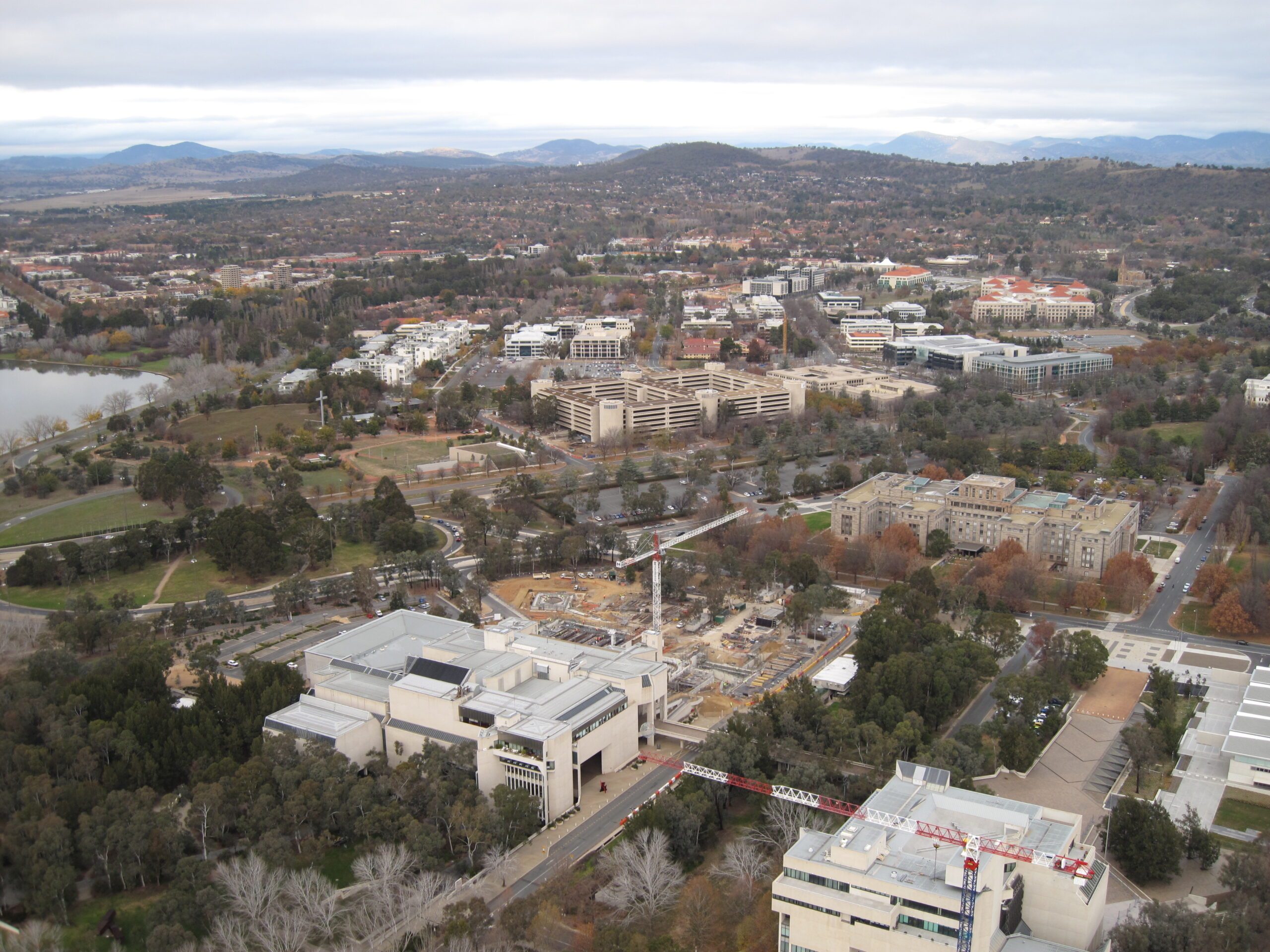
Born in New Zealand in 1917, Gascoigne settled in Canberra with her husband, astronomer Ben Gascoigne. For a period the family lived at Mount Stromlo Observatory. Without a car at first, she walked through the surrounding country, learning its surfaces and distances at human speed.
That attention later shaped the work. Her materials were not chosen merely because they were available. Faded lettering, sun-bleached timber and battered metal carried evidence of a particular place. When cut, repeated and reassembled, they turned roadside language into rhythm and ordinary wear into color.
Her first solo exhibition came in 1976, and the National Gallery made its first acquisition of her work that same year. By 1978, the National Gallery of Victoria had invited her to present a survey. The speed of recognition was extraordinary, but it followed years of looking, collecting and making outside the conventional timetable of a professional career.
Found material, exact decisions
Gascoigne’s use of scavenged objects can look spontaneous, yet the finished works depend on exact choices. She sorted, cut and placed fragments until the marks of their previous lives formed a new visual order. A road sign could become a field of yellow; repeated letters could work like musical notation; rust and chipped paint could hold the sensation of dry air.
The retrospective at the National Gallery of Australia, open from October 24, 2026, to February 14, 2027, returns those works to the region that nourished them. Curator Deborah Hart has described the Canberra landscape as the foundation of Gascoigne’s art, while the artist’s family recalls trips to rubbish tips as serious searches for working material.
The power of beginning late
Stories of late success can become sentimental if they erase the labor that came before recognition. Gascoigne’s career offers something more useful. She did not wait passively to be discovered. She developed attention as a practice, built a vocabulary from what was around her, and entered public view when the work had become unmistakably her own.
For artists who fear they have missed a timetable, her life is a corrective. A career can begin after decades spent in other roles. Local material can speak internationally. What looks discarded can become a precise instrument when someone has learned how to see it.
Gascoigne died in 1999, but her work still alters the eye. After encountering it, a roadside is no longer only a route and a broken sign is no longer only waste. The world appears full of unfinished arrangements, waiting for the artist who arrives in her own time.