
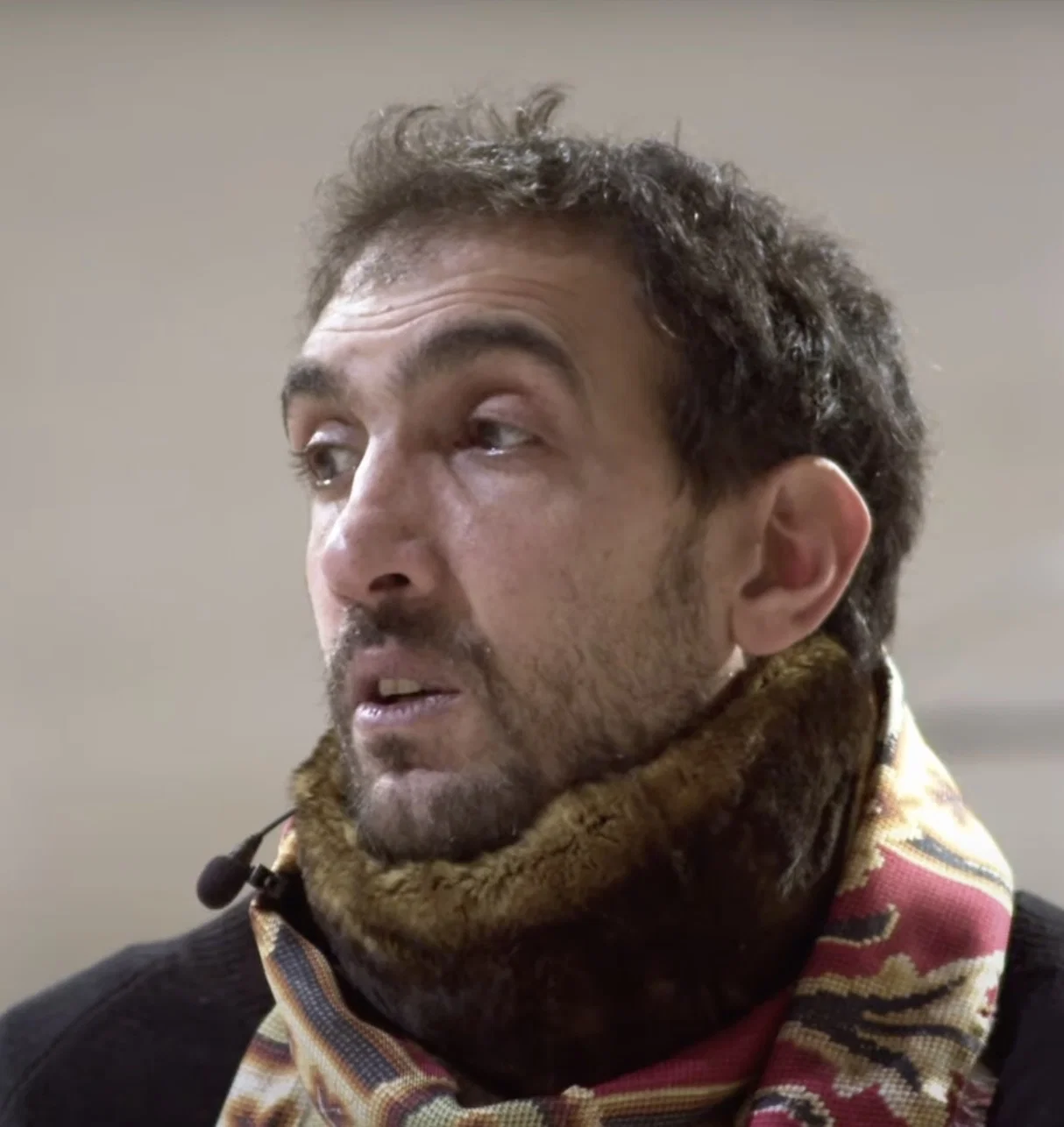
Tarek Atoui is preparing to turn Tate Modern’s Turbine Hall into a place for listening, playing and collective discovery. Opening October 13, the eleventh Hyundai Commission will bring the Paris-based Lebanese artist and composer’s sound practice into one of contemporary art’s most demanding public spaces.
The commission is important not simply because it fills a vast hall. Atoui’s work challenges the visual habits of museum-going. His installations are built from sound, vibration, handmade instruments, sculpture, performance and the unpredictable behavior of visitors. They ask audiences to enter through attention rather than explanation.
A public artwork that remains unfinished
Atoui does not treat participation as an accessory added after a work is complete. His instruments are often developed with composers, craftspeople, researchers and other artists. When no one is playing them, they can be read as sculptural objects. During workshops and improvisations, the exhibition can become a concert hall, laboratory or classroom.
That structure makes the Turbine Hall especially apt. The space receives millions of visitors and is defined by movement, echo and distraction. Rather than trying to eliminate those conditions, Atoui has described his aim as creating a realm in which people can listen and play. The commission can therefore absorb the hall’s noise, traffic and changing public instead of pretending the institution is acoustically neutral.
His previous projects have drawn on underwater recordings, experimental instrumentation and collaborations with Deaf and hard-of-hearing participants. Those experiences led him to insist that hearing is not a single biological or cultural standard. Sound can be felt through the body, encountered through vibration and understood through movement, memory and attention.
Why this matters for artists
Atoui’s practice offers a useful model for artists working beyond a single medium. The work does not abandon craft when it becomes participatory. Its engineered instruments, materials and spatial decisions remain precise. Participation is possible because the artist has designed a framework strong enough to welcome variation.
That distinction matters. Interactive art can become a collection of prompts without a durable artistic language. Atoui’s approach starts with sustained research, technical collaboration and a clear question: how can a space change the way people listen? The audience then extends the work rather than supplying its missing content.
For museums, the commission also demonstrates how access can become generative. Working with different modes of hearing need not be limited to accommodation delivered after curatorial decisions are made. It can reshape the art itself, producing new instruments, formats and relationships.
From spectacle to attention
The Turbine Hall is frequently associated with scale and spectacle. Sound art can redirect that expectation. Visitors may encounter a work they cannot take in from a single viewpoint or reduce to one photograph. They must spend time, move, listen to others and notice how their own bodies alter the experience.
That is a timely proposition for contemporary art. In a culture optimized for immediate images, Atoui proposes that attention can be social, physical and slow. The work’s visibility will come not from a single monumental object but from the relationships it makes audible.
Hyundai Commission: Tarek Atoui runs at Tate Modern in London from October 13, 2026, through April 11, 2027.