
There is a question we can spend years avoiding, even while we are busy building a life: Who am I beneath everything I have learned to be?
Beneath the work, the responsibilities, the expectations. Beneath the person who knows how to keep going, take care of everyone, and say that everything is fine.
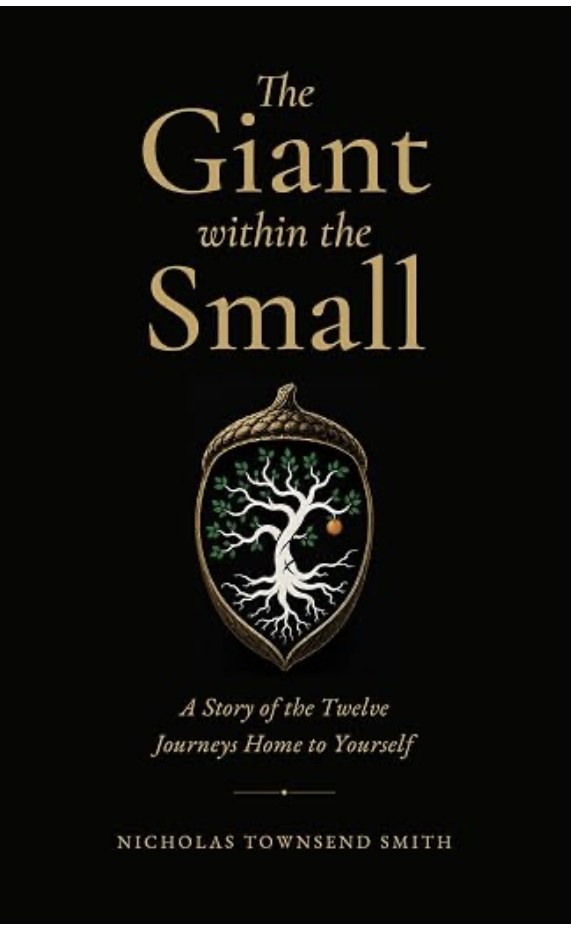
That question is at the heart of The Giant within the Small: A Story of the Twelve Journeys Home to Yourself by Nicholas Townsend Smith.
I’m pleased to introduce my friend Nicholas’s book to our ArtTour International readers. Its premise touches something many of us carry quietly: the feeling that there is more within us than the life we have allowed ourselves to live.
Sometimes that feeling arrives as restlessness. Sometimes it emerges through loss or an unexpected change. Sometimes it is simply a quiet awareness that the life we have built no longer feels connected to who we are.
The Call We Keep Postponing
The story follows Henry, a forty-one-year-old financial advisor whose marriage and financial security are coming apart. In the early morning, facing the collapse of the life he has built, he finally calls a number he has carried in his wallet for six years.
Six years. That detail alone gives us something to sit with.
How often do we carry the possibility of change while postponing the first step? We save the number. We keep the idea. We tell ourselves we will reach out when we feel stronger, when things settle down, when we can explain ourselves without falling apart.
Henry’s call connects him with Rimi, a man who asks him a question that reaches beyond the immediate crisis: Who are you?
It sounds simple until we try to answer without naming our profession, our relationships, our accomplishments, or what other people need from us.
Through Henry, Nick opens a space for that deeper inquiry. The circumstances bring Henry to the telephone, but the conversation begins to uncover the beliefs beneath those circumstances.
The Stories We Learn Before We Can Question Them
The opening pages invite readers to consider how early we begin accepting ideas about our own limitations.
Long before we have the language to examine what is happening, we are learning what earns approval, what is safe to express, and what we should keep to ourselves. Those lessons can become so familiar that we stop recognizing them as lessons. We begin to experience them as who we are.
Perhaps we learned to be agreeable. Perhaps we became the dependable one, the strong one, the person who never asks for help. Over time, a way of navigating the world can become an identity we feel obligated to maintain.
What happens when that identity becomes too small for the person we are becoming?
This is one reason the premise of Nick’s book speaks to me. Henry’s journey asks us to look beneath the habits of a lifetime and become curious about their origins.
There is compassion in that curiosity. We can begin to understand ourselves without turning every discovery into another reason for self-criticism. We can recognize that a belief once served a purpose and still ask whether we want it guiding our lives today.
Twelve Journeys Home
Henry’s story unfolds through twelve journeys: the Non-Conscious, Awareness, Grief, Acceptance, Gratitude, Empowerment, Uncertainty, Abundance, Vision, Surrender, Nurture, and Legacy.
Even reading those words, I am reminded of how much a human life asks us to hold.
Grief and gratitude can exist together. A vision can be meaningful while its outcome remains uncertain. We can feel empowered to act and still need rest, care, and support.
The book gives these themes a place within a story. Henry’s experiences bring the inquiry into the ordinary spaces where life actually happens: relationships, conversations, financial pressures, memories, and moments when maintaining appearances becomes too exhausting.
That approach offers readers a way to recognize themselves through a character. Sometimes a story helps us approach a question we have struggled to ask directly.
We follow someone else for a while, and then something in their experience feels close enough to illuminate our own. A decision, a hesitation, or a familiar fear can invite us to pause and consider what we have been carrying.
The Person Behind the Accomplishments
Henry’s struggle with identity raises a question many readers may recognize: How much of our sense of self depends on what we accomplish?
We give so much attention to what we must do. We plan, produce, improve, and pursue. Yet the beliefs we carry about ourselves accompany us into every action.
If we believe our worth depends entirely on achievement, even success can become difficult to enjoy. There is always another task waiting to prove that we deserve our place.
Henry’s encounter with Rimi invites reflection on what remains when the familiar markers of identity begin to fall away. Who are we when a career changes, a relationship ends, or the plans we trusted no longer hold?
These questions can feel uncomfortable because they ask us to look beyond the answers we have practiced.
They also create room for possibility. We may discover interests we have neglected, needs we have dismissed, or a voice we have gradually stopped listening to. We may begin to imagine a life shaped by a more honest understanding of ourselves.
A Story That Makes Room for Reflection

Nicholas Townsend Smith’s background includes a master’s degree in Industrial/Organizational Psychology and his work as a mindset coach. His interests in learned beliefs, identity, and personal growth inform the territory this novel explores.
Choosing fiction gives those questions a human setting. Henry has a history, relationships, and real pressures within the world of the story. His search begins amid circumstances he cannot simply think away.
That matters to the conversation the book invites. Reflection happens while life continues. There are bills, responsibilities, difficult conversations, and mornings when clarity feels far away.
For me, the premise raises a meaningful question: Can we begin listening to ourselves before we have everything figured out?
It is a question worth carrying into the reading.
An Invitation to Our Book Club
For our ATIM Book Club readers, I would begin here: Which part of your identity feels freely chosen, and which part feels inherited?
There is no need to rush toward an impressive answer.
Perhaps you will recognize an old expectation you have been carrying. Perhaps you will remember something you once loved before you began measuring its usefulness. Perhaps Henry’s story will encourage you to pause and listen more closely.
That pause has value.
The Giant within the Small invites us to consider the person beneath the roles, the responsibilities, and the stories we have repeated for years. It gives us a character to accompany as we consider what coming home to ourselves might mean.
As you read, notice which of the twelve journeys feels closest to the season you are living now. Give yourself permission to explore why. What feels familiar? What challenges you? What would you like to understand more deeply?
Those are the conversations I look forward to opening through our Book Club—conversations that stay with us after we close the book and return to our own lives.
Read The Giant within the Small: A Story of the Twelve Journeys Home to Yourself by Nicholas Townsend Smith.
Stay inspired!
Viviana Puello