
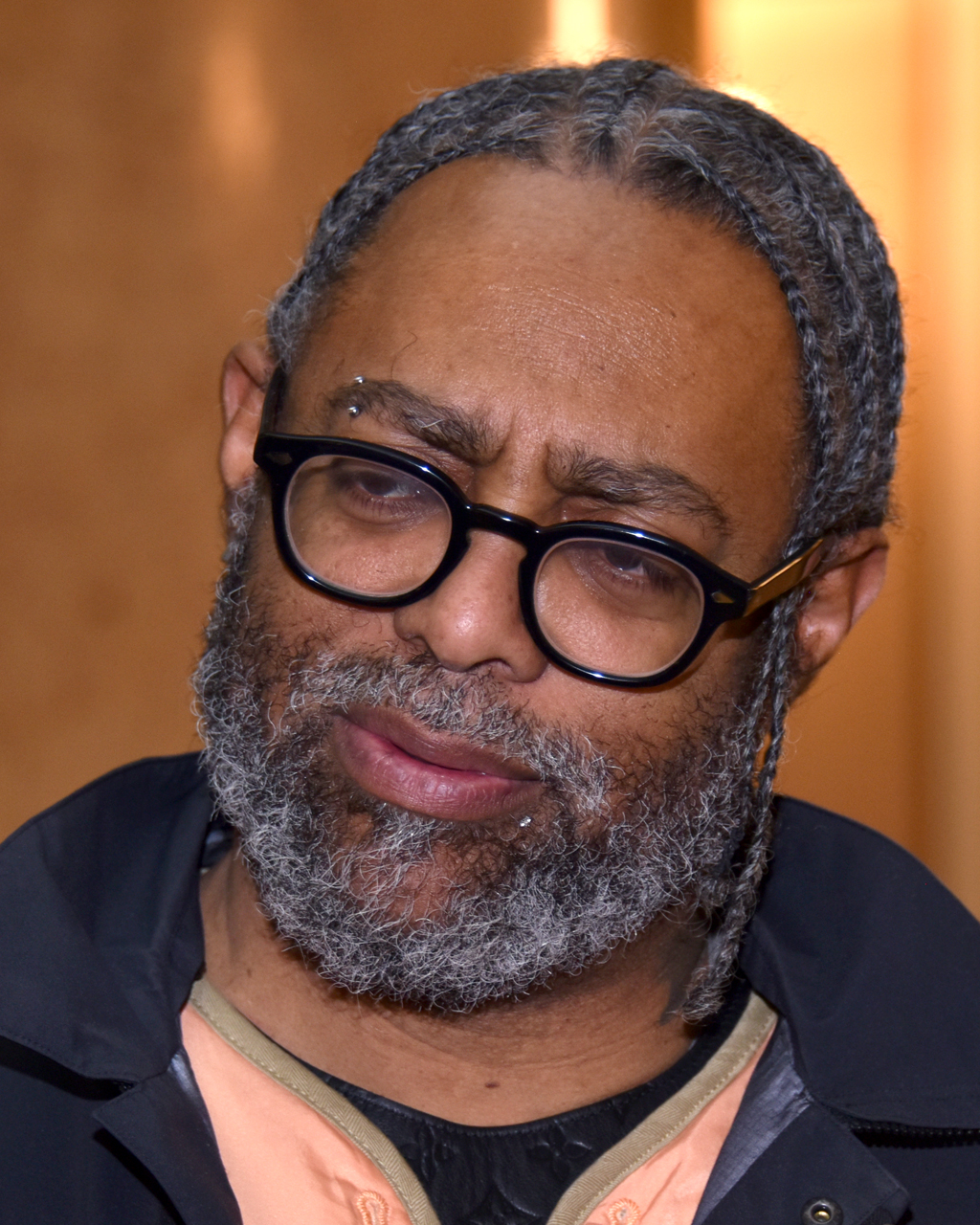

Arthur Jafa’s I Am Tony opened at the New Museum on September 24, bringing nearly four decades of restless image-making into one exhibition. The first U.S. museum survey to encompass the full breadth of his practice is also his largest museum presentation to date. Spanning two floors of the expanded Bowery building, it will move among film, video, photography, painting, sculpture and large-scale installation.
The title honors jazz drummer Tony Williams, whose playing could rupture a rhythm without destroying it. That reference offers a way into Jafa’s method. He edits images as a musician shapes time: through syncopation, recurrence, collision and silence. The result is not simply a collection of things to look at. It is an environment in which the viewer feels how images circulate through Black life in America.
A visual language built like music
Jafa has often pursued a visual form capable of carrying the power, complexity and invention of Black music. This is not a matter of illustrating a song. It is a structural ambition. A cut can behave like a drum strike; a return to an image can function like a refrain; a sudden shift in scale can destabilize the body like a change in tempo.
The exhibition’s name makes that ambition audible before the work begins. Williams became famous for an open, unpredictable style that changed the shape of jazz time. Jafa’s moving images similarly refuse smooth progression. They place beauty beside violence, intimacy beside mass spectacle and historical evidence beside material drawn from contemporary media.
The archive as a charged material
Central to Jafa’s practice is an immense archive drawn from cinema, television, documentary footage, social platforms, music and popular culture. He cuts and rearranges that material into unexpected proximities. The space between two images can carry as much force as either image alone.
This approach is especially visible in Love Is the Message, The Message Is Death, the 2016 video that became one of the defining works of its decade. Its rapid montage gathers celebration, grief, virtuosity, vulnerability and violence into a sequence that resists a single emotional instruction. The work does not ask the viewer to choose between joy and mourning. It insists that both are present and that their simultaneity is part of the truth.
Four decades on two floors
The New Museum says the survey will chart Jafa’s development from his earliest films to recent video installations and new work. Announced highlights include Love Is the Message, The Message Is Death and The White Album, the work that received the Golden Lion at the 2019 Venice Biennale. Photography, sculpture, painting and large-scale installations will expand the account beyond the pieces for which he is best known.
That breadth matters because Jafa’s career began in cinematography. He brought a filmmaker’s sensitivity to framing, duration and movement into an art practice that continuously tests the power of found images. The exhibition can therefore be read as both a survey of objects and a survey of looking: how the camera witnesses, how editing produces meaning and how media teaches viewers to recognize race.
Why this exhibition belongs in the expanded museum
The newly expanded New Museum offers more space, but I Am Tony will test something larger than capacity. Jafa’s work asks institutions to hold contradiction without neutralizing it. The images may be familiar from news, entertainment or social media, yet their new arrangement breaks the habits that made them seem understandable.
A museum survey can sometimes freeze an artist into a completed history. This one promises the opposite. By placing early work beside new commissions, it can reveal an evolving rhythm rather than a sealed career. The most important experience may occur between rooms, when one image continues to sound inside the viewer while the next is already arriving.
Sources
Continue reading: RM Opens His Private Art Collection to the Public at SFMOMA · Andrea Galvani Builds a Garden for the Apples We Lost