
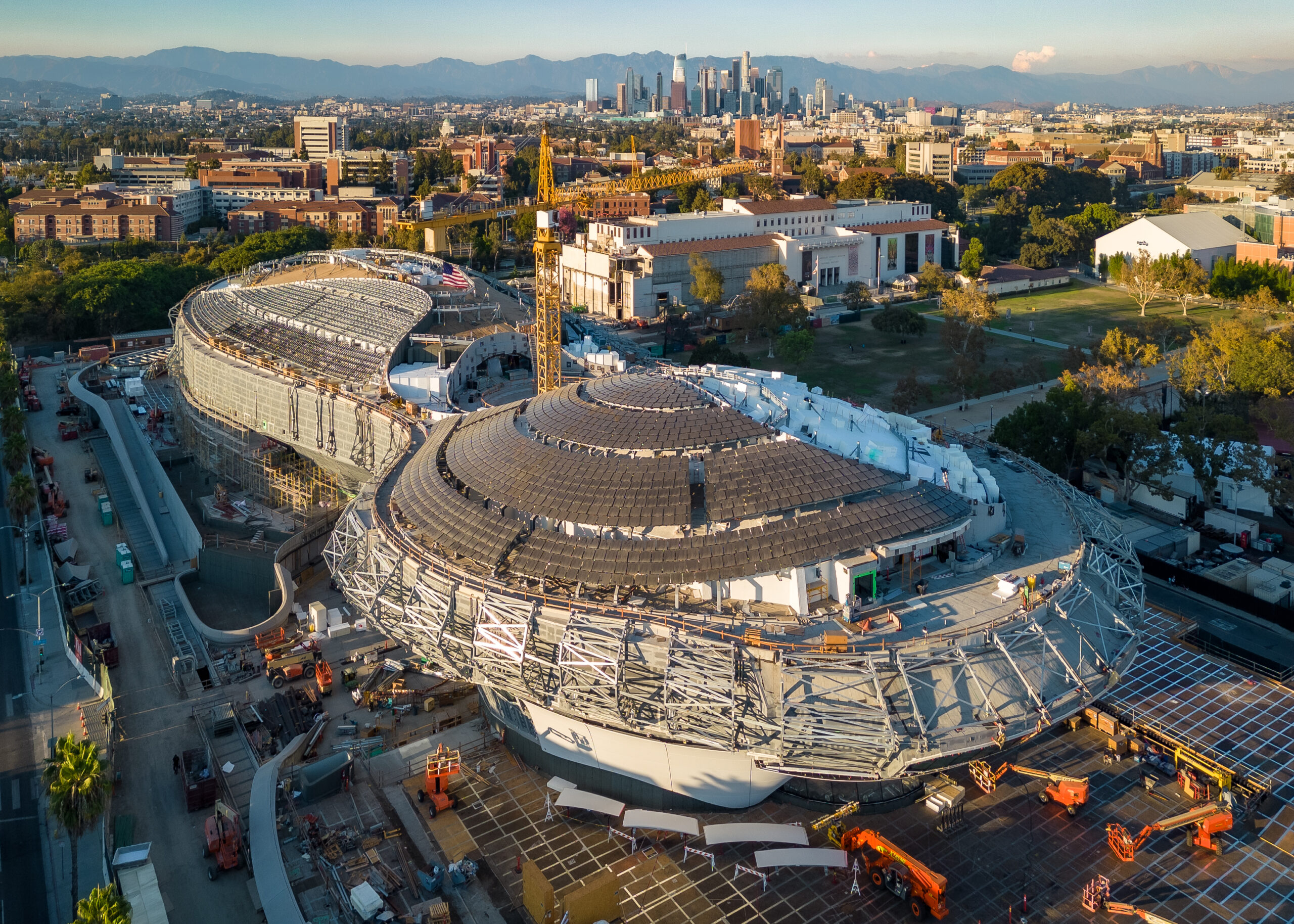

The Lucas Museum, which opened on September 22, gives Los Angeles something rare: a new cultural landmark whose architecture looks as if it belongs to a story before anyone has entered it. Rising in Exposition Park, the Lucas Museum of Narrative Art curves above landscaped ground like a silver vessel. It is a fitting form for an institution built around the proposition that illustrated stories are not marginal culture. They are one of the ways people learn what the world means.
Co-founded by George Lucas and Mellody Hobson, the museum brings together illustration, comics, murals, photography, children’s books, science-fiction art and cinematic material. Its permanent collection contains more than 40,000 works. Thirty-five galleries will occupy 100,000 square feet, arranged around themes drawn from human experience rather than a conventional march through art-historical periods.
An object that changes the journey
Travel begins with anticipation, and the museum’s exterior has been producing that feeling for years. Designed by Ma Yansong of MAD Architects, with executive architecture by Stantec, the building does not look placed on the landscape; it appears to hover above it. Broad curves minimize the sense of a front and back, encouraging visitors to move around the structure before deciding where it begins.
The surrounding landscape, designed by Mia Lehrer of Studio-MLA, is equally important. The project replaces what the museum describes as a former asphalt lot with gardens and public space. That transformation turns a visit into more than an indoor itinerary. Architecture, planting, shade, pathways and gathering places create a campus that can be encountered even before a ticket is scanned.
Why narrative art changes the museum map
The phrase “narrative art” sounds broad because it is broad. The museum’s announced holdings move from beloved illustrators and comic artists to muralists, movie posters and documentary presentations. That range challenges a hierarchy that has often treated popular images as less serious than objects made for galleries.
Yet illustrated stories have always carried beliefs, anxieties and desires. A comic panel can establish character and time through a handful of lines. A film concept drawing can build a world before cameras or actors arrive. A children’s-book illustration can become a person’s first sustained encounter with visual symbolism. By placing these forms together, the Lucas Museum is making an argument about how images travel through everyday life.
Forty thousand works, human-sized themes
The scale could easily become overwhelming. The museum’s solution is to name galleries around recognizable experiences: love, family, community, play, work, sports, childhood and adventure. This is not a neutral curatorial choice. It invites visitors to begin with what they know, then discover how artists across media have pictured those ideas differently.
That approach may also make the institution unusually accessible to families and visitors who do not think of themselves as art specialists. Someone can arrive because of cinema, stay for comic art and leave thinking about a mural. The bridge is story. Instead of demanding that visitors master a vocabulary before entry, the museum can use narrative as a shared point of contact.
A new reason to cross Los Angeles
Exposition Park already concentrates major destinations, including museums, gardens and sporting architecture. The Lucas Museum adds a building whose identity is likely to extend far beyond its collection. Its silhouette will be photographed from the air and from the surrounding paths; its gardens will become part of the local rhythm; its galleries will test whether popular visual culture can be displayed without losing its immediacy.
The most intriguing question is not whether the museum will contain recognizable objects. It is whether those objects, seen together, will change what visitors believe belongs inside an art museum. A museum devoted to stories must decide whose images are allowed to feel important. Los Angeles now enters that conversation through a building that already looks like an invitation.
Sources
Lucas Museum opening announcement
Continue reading: Marrakech Rewards the Art Traveler Who Looks Beyond One Famous Blue · Twenty-Six Louvre Masterpieces Are Crossing the Atlantic for the First Time