
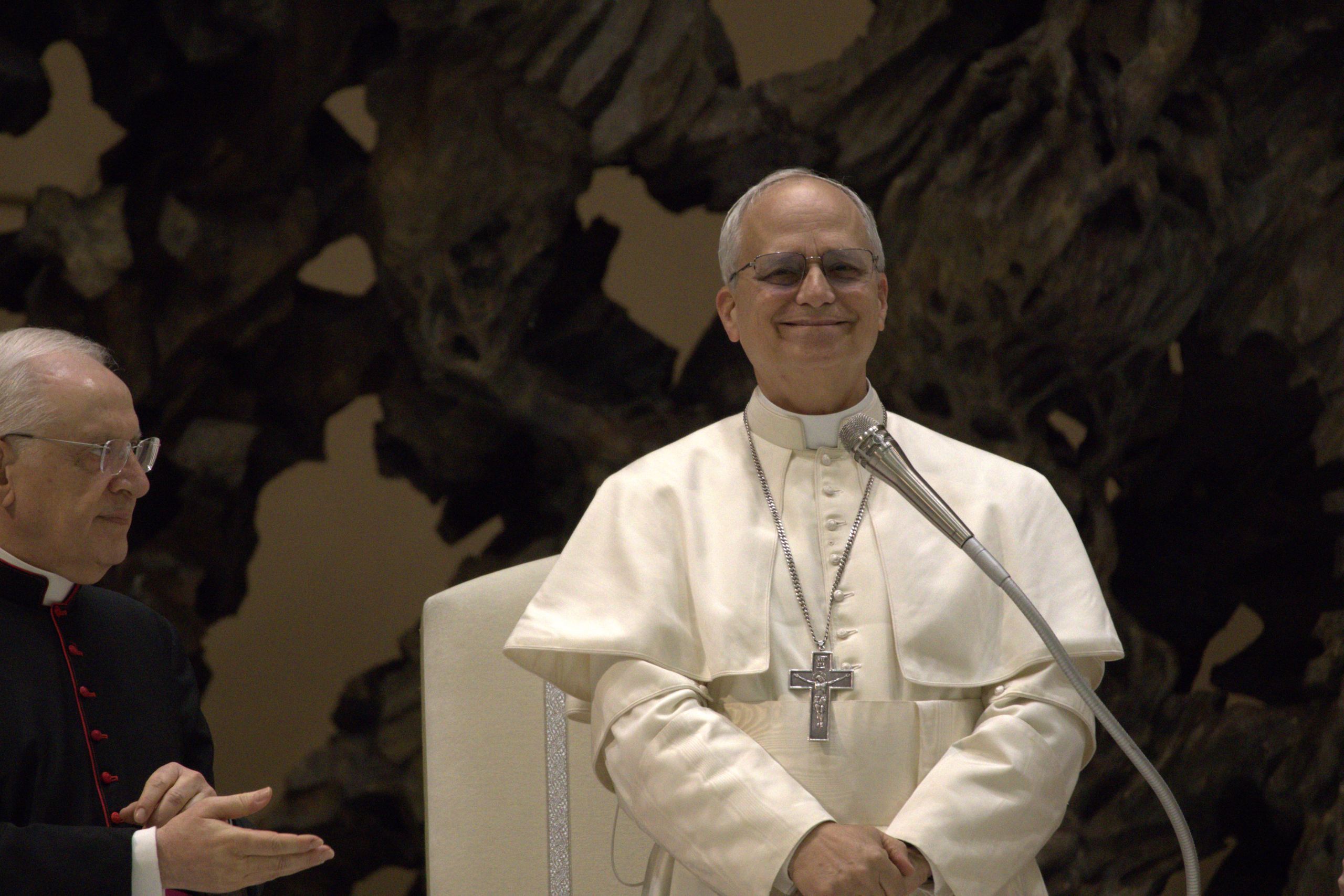

Pope Leo XIV style entered an unexpected fashion conversation when Vanity Fair placed the pontiff among the “Originals” on its revived 2026 Best Dressed List. It is an amusing headline at first glance. Look longer, however, and it becomes something more interesting: a reminder that clothing can operate as architecture, ritual, identity and visual communication all at once.
When clothing carries an institution
Vanity Fair describes its “Originals” as dressers who keep style surprising and innovative. Pope Leo XIV appears in a category that also includes figures from film, art, music and fashion. Yet papal dress is almost the opposite of ordinary celebrity dressing. Its strength comes not from seasonal reinvention but from continuity. The white cassock, skullcap, pectoral cross and other ceremonial elements belong to a visual vocabulary accumulated across centuries.
That is precisely why a small deviation can become so visible. In an age of logos and constant novelty, the papal wardrobe demonstrates another kind of image-making: one in which repetition creates the frame and detail provides the personality.
The art of symbolic dressing
Artists understand this instinctively. A recurring shape, a limited palette or a familiar material can become a signature because it is repeated with intention. Ceremonial clothing works in a similar way. White is not simply a color here. Silhouette is not merely tailoring. Each visual choice sits inside a network of history, expectation and meaning.
The result is a form of living iconography. Before a word is spoken, the figure is legible. The clothing says office, tradition, continuity and spiritual authority. It is visual storytelling at its most compressed.
The most powerful clothes do not merely decorate a body; they make an idea visible.
Why restraint can feel radical now
Contemporary fashion culture often rewards spectacle. Red carpets are engineered for instant circulation; outfits become images before they become memories. Against that background, Pope Leo XIV style is compelling for almost the opposite reason. It is restrained, codified and resistant to the churn of novelty.
That does not make it outside fashion. It reveals one of fashion’s oldest truths: clothes communicate whether or not they are trying to be fashionable. Uniforms, robes, workwear, wedding garments and mourning dress all tell us that what we wear can locate us inside a community and a story.
A lesson for artists in visual identity
There is something useful here for artists developing a public presence. A recognizable visual language does not require constant reinvention. In fact, identity often becomes stronger when certain elements are allowed to recur: a material, a tone, a silhouette, a way of framing the work.
Originality does not always mean abandoning the known. Sometimes it means making a subtle decision inside a strong structure and allowing that decision to carry weight. In ceremonial dress, repetition is not the enemy of originality. It is the language that makes a variation legible.
Vanity Fair’s list may have placed a pope beside fashion’s professional image-makers, but the deeper connection is not as strange as it sounds. Both art and dress are systems of signs. Both can turn material into meaning. And both remind us that a powerful image begins long before the camera arrives.
Continue reading: Pope Leo XIV Draws a Line Between Human Art and AI · How Queen Elizabeth II Designed Visibility · Princess Diana’s Travolta Dress Is Ready to Dance Again